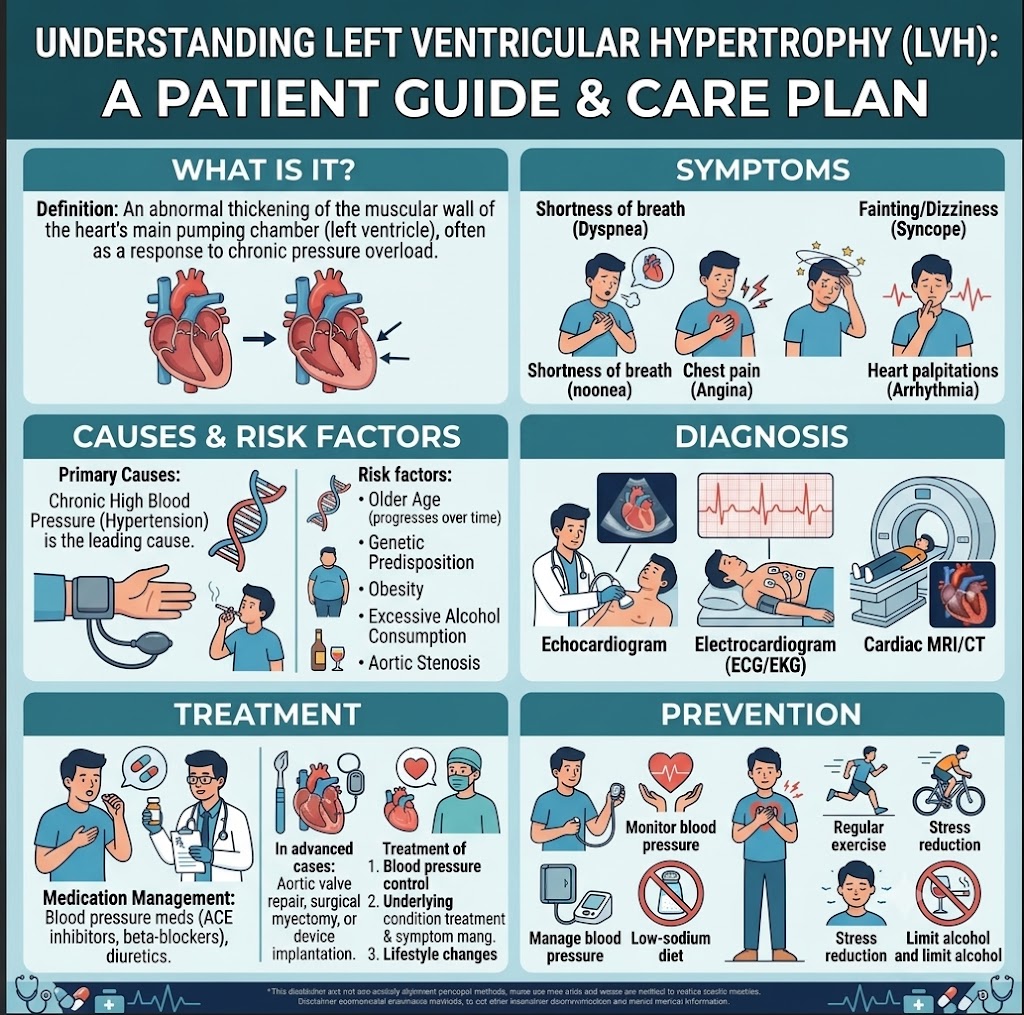
Left ventricular hypertrophy (LVH) is the thickening and stiffening of the walls of the heart's main pumping chamber, the left ventricle. As the muscle wall thickens, it loses flexibility, increasing the pressure inside the heart and making it harder to pump blood efficiently. Over time, this extra strain can lead to heart failure or serious heart rhythm issues. LVH is most commonly caused by long-term, uncontrolled high blood pressure, but it can also result from heart valve problems or genetic conditions.
Understanding the Condition
Left Ventricular Hypertrophy (LVH): Understanding Heart Muscle Thickening
Understanding the Condition
Common Symptoms
Early Stage (Asymptomatic): In its early phases, LVH typically develops gradually without presenting any noticeable symptoms.
Shortness of Breath: Difficulty breathing, which frequently worsens when lying down flat.
Chest Pain: A feeling of pressure or pain in the chest, particularly during physical exertion or exercise.
Heart Palpitations: A sensation of a rapid, pounding, fluttering, or irregular heartbeat.
Dizziness and Fainting: Feeling lightheaded, dizzy, or experiencing temporary loss of consciousness.
Leg Swelling: Fluid retention causing swelling (edema) in the lower legs and ankles.
Emergency Symptoms: Seek immediate emergency medical attention if you experience chest pain lasting more than a few minutes, severe shortness of breath, fainting, sudden severe headache, difficulty speaking, or weakness on one side of the body.
Consultation Guide
Which Specialist to Meet
You should schedule a consultation with a Cardiologist, a physician specializing in heart diseases and cardiovascular health.
Preparations Before Your Visit
To prepare for your visit, record your daily blood pressure readings, compile a detailed list of all medications, vitamins, and supplements you take, write down your family history of heart disease, and document all symptoms you experience along with what triggers them.
Book a doctor visit near me
Consultation Guide
Left ventricular hypertrophy (LVH) is the thickening and stiffening of the walls of the heart's main pumping chamber, the left ventricle. As the muscle wall thickens, it loses flexibility, increasing the pressure inside the heart and making it harder to pump blood efficiently. Over time, this extra strain can lead to heart failure or serious heart rhythm issues. LVH is most commonly caused by long-term, uncontrolled high blood pressure, but it can also result from heart valve problems or genetic conditions.
Diagnostic Procedures
An imaging test that uses high-frequency sound waves to create live, detailed visual images of the heart's chambers, valves, and blood flow.
What to Expect
You will lie on an exam table. A technician will apply a small amount of warm gel to your chest and press a handheld device called a transducer firmly against your skin. You may feel slight pressure as they move the device to capture different views. The test is non-invasive, painless, and typically takes 30 to 60 minutes.
Electrocardiogram (ECG or EKG)
A non-invasive test that records the electrical signals generated by your heart to assess its rhythm, structure, and overall health.
What to Expect
You will lie flat on a table. A technician will place several small, sticky patches called electrodes onto your chest, arms, and legs. Wires connect these patches to a computer that monitors your heartbeat. You will need to lie still for a few minutes while the machine records. The test is completely painless and takes about 5 to 10 minutes.
Treatment Options
Medications
Blood Pressure Regulators: Prescription therapies that relax blood vessels, lower systemic blood pressure, and decrease the physical strain on the left ventricle to help prevent or reverse muscle thickening. (Duration: Typically required as a lifelong, daily supportive therapy.)
Heart Rate Control Agents: Medications designed to slow the heart rate and improve blood flow, allowing the stiffened left ventricle more time to fill with blood between beats. (Duration: Ongoing, long-term daily management.)
Surgical and Minimally Invasive Procedures
Surgical Myectomy: An open-heart surgical procedure where a surgeon removes a portion of the thickened heart muscle wall to clear blockages and improve blood flow. (Duration: One-time surgery with an average recovery period of 6 to 8 weeks.)
Alcohol Septal Ablation: A minimally invasive catheter-based procedure where pure alcohol is introduced into a small blood vessel feeding the thickened heart muscle, causing a small, controlled area of tissue to shrink. (Duration: One-time procedure requiring a 2 to 3-day hospital stay.)
Aortic Valve Repair or Replacement: Surgery or a catheter-based procedure to fix or replace a narrowed aortic valve, removing the resistance the heart must pump against. (Duration: One-time procedure; recovery takes several weeks depending on the approach.)
Prevention & Long-Term Wellbeing
Prevention and Long-Term Management
Routine Blood Pressure Monitoring: Regularly measure your blood pressure at home and share the log with your medical team to ensure your readings stay within a healthy target range.
Heart-Healthy Dietary Habits: Adopt a nutritional plan rich in vegetables, fruits, whole grains, and lean proteins while significantly reducing your intake of sodium and processed foods.
Regular Physical Activity: Participate in moderate aerobic exercise, such as brisk walking, for at least 150 minutes per week, after obtaining clear medical approval from your doctor.
Weight and Stress Management: Maintain a healthy body weight to reduce cardiac workload, prioritize 7 to 9 hours of quality sleep nightly, and utilize mindfulness or relaxation techniques to manage daily stress.
Eliminate Toxic Substances: Quit smoking entirely and strictly limit or completely avoid alcohol consumption to protect blood vessels and reduce stress on the heart muscle.
Tags & Topics
Notice an error or need an update?
Help us keep medical information accurate. Report incorrect info or suggest an edit.

