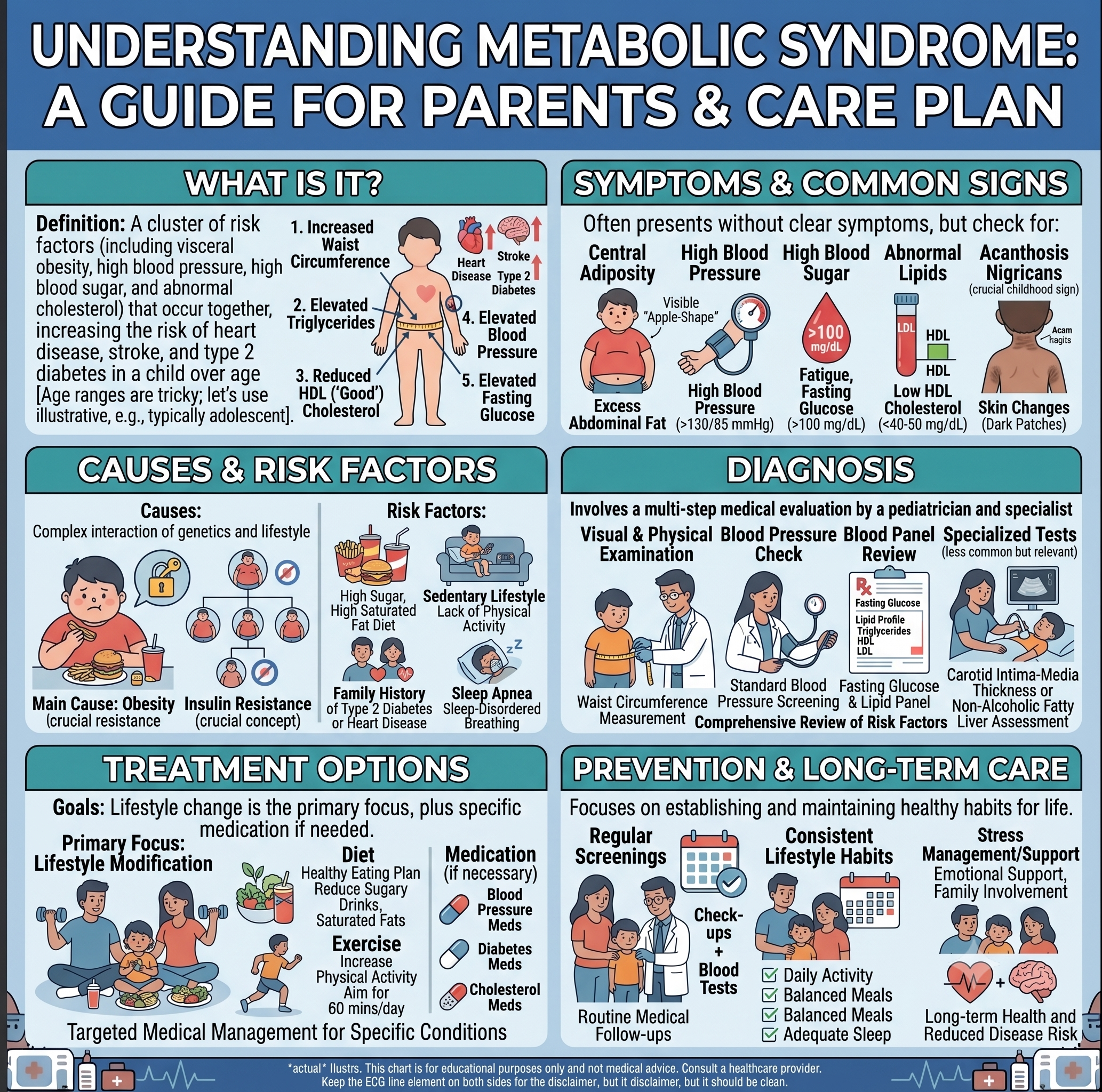
Metabolic syndrome is a combination of health conditions that, when present together, significantly raise your risk of developing serious diseases like heart disease, stroke, and type 2 diabetes. These conditions include high blood pressure, elevated blood sugar levels, too much fat around the waist (often called an 'apple shape'), and unhealthy levels of cholesterol or triglycerides in your blood. You are considered to have metabolic syndrome if you have three or more of these conditions. Even having just one increases your risk for serious health issues. This condition is becoming more common, affecting up to one-third of adults in some regions. Adopting healthy lifestyle changes can help manage or prevent the progression of metabolic syndrome to more severe health problems. The condition is strongly linked to being overweight or obese and not getting enough physical activity, as well as a state called insulin resistance where your body's cells don't properly use insulin to absorb sugar from your blood.
Understanding the Condition
Metabolic Syndrome: Understanding Your Health Risks
Understanding the Condition
Common Symptoms
Large Waist Size: A waist measurement that is larger than healthy limits is a key indicator. This often means carrying extra weight around your abdomen, leading to an 'apple-shaped' body. This is different from a 'pear-shaped' body, where weight is carried more around the hips and thighs, which is generally not associated with the same increased health risks.
Signs of High Blood Sugar: While many conditions of metabolic syndrome don't have obvious symptoms, high blood sugar, a component of the syndrome, might cause noticeable changes. These can include feeling unusually thirsty, needing to urinate more often than usual, feeling tired, and having blurred vision.
Consultation Guide
Which Specialist to Meet
Before your visit, make a list of all your current medications (including over-the-counter drugs and supplements), note any symptoms you've experienced, and be prepared to discuss your personal and family medical history. Consider writing down any questions you have. If you have any recent lab results or blood pressure readings, bring those along.
Book a doctor visit near me
Consultation Guide
This test measures the force of your blood against the walls of your arteries. High blood pressure is a significant risk factor within metabolic syndrome.
Diagnostic Procedures
Waist Circumference Measurement
This simple physical measurement helps determine if you have too much fat around your middle, a key indicator of metabolic syndrome. Your doctor or nurse will use a measuring tape.
What to Expect
You will be asked to stand and may need to slightly lift your shirt. The healthcare professional will place a measuring tape around your bare abdomen, usually just above your hip bones, at the level of your belly button. You'll be asked to breathe out normally as the measurement is taken. This is a quick and painless procedure.
Blood Pressure Measurement
What to Expect
You will typically sit with your arm resting on a surface at heart level. A cuff will be wrapped around your upper arm and inflated, momentarily tightening, then slowly deflating. This process measures your systolic (top number) and diastolic (bottom number) blood pressure. It's a routine and generally painless test, though you might feel a brief squeeze on your arm.
Fasting Blood Sugar Test (Glucose)
This blood test measures the amount of sugar (glucose) in your blood after you haven't eaten for a specific period, usually 8-12 hours. High levels indicate a risk for type 2 diabetes.
What to Expect
You will need to fast (not eat or drink anything other than water) for 8 to 12 hours before the test. A healthcare professional will draw a small sample of blood, usually from a vein in your arm. This involves a brief prick when the needle is inserted. The process is quick, and you can usually resume normal eating and drinking immediately afterward.
Fasting Lipid Panel (Cholesterol and Triglycerides)
This blood test measures your levels of 'bad' cholesterol (LDL), 'good' cholesterol (HDL), and triglycerides. Unhealthy levels are a major component of metabolic syndrome.
What to Expect
Similar to the blood sugar test, you will typically need to fast for 8 to 12 hours before this test. A small blood sample will be drawn from a vein in your arm by a healthcare professional. You will feel a brief prick. The entire process of blood collection is usually quick, and you can eat and drink normally once it's done.
Blood Sugar Control Medications: For elevated blood sugar or diagnosed type 2 diabetes, medications can help your body use insulin more effectively or reduce glucose production in the liver. (Duration: Usually long-term, requiring regular monitoring and adjustments.)
Cholesterol and Triglyceride Lowering Medications: These medicines can help manage unhealthy cholesterol and triglyceride levels, reducing your risk of plaque buildup in arteries. (Duration: Often long-term, with regular blood tests to check effectiveness and adjust dosage.)
Treatment Options
Medications
Blood Pressure Control Medications: If lifestyle changes aren't enough, your doctor may prescribe medication to lower your blood pressure and reduce the risk of heart disease. (Duration: Typically long-term, as prescribed by your doctor.)
Prevention & Long-Term Wellbeing
Metabolic syndrome is a combination of health conditions that, when present together, significantly raise your risk of developing serious diseases like heart disease, stroke, and type 2 diabetes. These conditions include high blood pressure, elevated blood sugar levels, too much fat around the waist (often called an 'apple shape'), and unhealthy levels of cholesterol or triglycerides in your blood. You are considered to have metabolic syndrome if you have three or more of these conditions. Even having just one increases your risk for serious health issues. This condition is becoming more common, affecting up to one-third of adults in some regions. Adopting healthy lifestyle changes can help manage or prevent the progression of metabolic syndrome to more severe health problems. The condition is strongly linked to being overweight or obese and not getting enough physical activity, as well as a state called insulin resistance where your body's cells don't properly use insulin to absorb sugar from your blood.
You should start by consulting your primary care physician (PCP). They can assess your overall health and may refer you to specialists like an endocrinologist (for hormone and metabolism disorders), a cardiologist (for heart health), or a registered dietitian (for dietary guidance).
Preparations Before Your Visit
Lifestyle Changes
Healthy Eating Plan: Focus on a balanced diet rich in fruits, vegetables, whole grains, lean proteins, and healthy fats. Limit processed foods, sugary drinks, red meat, and unhealthy fats. Working with a dietitian can help create a personalized plan. (Duration: Lifelong commitment for sustained health benefits.)
Regular Physical Activity: Aim for at least 150 minutes of moderate-intensity aerobic exercise per week, such as brisk walking, swimming, or cycling. Include strength training exercises two or more days a week. (Duration: Ongoing, aim for consistency most days of the week.)
Weight Management: Achieving and maintaining a healthy weight is crucial. Even a modest weight loss can significantly improve the conditions associated with metabolic syndrome. Combine diet and exercise for best results. (Duration: Ongoing effort; weight loss typically occurs over months, maintenance is lifelong.)
Smoking Cessation: If you smoke, quitting is one of the most impactful steps you can take for your overall health, including reducing your risk of heart disease and stroke linked to metabolic syndrome. (Duration: Ongoing abstinence from smoking.)
Prevention and Long-Term Monitoring
Routine Health Screenings: Regular check-ups with your doctor are essential to monitor your blood pressure, blood sugar, cholesterol levels, and waist circumference. Early detection allows for earlier intervention.
Stress Management: Chronic stress can negatively impact blood pressure and blood sugar. Incorporate stress-reducing activities into your daily routine, such as meditation, yoga, hobbies, or spending time in nature.
Adequate Sleep: Aim for 7-9 hours of quality sleep per night. Poor sleep can affect hormone levels that control appetite and blood sugar, potentially worsening metabolic syndrome components.
Support System: Seek support from family, friends, or a healthcare team to help maintain healthy habits. Joining support groups or working with health coaches can also provide valuable encouragement and accountability.
Tags & Topics
Notice an error or need an update?
Help us keep medical information accurate. Report incorrect info or suggest an edit.


