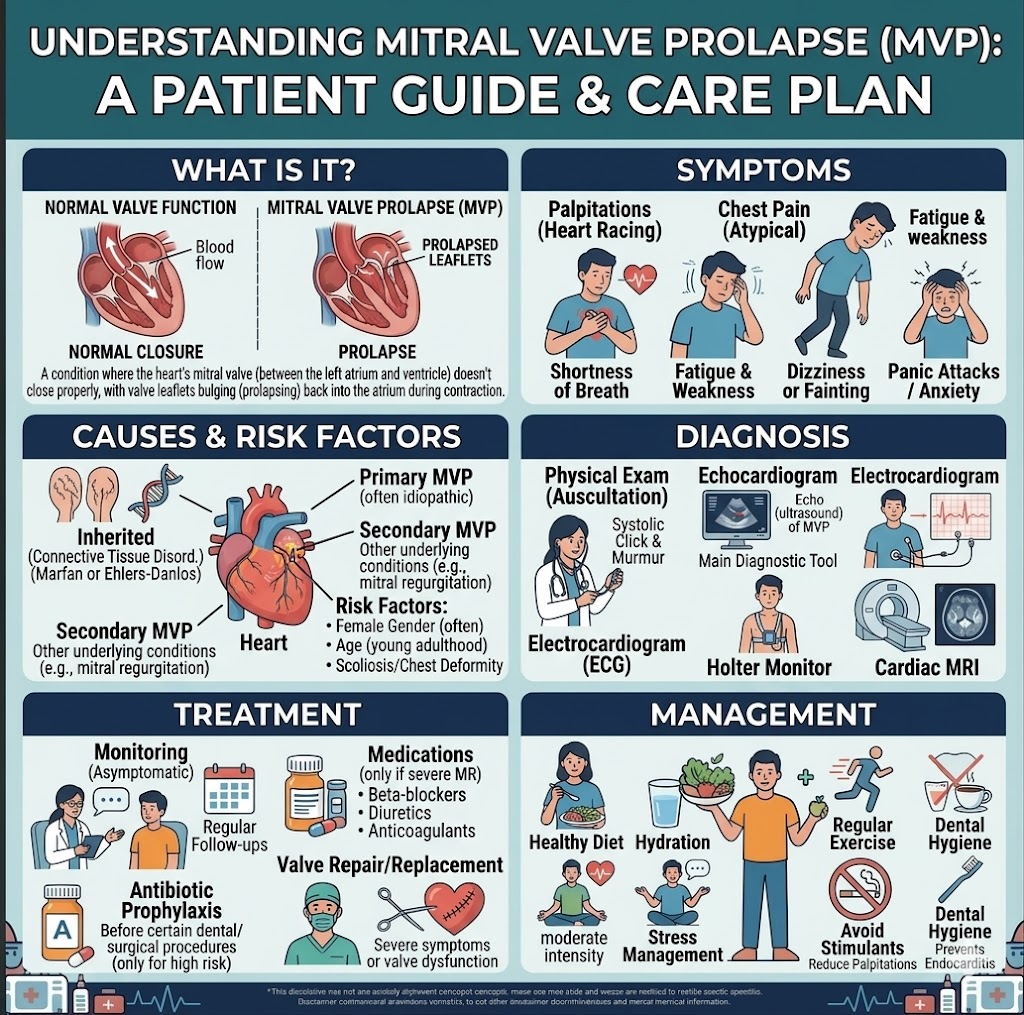
Mitral valve prolapse (MVP) is a common condition affecting one of the heart's four valves, the mitral valve, located between the two left chambers of your heart. In MVP, the flaps (leaflets) of this valve become floppy and bulge backward, much like a parachute, into the heart's upper left chamber when the heart squeezes. Sometimes, this can cause blood to leak backward across the valve, a condition known as mitral valve regurgitation. While often harmless and not life-threatening, and usually not requiring treatment, some individuals may need medication or surgery, especially if significant leakage occurs.
Understanding the Condition
Mitral Valve Prolapse: A Guide for Non-Medical Persons
Understanding the Condition
Common Symptoms
Heart Murmur: An extra or unusual sound heard during a heartbeat, often the first sign detected by a doctor.
Heart Palpitations: A feeling of a rapid, fluttering heartbeat, or a skipped beat.
Shortness of Breath: Difficulty breathing, especially during physical activity or when lying flat.
Fatigue: Unusual tiredness or lack of energy.
Dizziness or Lightheadedness: Feeling unsteady or faint.
Chest Pain: Discomfort in the chest, which may not be related to a heart attack.
Panic or Anxiety: Feelings of intense fear or worry.
Migraine Headaches: Severe headaches often accompanied by throbbing pain, sensitivity to light and sound.
Consultation Guide
Which Specialist to Meet
Initially, you should consult your primary care doctor. Depending on the findings, they may refer you to a cardiologist, a doctor specializing in heart conditions.
Preparations Before Your Visit
Before your appointment, prepare a list of your symptoms, including when they started, how often they occur, and what makes them better or worse. Provide a complete medical history, including any other health conditions and family history of heart disease. Bring a list of all medications, vitamins, and supplements you are taking. Write down any questions you have for your doctor.
Book a doctor visit near me
You will receive a local anesthetic to numb the area where the catheter will be inserted, so you should feel pressure, not pain. The catheter is then carefully threaded through the blood vessel to your heart. Dye may be injected to visualize blood flow. You will be awake but may receive a mild sedative. The procedure can take 30 minutes to a few hours, depending on what is being done. After the procedure, you will need to lie flat for several hours to prevent bleeding at the insertion site.
A coronary angiogram is a specific type of cardiac catheterization that uses X-rays and a special dye to visualize the blood vessels that supply your heart (coronary arteries). It's primarily used to identify narrowed or blocked arteries.
Regular Monitoring: If you have no symptoms or mild symptoms, your doctor may recommend regular check-ups to monitor your condition over time. This typically involves physical exams and echocardiograms to track any changes in the valve's function. (Duration: Ongoing, usually annually or as recommended by your doctor.)
Beta-Blockers: These medications can help slow your heart rate and ease heart palpitations, often reducing symptoms like chest pain and anxiety. (Duration: As prescribed, typically long-term if symptoms persist.)
Diuretics: These medications help remove excess fluid from the body, which can alleviate symptoms like swelling and shortness of breath associated with fluid buildup. (Duration: As prescribed, typically for symptom management.)
Regular Medical Check-ups: Even if asymptomatic, consistent visits to your doctor are crucial for monitoring your heart health and valve condition.
Limit Alcohol and Caffeine: If alcohol or caffeine trigger palpitations or other symptoms, reducing or avoiding them can improve comfort.
Maintain a Healthy Weight: Achieving and maintaining a healthy weight reduces strain on your heart and lowers the risk of related health issues.
Good Dental Hygiene: Practicing excellent oral hygiene helps prevent bacterial infections that can potentially spread to the heart valves.
Report New or Worsening Symptoms: Be vigilant for any changes in your symptoms and communicate them promptly to your healthcare provider.
Consultation Guide
Mitral valve prolapse (MVP) is a common condition affecting one of the heart's four valves, the mitral valve, located between the two left chambers of your heart. In MVP, the flaps (leaflets) of this valve become floppy and bulge backward, much like a parachute, into the heart's upper left chamber when the heart squeezes. Sometimes, this can cause blood to leak backward across the valve, a condition known as mitral valve regurgitation. While often harmless and not life-threatening, and usually not requiring treatment, some individuals may need medication or surgery, especially if significant leakage occurs.
Diagnostic Procedures
An echocardiogram uses sound waves to create moving pictures of your heart. This common test shows the structure of your heart, how blood flows through its chambers and valves, and how well your heart muscle is pumping.
What to Expect
You will lie on an examination table, and a small amount of gel will be applied to your chest. A technician will then move a handheld device (transducer) over your chest, which sends and receives sound waves. You may be asked to change positions or hold your breath briefly. The test is painless and typically takes 30-60 minutes.
Electrocardiogram (ECG or EKG)
An ECG is a quick and painless test that records the electrical signals of your heart. It can show how fast or slow your heart is beating and detect any irregular heart rhythms or signs of heart damage.
What to Expect
You will lie down on an examination table. Small, sticky patches called electrodes will be placed on your chest, arms, and legs. Wires connect these patches to a machine that records your heart's electrical activity. The test takes only a few minutes and is non-invasive.
A chest X-ray uses a small amount of radiation to produce images of your heart, lungs, blood vessels, airways, and bones of the chest and spine. It can help identify if your heart is enlarged or if there's fluid in your lungs.
What to Expect
You will stand or sit against a plate, and you may be asked to hold your breath for a few seconds while the X-ray is taken. The procedure is quick, painless, and usually takes less than 15 minutes.
A stress test, sometimes called an exercise stress test, shows how your heart works during physical activity. It can help detect blood flow problems within the heart or identify irregular heart rhythms that only appear during exertion.
What to Expect
Electrodes will be placed on your chest for an ECG, and a blood pressure cuff will be on your arm. You will then walk on a treadmill or ride a stationary bike, with the intensity gradually increasing. Your heart rate, blood pressure, and breathing will be continuously monitored. If you cannot exercise, medication may be given to simulate the effects of exercise on your heart. The test typically lasts 30-60 minutes, including preparation.
Cardiac Catheterization
Cardiac catheterization is a procedure that involves inserting a thin, flexible tube (catheter) into a blood vessel, usually in the groin or arm, and guiding it to your heart. This allows doctors to get detailed information about your heart muscle, valves, and blood vessels.
What to Expect
What to Expect
Treatment Options
This procedure is performed similarly to cardiac catheterization. A catheter is inserted into an artery (usually in the groin, arm, or neck) and guided to the heart. A special dye is injected through the catheter, making your coronary arteries visible on X-ray images. You may feel a brief warm sensation when the dye is injected. If blockages are found, treatments like angioplasty (opening the artery with a balloon) and stenting (placing a mesh tube to keep it open) can sometimes be performed during the same procedure. Recovery involves lying flat for several hours afterward.
Medications
Blood Thinners (Anticoagulants): If you have a history of blood clots, an irregular heart rhythm, or have had a mechanical heart valve replacement, these medications can help prevent dangerous blood clots. (Duration: As prescribed, often lifelong after a mechanical valve replacement or if specific clot risks are present.)
Mitral Valve Replacement: If the mitral valve cannot be repaired effectively, it may need to be replaced. The damaged valve is removed and replaced with either a mechanical valve (made of durable materials) or a biological valve (made from animal or human tissue). (Duration: Hospital stay typically 5-7 days, with full recovery taking several weeks to months. Mechanical valves require lifelong blood-thinning medication. Biological valves may need replacement again in 10-20 years. Lifelong monitoring is required for both.)
Manage Blood Pressure and Cholesterol: Keeping blood pressure and cholesterol levels within healthy ranges through diet, exercise, and medication (if needed) supports overall heart function.
Prevention & Long-Term Wellbeing
Watchful Waiting and Lifestyle Adjustments
Healthy Lifestyle: Adopting a heart-healthy lifestyle, including a balanced diet, regular exercise, and avoiding smoking, can help manage overall heart health. (Duration: Lifelong commitment.)
Mitral Valve Repair: Whenever possible, surgeons prefer to repair the mitral valve rather than replace it. This procedure aims to fix the damaged valve by removing floppy sections, stitching the edges, or tightening the valve's opening with a ring. Repair helps preserve your own heart tissue and function. (Duration: Hospital stay typically 5-7 days, with full recovery taking several weeks to months. Lifelong monitoring of valve function is required.)
Prevention and Long-Term Wellbeing
Heart-Healthy Diet: Consume a balanced diet rich in fruits, vegetables, whole grains, and lean proteins, and low in saturated fats, trans fats, sodium, and added sugars.
Regular Physical Activity: Aim for at least 150 minutes of moderate-intensity aerobic exercise per week, or as advised by your doctor, to strengthen your heart.
Avoid Smoking: Smoking significantly harms heart and blood vessel health; quitting is one of the most beneficial steps you can take.
Tags & Topics
Notice an error or need an update?
Help us keep medical information accurate. Report incorrect info or suggest an edit.

