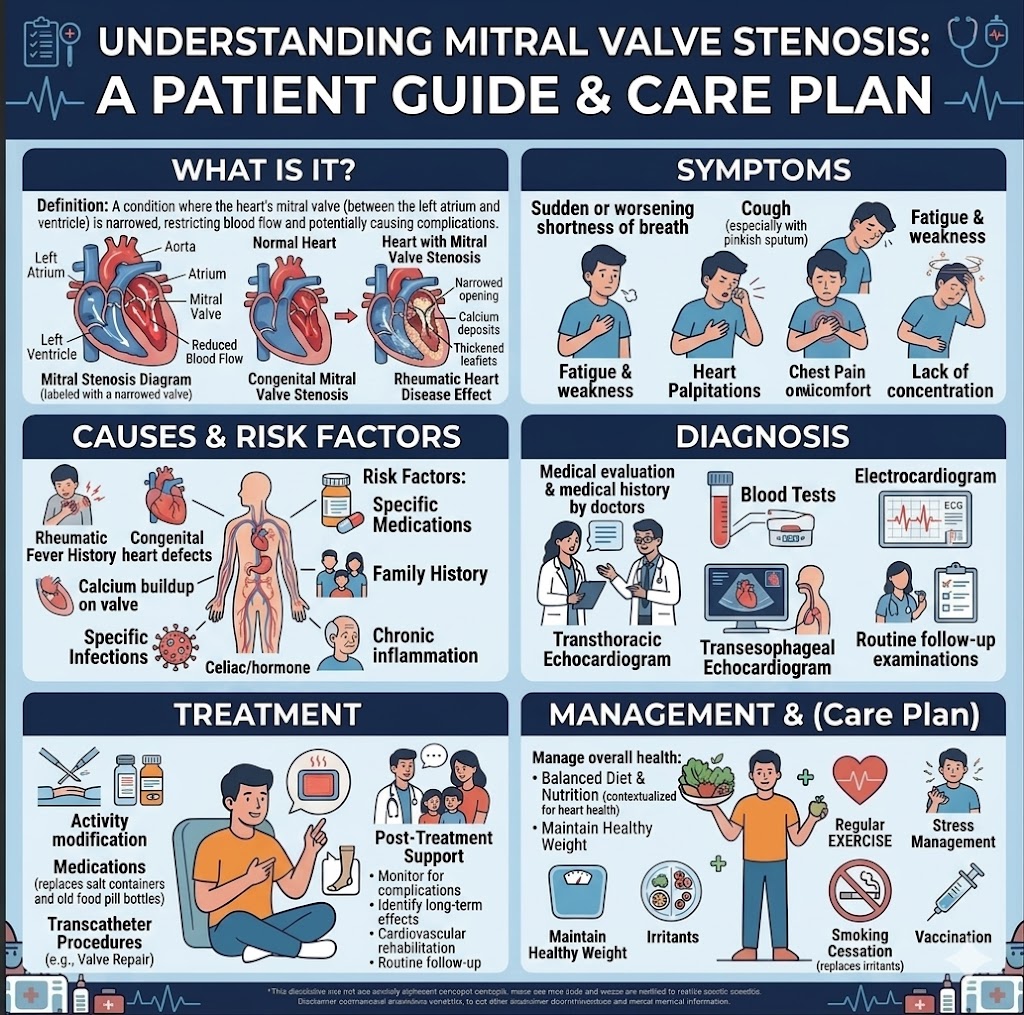
Mitral valve stenosis is a narrowing of the heart's mitral valve, which controls blood flow between the upper and lower left chambers of the heart. The lower left chamber (left ventricle) is the heart's main pumping station. When the valve narrows, blood flow is restricted, forcing the heart to work harder and causing pressure to build up in the lungs. While some individuals remain symptom-free for years, this progressive condition can cause severe fatigue, breathing difficulties, and other serious cardiac complications if left untreated.
Understanding the Condition
Mitral Valve Stenosis: Understanding Causes, Symptoms, and Care
Understanding the Condition
Mitral valve stenosis is a narrowing of the heart's mitral valve, which controls blood flow between the upper and lower left chambers of the heart. The lower left chamber (left ventricle) is the heart's main pumping station. When the valve narrows, blood flow is restricted, forcing the heart to work harder and causing pressure to build up in the lungs. While some individuals remain symptom-free for years, this progressive condition can cause severe fatigue, breathing difficulties, and other serious cardiac complications if left untreated.
Common Symptoms
Shortness of Breath: Feeling winded or struggling to breathe, especially during physical exertion or when lying flat in bed.
Fatigue: Unusual exhaustion or tiredness during daily activities or increased physical tasks.
Before your visit, keep a detailed log of your symptoms and note what activities trigger them. Write down your medical history, paying close attention to any childhood history of strep throat or rheumatic fever. Bring a complete list of your current medications, vitamins, and supplements, and prepare a list of questions about your treatment options.
Book a doctor visit near me
A technician will attach electrodes to your chest, which connect to a small, lightweight recording device. You will wear the device in a pocket or on a strap. You must keep the monitor dry, so you cannot bathe or swim while wearing it. You will keep a diary of your activities and symptoms.
Percutaneous Balloon Valvuloplasty: A minimally invasive procedure where a doctor inserts a catheter with a tiny balloon into the heart. The balloon is inflated inside the narrowed valve to stretch it open, then deflated and removed. (Duration: The procedure takes 1 to 2 hours. Symptom relief can last for several years before further treatment is needed.)
Regular Cardiac Checkups: Schedule routine appointments with your cardiologist to monitor the progression of your valve condition, even if you do not feel any symptoms.
Consultation Guide
Swollen Feet or Legs: Fluid buildup (edema) in the lower limbs caused by poor blood circulation and heart strain.
Heart Palpitations: Sensations of a racing, pounding, or irregular heartbeat, which can indicate heart rhythm issues like atrial fibrillation.
Dizziness or Fainting: Lightheadedness or loss of consciousness due to reduced oxygen-rich blood reaching the brain.
Chest Discomfort: Pain, pressure, or a tight feeling in the chest area.
Coughing up Blood: A cough that produces blood, stemming from increased fluid pressure in the blood vessels of the lungs.
Consultation Guide
Which Specialist to Meet
You will need to consult with a Cardiologist (a doctor specializing in heart conditions). If your condition is advanced, you may also meet with a Cardiothoracic Surgeon to discuss surgical options.
Preparations Before Your Visit
You will be given a mild sedative to help you relax. A doctor will numb your groin or wrist, insert a thin, flexible tube (catheter) into a blood vessel, and guide it to your heart. Contrast dye may be injected, which can cause a temporary warm flushing sensation.
Prompt Treatment of Strep Infections: Seek immediate medical attention for sore throats. Treating strep throat with a full course of prescribed antibiotics prevents rheumatic fever, the primary cause of mitral valve stenosis.
Avoid Heart Stimulants: Do not use illicit stimulants such as ecstasy (MDMA), and check with your doctor before taking migraine medications or weight-loss products, as some can cause heart valve damage.
Diagnostic Procedures
This is an ultrasound of the heart that uses high-frequency sound waves to create live images of your heart chambers, valves, and blood flow.
What to Expect
You will lie on an exam table. A technician will apply warm gel to your chest and gently press a wand-like device called a transducer against your skin, moving it around to capture images. The test is completely painless and takes about 30 to 60 minutes.
Electrocardiogram (ECG or EKG)
A quick, noninvasive test that records the electrical signals of your heart to detect abnormal heart rhythms.
What to Expect
You will lie flat on a table. A technician will place small, sticky patches called electrodes onto your chest, arms, and legs. You will need to lie still for a few minutes while the machine records your heart's electrical activity.
A portable ECG device that continuously records your heart's rhythm, typically for 24 to 48 hours, while you go about your normal daily activities.
What to Expect
An imaging test that allows your doctor to see the size of your heart and the condition of your lungs.
What to Expect
You will stand in front of an X-ray machine and be asked to take a deep breath and hold it still for a few seconds. The test is painless and takes only a few minutes.
Cardiac Catheterization
An invasive procedure used to measure pressures inside your heart chambers and evaluate blood flow when noninvasive tests are inconclusive.
What to Expect
Treatment Options
Medications
Diuretics: Medicines that help reduce fluid buildup in your lungs and body, easing breathing difficulties and swelling. (Duration: Often prescribed for long-term daily management depending on fluid retention levels.)
Heart Rate Regulators: Medications that slow your heart rate, allowing the heart's chambers more time to fill with blood. (Duration: Typically required as ongoing, daily, long-term therapy.)
Blood Thinners (Anticoagulants): Medications that lower the risk of blood clots forming in the heart, particularly if you have an irregular rhythm like atrial fibrillation. (Duration: Usually a lifelong daily treatment to prevent stroke.)
Interventional and Surgical Procedures
Mitral Valve Repair: An open-heart or minimally invasive surgery where the surgeon reshapes, patches, or tightens your existing valve to restore proper blood flow. (Duration: The surgery takes 3 to 5 hours. Recovery takes 4 to 8 weeks, and the repaired valve can function well for decades.)
Mitral Valve Replacement: If the valve cannot be repaired, it is surgically replaced with either a mechanical valve (made of metal) or a biological valve (made from animal tissue). (Duration: The surgery takes 3 to 5 hours. Biological valves last 10 to 15 years, while mechanical valves last a lifetime but require permanent daily blood-thinning medication.)
Prevention & Long-Term Wellbeing
Prevention Strategies
Long-Term Monitoring and Lifestyle
Adhere to a Low-Sodium Diet: Reduce your salt intake to help prevent fluid retention, which lowers pressure in your lungs and reduces the workload on your heart.
Engage in Safe, Low-Impact Exercise: Maintain cardiovascular fitness with moderate activities like walking or swimming. Consult your cardiologist before starting any new exercise routine.
Tags & Topics
Notice an error or need an update?
Help us keep medical information accurate. Report incorrect info or suggest an edit.

