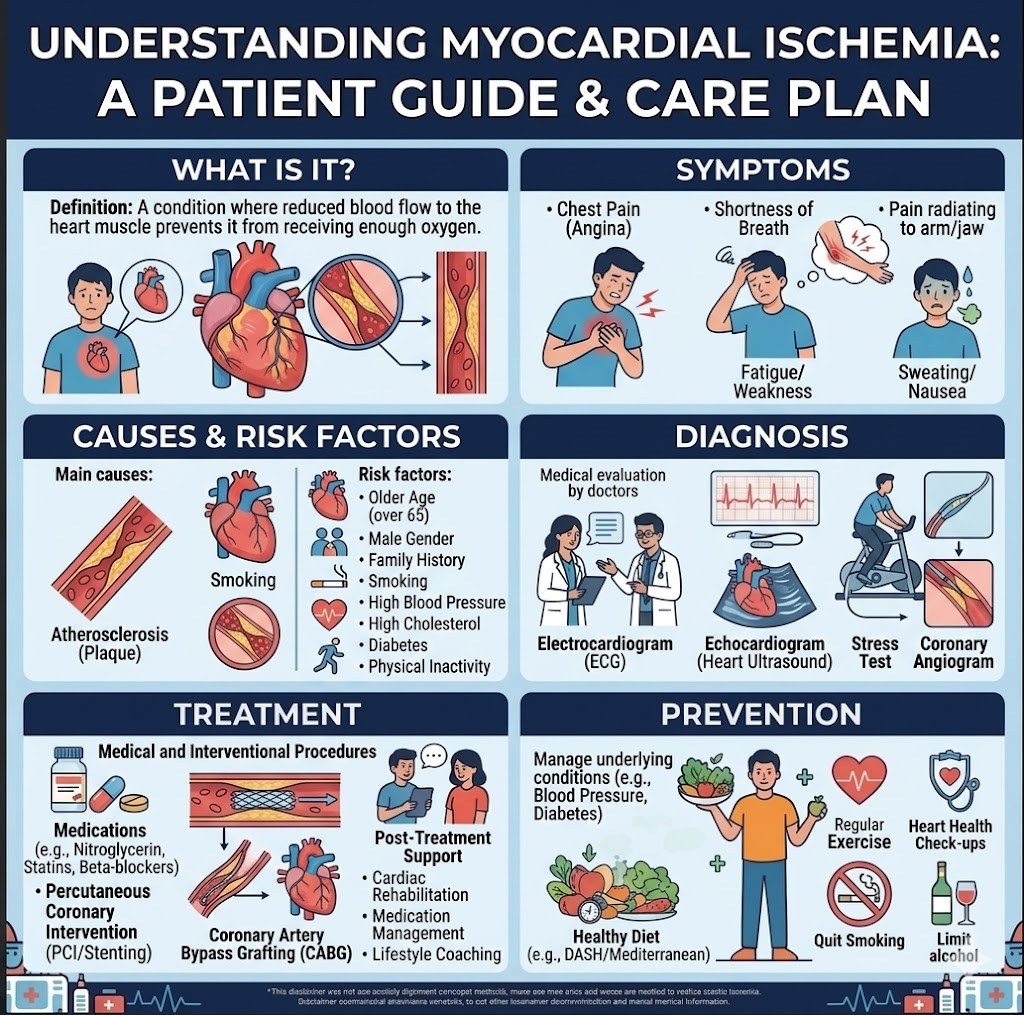
Myocardial ischemia, or cardiac ischemia, occurs when blood flow to your heart muscle is reduced, depriving it of enough oxygen. This is usually caused by narrowed or blocked coronary arteries due to plaque buildup (atherosclerosis). Reduced blood flow can weaken your heart's pumping ability, lead to irregular heart rhythms, and potentially a heart attack. Treatment involves improving blood flow through lifestyle changes, medications, procedures, or surgery.
Understanding the Condition
Myocardial Ischemia: Understanding Reduced Blood Flow to Your Heart
Understanding the Condition
Common Symptoms
Chest Pain or Pressure (Angina): The most common symptom, often a squeezing, tightness, or aching in the chest, possibly spreading to the arm, neck, jaw, or back.
Shortness of Breath: Feeling winded, especially with activity.
Other Symptoms: Sweating, dizziness, lightheadedness, nausea, unusual fatigue, or a fast heartbeat. These can be more common in women, older individuals, and people with diabetes. Some people experience "silent ischemia" with no noticeable symptoms. Seek immediate medical help for severe or persistent chest pain.
Consultation Guide
Which Specialist to Meet
Begin with your primary care physician, who can refer you to a cardiologist (heart specialist). For surgical options, a cardiovascular surgeon may be involved.
Preparations Before Your Visit
Prepare a list of all symptoms, medical history, current medications, and any questions. Be ready to discuss lifestyle habits like diet, exercise, and smoking.
Book a doctor visit near me
Electrodes are attached to your chest and connected to the portable monitor worn under clothing. You'll keep a diary of activities and symptoms. Device is returned for analysis.
Recognizing Symptoms: Be aware of and promptly report any new or worsening symptoms, such as chest pain or unusual breathlessness, to your healthcare team.
Consultation Guide
Myocardial ischemia, or cardiac ischemia, occurs when blood flow to your heart muscle is reduced, depriving it of enough oxygen. This is usually caused by narrowed or blocked coronary arteries due to plaque buildup (atherosclerosis). Reduced blood flow can weaken your heart's pumping ability, lead to irregular heart rhythms, and potentially a heart attack. Treatment involves improving blood flow through lifestyle changes, medications, procedures, or surgery.
Diagnostic Procedures
An X-ray test using a special dye and a thin tube (catheter) to visualize and identify blockages in your heart's arteries.
What to Expect
What to Expect
Lie on a table in a CT scanner. Contrast dye is injected into a vein. Rapid X-ray images are taken. No direct treatment occurs during this test; further intervention would require a catheter-based angiogram. Scan is typically 10-15 minutes.
Uses sound waves to create moving pictures of your heart, showing its structure, function, and blood flow.
What to Expect
Electrodes placed on your chest. Gel applied, and a handheld device (transducer) is moved across your chest to capture images. Painless, typically 30-60 minutes.
Electrocardiogram (ECG or EKG)
Records your heart's electrical activity to check rhythm, rate, and detect signs of heart damage.
What to Expect
Small, sticky patches (electrodes) on your chest (and sometimes limbs) connect to an ECG machine. Quick and painless, usually a few minutes.
A small, wearable device that continuously records heart rhythm for 24-48 hours to catch intermittent irregular heartbeats.
What to Expect
Imaging test showing blood flow to your heart muscle at rest and during stress (exercise or medication) using a radioactive tracer. It helps pinpoint areas of poor blood flow or damage.
What to Expect
Treatment Options
Tracer injected, images taken at rest. Then, exercise (treadmill/bike) or medication to stress the heart. More tracer injected, and another set of images are taken for comparison. The process can take several hours.
Medications
Prescribed Heart Medications: To alleviate pain, enhance blood flow, lower cholesterol, manage blood pressure, prevent clots, or regulate heart rate. (Duration: Typically lifelong, as prescribed.)
Coronary Angioplasty and Stenting: A balloon-tipped catheter inflates to widen a blocked artery; a mesh tube (stent) is often placed to maintain openness, sometimes releasing medication. (Duration: Procedure 1-3 hours. Stent is permanent.)
Surgical Procedures
Coronary Artery Bypass Graft (CABG) Surgery: A healthy blood vessel from elsewhere in the body creates a new route around a blocked heart artery, restoring critical blood flow. (Duration: Surgery lasts several hours. Hospital stay is typically a few days; full recovery takes weeks to months.)
Managing Health Conditions: Work with your doctor to control conditions like high blood pressure, cholesterol, and diabetes through lifestyle and medication, including regular check-ups.
Consistent Medical Follow-ups: Regular visits with your cardiologist are essential to monitor heart health, treatment effectiveness, and adjust your care plan.
Adhering to Medications: Take all prescribed medications precisely as directed to manage your condition and prevent complications.
Prevention & Long-Term Wellbeing
A local anesthetic numbs an area (e.g., groin), where the catheter is inserted and guided to your heart. Dye is injected, and X-rays are taken. You might feel a warm sensation. Blockages can sometimes be treated immediately with angioplasty/stenting. The procedure takes 30-60 minutes, with additional preparation/recovery.
Coronary CT Angiogram (CCTA)
A non-invasive CT scan creating detailed images of heart arteries without catheter insertion, identifying blockages.
Lifestyle Changes
Heart-Healthy Living: Adopting a diet low in unhealthy fats, maintaining a healthy weight, exercising regularly, quitting smoking, and reducing stress. (Duration: Ongoing, lifelong.)
Prevention
Heart-Healthy Lifestyle: Maintain a balanced diet, regular exercise, healthy weight, avoid tobacco, limit alcohol, and manage stress.
Cardiac Rehabilitation Programs: Participate in structured programs offering supervised exercise, education, and support for recovery and improved cardiovascular health.
Tags & Topics
Notice an error or need an update?
Help us keep medical information accurate. Report incorrect info or suggest an edit.

