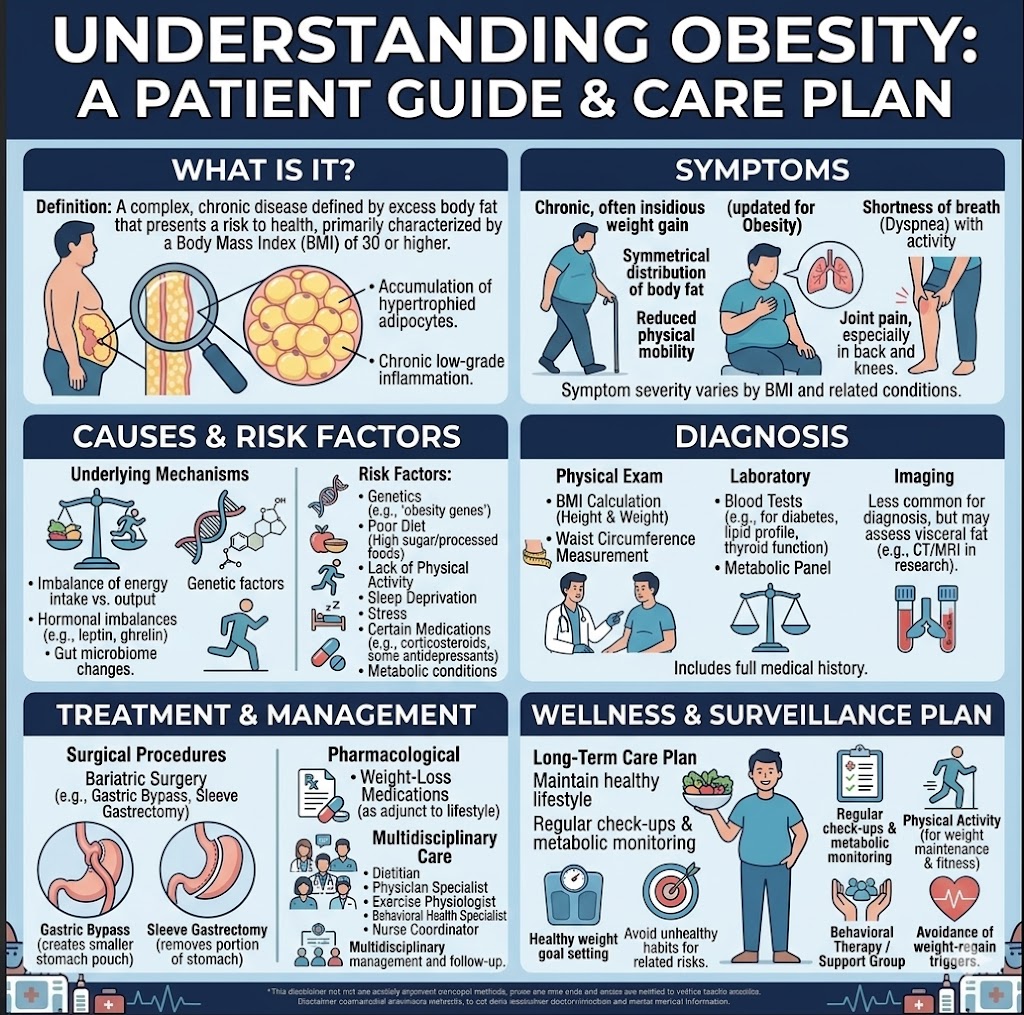
Obesity is a complex medical condition characterized by having an excessive amount of body fat. It's more than a cosmetic issue; it significantly increases the risk of serious health problems such as heart disease, type 2 diabetes, high blood pressure, high cholesterol, liver disease, sleep apnea, and certain cancers. Obesity often develops from a combination of genetic, biological, and environmental factors, along with lifestyle choices related to diet and physical activity. It occurs when the body consistently takes in more calories than it burns, storing the surplus as fat. Factors like calorie-dense diets, inactive lifestyles, stress, and even certain medical conditions can contribute. Even a modest amount of weight loss can significantly improve or prevent these associated health conditions.
Understanding the Condition
Obesity: Understanding, Managing, and Preventing Excess Body Fat
Understanding the Condition
Common Symptoms
Excess Body Weight and Fat: The primary indicator is having too much body fat, often reflected in a high body weight for one's height.
High Body Mass Index (BMI): BMI is a tool used to estimate body fat based on height and weight. For most adults, a BMI of 30 or higher indicates obesity. For some ethnic groups, like Asians, a BMI of 23 or higher may indicate increased health risks.
Increased Waist Circumference: Carrying excess fat around the waist can be a significant health risk. A waist measurement over 40 inches (102 cm) for men and over 35 inches (89 cm) for women often indicates a higher risk of weight-related health issues.
Associated Health Problems: While not direct symptoms of obesity, the presence of conditions like high blood pressure, high cholesterol, or sleep apnea can be indicators that obesity is impacting health.
Consultation Guide
Which Specialist to Meet
Consultation Guide
Understanding Risk Factors
Genetic Awareness: Be aware of your family history, as genetics can influence body fat distribution and metabolism. This knowledge can help in proactive management.
Environmental Factors: Identify and mitigate environmental influences, such as lack of access to healthy foods or safe spaces for physical activity, by advocating for community resources or making conscious choices.
Diagnostic Procedures
Body Mass Index (BMI) Calculation
A calculated value using your weight and height to estimate body fat. A BMI of 30 or higher generally indicates obesity; for some Asian populations, it's 23 or higher.
What to Expect
Your doctor measures your height and weight, then calculates your BMI. It's a quick, non-invasive process.
Waist Circumference Measurement
Measures fat around your abdomen, which signifies higher health risks. A waist over 40 inches (102 cm) for men or 35 inches (89 cm) for women is often concerning.
What to Expect
A healthcare professional uses a tape measure around your waist, usually above your hip bones. This is quick and painless.
Complete Cholesterol Test (Lipid Panel)
Measures cholesterol types (HDL, LDL, total) and triglycerides to assess heart disease risk.
What to Expect
A small blood sample is drawn, usually from a vein in your arm. You might need to fast (not eat or drink anything but water) for 9-12 hours beforehand. Expect a brief pinch.
Blood Glucose and Hemoglobin A1C Test
Measures current blood sugar (glucose) and average blood sugar over 2-3 months (A1C) to screen for diabetes and insulin resistance.
What to Expect
A blood sample is drawn, usually from a vein in your arm. Fasting may be required for a glucose test; usually not for A1C. A slight pinch may be felt.
Checks levels of liver enzymes and proteins, indicating liver damage or disease, common with obesity.
What to Expect
A small blood sample is taken, usually from a vein in your arm. Fasting may be necessary depending on the specific tests. The procedure is quick with minimal discomfort.
Thyroid Stimulating Hormone (TSH) Test
Screens for an underactive thyroid (hypothyroidism), a condition that can contribute to weight gain.
What to Expect
A blood sample is drawn from a vein in your arm. No specific preparation, like fasting, is typically needed.
Gastric Bypass (Roux-en-Y): This procedure creates a small stomach pouch and reroutes a portion of the small intestine, bypassing most of the stomach and the first section of the small intestine. It reduces food intake and nutrient absorption. (Duration: A permanent surgical change, demanding lifelong dietary changes, vitamin supplementation, and regular medical monitoring.)
Biliopancreatic Diversion with Duodenal Switch (BPD/DS): A complex two-step procedure that involves removing a large part of the stomach and significantly re-routing the small intestine. It severely limits food intake and nutrient absorption. (Duration: A permanent and complex surgical intervention, requiring strict, lifelong adherence to dietary guidelines, comprehensive vitamin and mineral supplementation, and ongoing medical oversight due to higher risk of nutritional deficiencies.)
Treatment Options
Begin by consulting your primary care physician, who can provide an initial assessment and coordinate care. They may refer you to specialists such as an endocrinologist (for hormone-related or metabolic issues), a registered dietitian or nutritionist (for diet and eating habits), an exercise physiologist (for physical activity guidance), a bariatric surgeon (if weight-loss surgery is an option), or a psychologist/therapist (for behavioral and emotional aspects of eating).
Preparations Before Your Visit
Book a doctor visit near me
Medications
Prescription Weight-Loss Medications: Medicines that help reduce appetite, increase feelings of fullness, or decrease the absorption of dietary fat, typically used in conjunction with lifestyle changes. (Duration: Often taken for several months to a year or longer, under strict medical supervision.)
Medical Procedures (Non-Surgical)
Surgical Procedures (Bariatric or Metabolic Surgery)
Medication Review: Periodically review your medications with your doctor, as some can contribute to weight gain, to explore alternative options if appropriate.
Prevention & Long-Term Wellbeing
Obesity is a complex medical condition characterized by having an excessive amount of body fat. It's more than a cosmetic issue; it significantly increases the risk of serious health problems such as heart disease, type 2 diabetes, high blood pressure, high cholesterol, liver disease, sleep apnea, and certain cancers. Obesity often develops from a combination of genetic, biological, and environmental factors, along with lifestyle choices related to diet and physical activity. It occurs when the body consistently takes in more calories than it burns, storing the surplus as fat. Factors like calorie-dense diets, inactive lifestyles, stress, and even certain medical conditions can contribute. Even a modest amount of weight loss can significantly improve or prevent these associated health conditions.
Lifestyle and Behavioral Therapies
Dietary Modifications: Adopting a balanced, calorie-controlled diet rich in whole foods, limiting processed items, sugary drinks, and large portions. Focus on mindful eating. (Duration: Ongoing, long-term commitment.)
Increased Physical Activity: Regular exercise, aiming for at least 150-300 minutes of moderate-intensity activity per week, combined with strength training, to burn calories, build muscle, and boost metabolism. (Duration: Ongoing, long-term commitment.)
Behavioral Therapy: Working with a therapist or counselor to address eating behaviors, emotional triggers for eating, and stress management, developing healthier coping mechanisms. (Duration: Can range from several weeks to many months, depending on individual needs.)
Intragastric Balloon Placement: A temporary, non-surgical procedure where a saline-filled silicone balloon is placed into the stomach. It helps reduce food intake by occupying space and promoting earlier feelings of fullness. (Duration: The balloon typically remains in place for approximately 6 months before being removed. Requires continued lifestyle changes for sustained results.)
Sleeve Gastrectomy: A surgical procedure that removes about 80% of the stomach, creating a smaller, tube-shaped stomach. This limits the amount of food that can be consumed and affects hunger-regulating hormones. (Duration: This is a permanent alteration to the digestive system, requiring lifelong dietary modifications, vitamin supplementation, and medical follow-up.)
Healthy Eating Habits
Balanced Diet: Prioritize a diet rich in whole foods, including fruits, vegetables, lean proteins, and whole grains. Limit intake of processed foods, sugary drinks, unhealthy fats, and oversized portions.
Mindful Eating: Pay attention to hunger and fullness cues, eat slowly, and avoid distracted eating to recognize when you've had enough.
Regular Physical Activity: Incorporate daily movement into your routine. Aim for consistent moderate-intensity aerobic activity and muscle-strengthening exercises.
Reduce Sedentary Time: Minimize prolonged sitting and screen time by taking regular breaks to stand and move throughout the day.
Behavioral and Emotional Support
Stress Management: Develop healthy ways to cope with stress, anxiety, and emotional challenges, rather than using food. Techniques like meditation, yoga, or counseling can be beneficial.
Support Systems: Seek support from family, friends, or support groups to stay motivated and accountable in your weight management journey.
Regular Medical Check-ups and Monitoring
Ongoing Health Monitoring: Regularly visit your healthcare professional to monitor your weight, BMI, waist circumference, blood pressure, cholesterol, blood sugar levels, and liver function.
Addressing Complications: Work with your medical team to manage any associated health conditions, such as diabetes, heart disease, or sleep apnea, to prevent further complications.
Tags & Topics
Notice an error or need an update?
Help us keep medical information accurate. Report incorrect info or suggest an edit.


