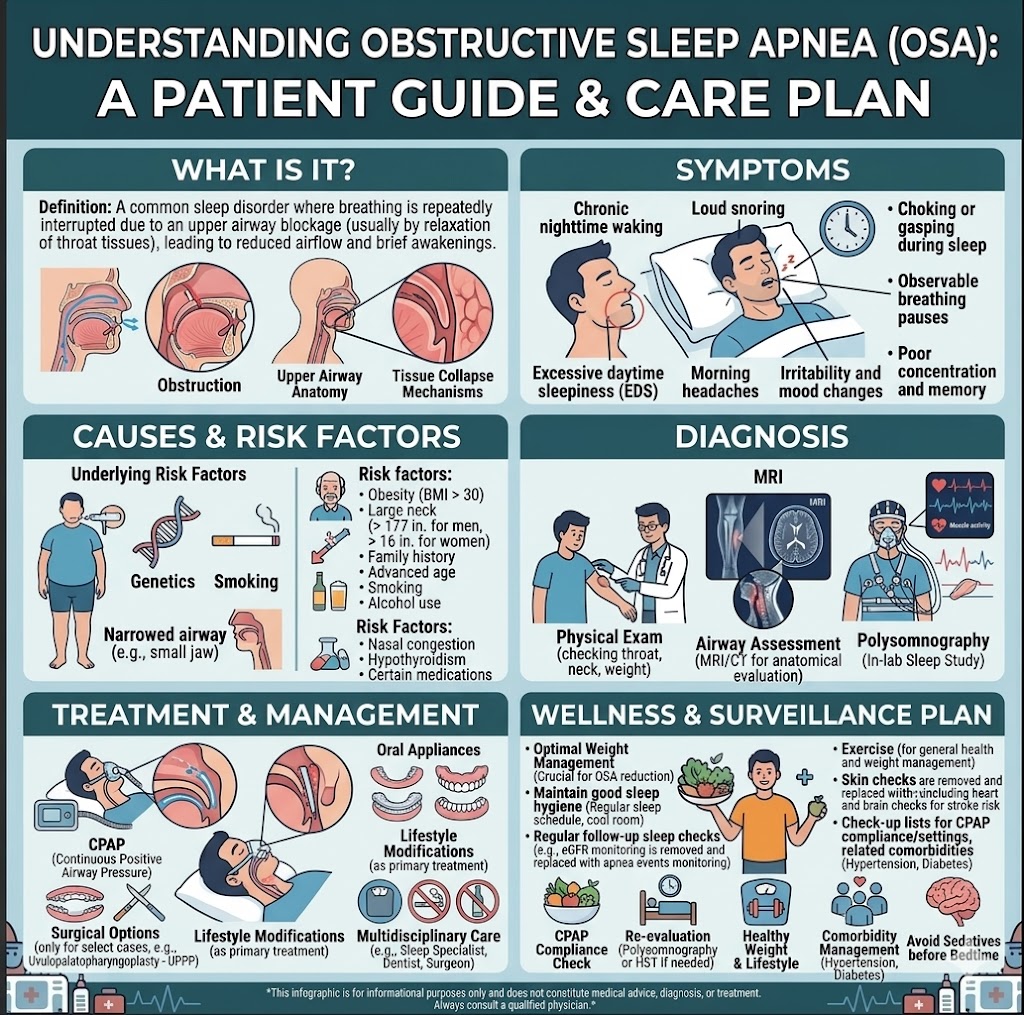
Obstructive Sleep Apnea (OSA) is the most common sleep-related breathing disorder. It occurs when throat muscles relax during sleep, temporarily blocking the airway. This leads to repeated pauses in breathing, often marked by loud snoring, and disrupts restful sleep. OSA can cause daytime fatigue and has serious health implications if left untreated.
Understanding the Condition
Understanding Obstructive Sleep Apnea (OSA)
Understanding the Condition
Common Symptoms
Nighttime Symptoms: Loud snoring, often noticed by a partner; breathing pauses during sleep; waking up gasping or choking; frequent nighttime urination.
Daytime Symptoms: Excessive daytime sleepiness; waking with a dry mouth or sore throat; morning headaches; difficulty concentrating; mood changes (e.g., depression, irritability); high blood pressure; decreased interest in sex.
Consultation Guide
Which Specialist to Meet
Before your appointment, keep a detailed sleep diary for a week, noting your sleep times, how often you wake, daytime energy levels, and any observed symptoms. List all medications you take, any existing health conditions, and prepare a list of questions for your doctor. Be ready to discuss your sleep habits, lifestyle, and any symptoms noticed by a sleep partner.
Book a doctor visit near me
Weight Loss: For individuals with obesity, losing even a small amount of weight can improve or resolve OSA symptoms by reducing fat deposits around the airway. (Duration: Ongoing)
Septoplasty: Surgery to straighten a deviated septum (the wall dividing the nostrils) to improve nasal airflow, which can reduce OSA symptoms caused or worsened by nasal obstruction. (Duration: One-time surgery, recovery varies)
Regular Medical Follow-ups: Consistent visits with your sleep specialist are crucial to monitor treatment effectiveness, adjust devices, and address any new symptoms or complications.
Adherence to Treatment: Using CPAP or oral appliances consistently as prescribed is vital for symptom control and preventing serious health complications.
Cardiovascular Health Monitoring: OSA significantly increases the risk of high blood pressure, heart attack, and stroke. Regular check-ups to monitor blood pressure and heart health are essential.
Consultation Guide
Obstructive Sleep Apnea (OSA) is the most common sleep-related breathing disorder. It occurs when throat muscles relax during sleep, temporarily blocking the airway. This leads to repeated pauses in breathing, often marked by loud snoring, and disrupts restful sleep. OSA can cause daytime fatigue and has serious health implications if left untreated.
Start by consulting your primary care doctor. They may refer you to a sleep specialist (pulmonologist or neurologist with sleep training) for diagnosis and management. Depending on the cause or complications, you might also see an Ear, Nose, and Throat (ENT) specialist, or a cardiologist if heart issues are present.
Preparations Before Your Visit
Tonsillectomy/Adenoidectomy: Removal of enlarged tonsils and/or adenoids, particularly effective in children where enlarged tissues are a common cause of OSA. (Duration: One-time surgery, recovery 10-14 days)
Maintain a Healthy Weight: Obesity is a major risk factor; maintaining a healthy body mass index (BMI) can prevent or reduce the severity of OSA.
Avoid Smoking: Smoking irritates and inflames the airways, increasing the risk and severity of OSA.
Limit Alcohol and Sedatives: These substances relax throat muscles, making airway collapse more likely during sleep.
Manage Nasal Congestion: Treating chronic allergies or other causes of nasal congestion can improve breathing efficiency and reduce OSA risk.
Long-Term Monitoring and Management
Diagnostic Procedures
Polysomnography (Sleep Study)
A comprehensive test used to diagnose sleep disorders, including OSA. It records various body functions during sleep to identify breathing pauses and sleep disruptions. This can be done in a sleep lab or at home.
What to Expect
If done in a sleep lab, you will spend a night in a specialized facility. Technicians will attach sensors to your scalp (to measure brain waves), face (eye movements), chest (heart rate, breathing effort), abdomen, and a clip on your finger (blood oxygen levels). These sensors record data while you sleep in a private room. If it's a home sleep apnea test, you'll be given a portable device with simpler sensors (often monitoring breathing rate, airflow, and blood oxygen) to use in your own bed, then return the device for analysis.
Pre-Surgical Disclosure: Always inform your surgeon and anesthesiologist about your OSA diagnosis before any procedure, as it can affect anesthesia and recovery.
Treatment Options
Avoid Alcohol and Sedatives: Alcohol and certain medications relax throat muscles, worsening OSA. Avoiding them before bed can help. (Duration: Nightly)
Sleep Position Adjustment: Sleeping on your side instead of your back can prevent the tongue and soft palate from falling back and blocking the airway. (Duration: Nightly)
Quit Smoking: Smoking can worsen airway inflammation and contribute to OSA. (Duration: Permanent)
Treat Nasal Congestion: Managing chronic nasal congestion (e.g., with decongestants or nasal sprays) can improve nighttime breathing. (Duration: As needed)
Therapies and Devices
Continuous Positive Airway Pressure (CPAP): The most common and effective treatment, involving a mask worn during sleep that delivers a continuous stream of air pressure to keep the airway open. (Duration: Nightly, long-term)
Oral Appliances: Custom-fitted dental mouthpieces designed to push the lower jaw and tongue slightly forward during sleep, helping to keep the airway open. (Duration: Nightly, long-term)
Surgical Procedures
Tracheostomy: A rare, last-resort surgery for severe, life-threatening OSA where other treatments have failed. It involves creating a permanent opening in the windpipe to bypass the upper airway. (Duration: Potentially lifelong)
Other Surgical Options: Various other surgeries exist to stiffen or remove excess tissue in the throat or move jaw bones forward to enlarge the airway. These are considered based on individual anatomy and OSA severity. (Duration: One-time surgery, recovery varies)
Mental Health Support: Address mood changes, depression, and irritability that can result from chronic sleep deprivation, seeking counseling or treatment as needed.
Prevention & Long-Term Wellbeing
Lifestyle and Home Remedies
Prevention
Tags & Topics
Notice an error or need an update?
Help us keep medical information accurate. Report incorrect info or suggest an edit.


