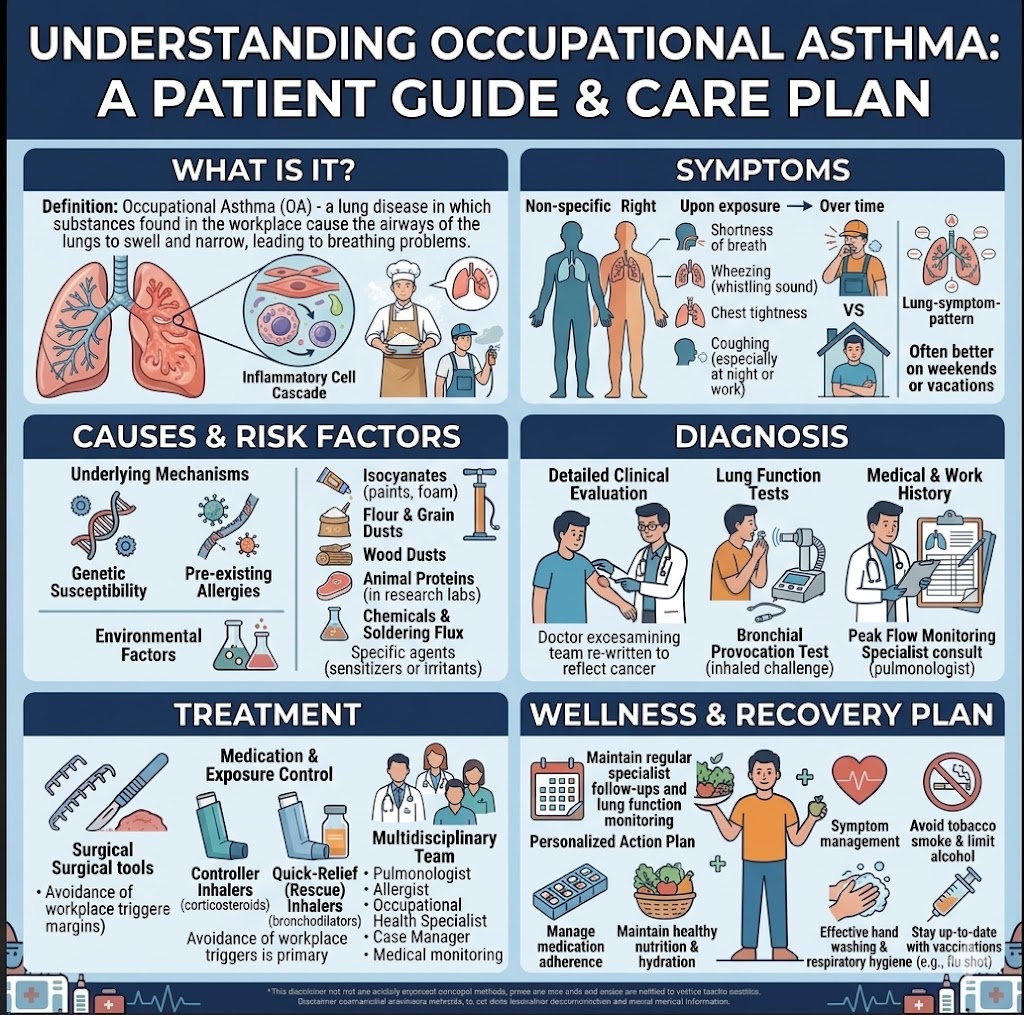
Occupational asthma, also known as work-related asthma, is a respiratory condition triggered by inhaling fumes, dust, gases, or other harmful substances while on the job. These workplace irritants provoke an immune response that causes the airways to swell, narrow, and produce excess mucus. This makes breathing difficult and can lead to long-term health issues. Recognizing the triggers and managing the condition early is vital, as prolonged exposure to these substances without treatment can cause permanent, irreversible damage to your lungs.
Understanding the Condition
Understanding Occupational Asthma: Causes, Symptoms, and Management
Understanding the Condition
Common Symptoms
Shortness of Breath: A feeling of breathlessness or struggling to get enough air into your lungs, which may worsen during or immediately after your work shift.
Chest Tightness: A sensation of pressure, squeezing, or heaviness in the chest area, making deep breaths feel restricted.
Wheezing and Coughing: A high-pitched whistling sound when exhaling, often accompanied by a persistent dry or mucus-producing cough.
Upper Respiratory Irritation: Symptoms resembling allergies, such as a runny nose, nasal congestion, and itchy, red, or watery eyes.
Fluctuating Symptom Patterns: Symptoms that typically flare up during workdays, improve or disappear entirely during weekends or vacations, and return upon resuming work. Over time, these symptoms may become constant.
Consultation Guide
Which Specialist to Meet
You should consult a pulmonologist (a doctor specializing in lung diseases) or an allergist/immunologist (a specialist in allergies and immune system reactions).
Preparations Before Your Visit
Before your appointment, keep a detailed daily log tracking when your symptoms occur in relation to your work hours. Obtain and bring the Safety Data Sheets (SDS) for any chemical substances, dusts, or materials you handle at work. Prepare a complete list of all current medications, including inhalers and over-the-counter drugs.
Book a doctor visit near me
A diagnostic procedure used to identify if specific workplace allergens (like animal dander, mold, or latex) are triggering your symptoms.
Long-Term Control Medications: Daily inhaled treatments that reduce inflammation, swelling, and mucus production in your airways, preventing symptoms from starting. (Duration: Typically required daily on a long-term, ongoing basis.)
Quick-Relief (Rescue) Inhalers: Inhaled medications that rapidly relax the tightened muscles around your airways to resolve sudden symptoms or asthma attacks. (Duration: Used strictly on an as-needed basis for immediate symptom relief; works within minutes.)
Consultation Guide
Occupational asthma, also known as work-related asthma, is a respiratory condition triggered by inhaling fumes, dust, gases, or other harmful substances while on the job. These workplace irritants provoke an immune response that causes the airways to swell, narrow, and produce excess mucus. This makes breathing difficult and can lead to long-term health issues. Recognizing the triggers and managing the condition early is vital, as prolonged exposure to these substances without treatment can cause permanent, irreversible damage to your lungs.
You will perform a baseline spirometry test first. Then, you will inhale small, gradually increasing amounts of a mist containing methacholine, a substance that causes mild narrowing of the airways in people with asthma. Your lung function will be measured after each dose. If your lung function drops significantly, the test is positive. A rescue medication is immediately administered at the end to reverse any constriction.
Diagnostic Procedures
A fundamental lung function test that measures how much air you can inhale and how quickly and forcefully you can exhale it.
What to Expect
During the test, you will sit upright and place a mouthpiece in your mouth, wearing a nose clip. You will take a deep breath in and blow out as hard and fast as possible into a tube connected to a machine. This process is usually repeated a few times, and may be performed again after you inhale a medicated mist to see if your airways open up.
A simple diagnostic monitoring method that tracks how fast you can push air out of your lungs under different circumstances.
What to Expect
You will be given a small, portable, handheld plastic device called a peak flow meter. You will take a deep breath, place your mouth around the mouthpiece, and blow out as hard and fast as possible in a single blow. You will be asked to perform this test several times a day both at home and at work to document changes in your breathing patterns.
Methacholine Challenge Test
A lung function test used to determine if your airways are hypersensitive, which is a hallmark sign of asthma.
What to Expect
Allergy Skin Prick Testing
What to Expect
A nurse will clean your skin, usually on your forearm or back. Small drops of various allergen extracts will be placed on the skin, and a tiny device will be used to lightly prick or scratch the skin's surface through the drops. You will wait about 15 minutes to see if small, itchy red bumps appear, indicating an allergy to those specific substances.
Prevention & Long-Term Wellbeing
Physical and Lifestyle Therapies
Complete Trigger Avoidance: Modifying your job tasks, switching to safer materials, improving work ventilation, or relocating to a different work environment to eliminate exposure to the offending substance. (Duration: Permanent lifestyle and career adjustment.)
Pulmonary Rehabilitation: A structured program combining breathing retraining, physical exercise, and education to help strengthen your lungs and improve overall stamina. (Duration: Usually spans several weeks to months, with techniques practiced lifelong.)
Prevention and Long-Term Wellbeing
Employ Workplace Safety Controls: Use appropriate Personal Protective Equipment (PPE) such as fitted respirators or masks, ensure work areas are well-ventilated, and follow all safety protocols for handling chemicals.
Quit Smoking: Eliminating tobacco use and avoiding secondhand smoke reduces chronic airway irritation and improves your overall lung defenses.
Stay Current on Vaccinations: Receive an annual influenza vaccine and recommended pneumonia vaccines to prevent respiratory infections that can trigger severe asthma attacks.
Manage Your Weight: Maintaining a healthy weight reduces physical pressure on your lungs and chest wall, which can make breathing easier and lower overall systemic inflammation.
Be Cautious with Pain Relievers: Avoid certain nonsteroidal anti-inflammatory drugs (NSAIDs) if you notice they aggravate your asthma, and consult your doctor about safe pain-relief alternatives.
Tags & Topics
Notice an error or need an update?
Help us keep medical information accurate. Report incorrect info or suggest an edit.


