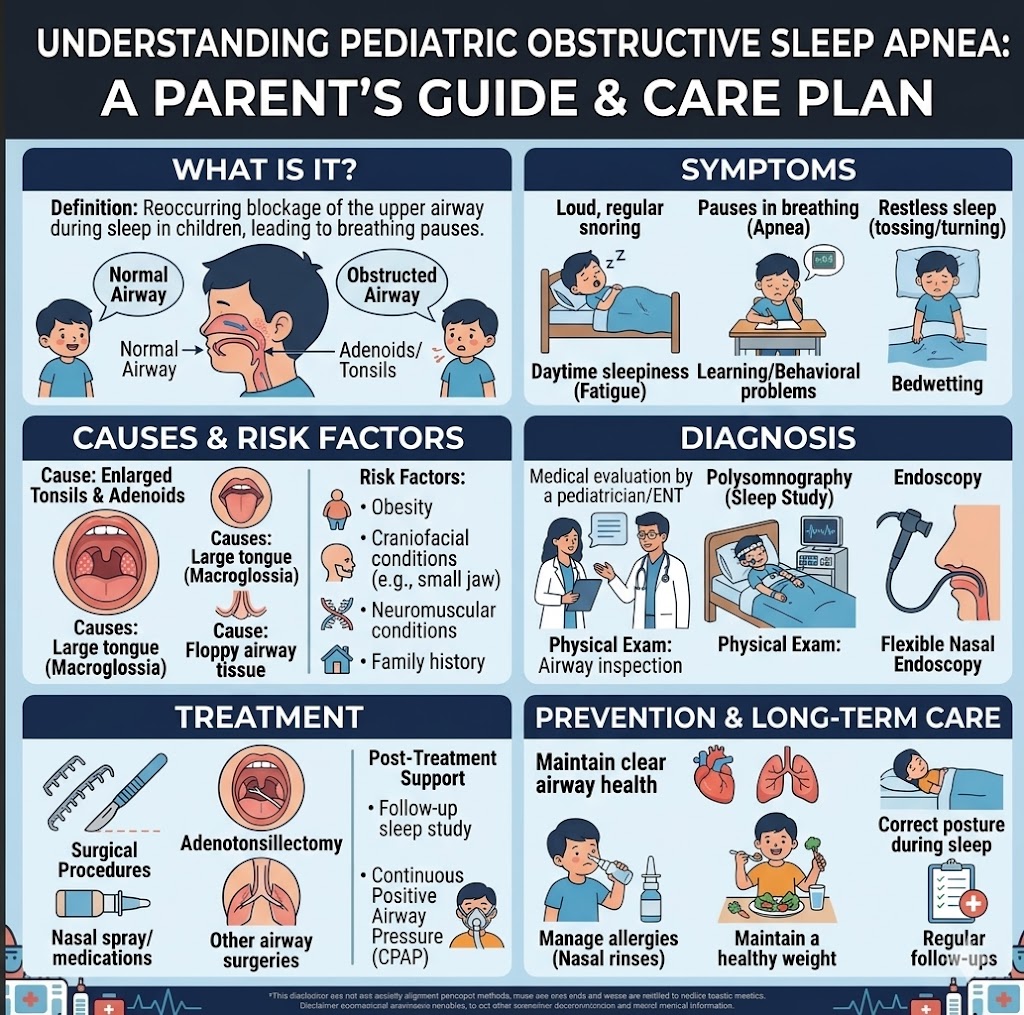
Childhood obstructive sleep apnea is a condition where a child's breathing becomes partly or completely blocked during sleep. This causes brief pauses in breathing that can happen many times each night. These blockages occur when the upper airway, the passage from the nose and mouth to the windpipe, narrows or closes. Unlike adults who often experience daytime sleepiness, children with sleep apnea may show behavioral issues like hyperactivity or difficulty focusing. While obesity can be a factor, enlarged tonsils and adenoids are the most common cause in children. Early diagnosis and treatment are crucial to prevent complications affecting a child's growth, learning, behavior, and heart health.
Understanding the Condition
Childhood Sleep Apnea (Obstructive Type)
Understanding the Condition
Common Symptoms
Noisy Breathing: Loud snoring, snorting, gasping, or choking sounds during sleep.
Breathing Pauses: Brief, noticeable stops in breathing during sleep.
Restless Sleep: Frequent tossing, turning, or unusual sleep positions.
Mouth Breathing: Consistently breathing through the mouth while asleep or awake.
Night Sweats: Excessive sweating during sleep.
Bedwetting: New or recurring bedwetting after a period of being dry.
Morning Headaches: Headaches upon waking that often subside during the day.
Learning & Attention Problems: Difficulty concentrating, poor memory, or struggles in school.
Behavioral Changes: Hyperactivity, impulsivity, irritability, or aggression.
Poor Growth: Slower than expected weight gain or growth.
Daytime Sleepiness: Unusual tiredness, falling asleep during quiet activities or school.
Consultation Guide
Which Specialist to Meet
Start by consulting your child's pediatrician. They may then refer you to specialists like a pediatric sleep medicine doctor (a pediatric pulmonologist or neurologist specializing in sleep disorders) or an ear, nose, and throat (ENT) specialist.
Preparations Before Your Visit
The doctor will ask about symptoms and medical history, then perform a routine physical exam, checking the back of the throat, nose, and jaw. This is a quick, painless part of the initial visit.
Polysomnography (Sleep Study)
Adhere to Treatment Plan: Consistent adherence to prescribed treatments (surgical follow-up, CPAP, medication) is crucial for managing symptoms and preventing complications.
Monitor for Recurrence: Stay vigilant for returning symptoms (snoring, restless sleep, behavioral changes) even after successful treatment, and report them to your doctor.
Address Co-existing Conditions: Work with providers to manage other health issues like genetic syndromes or craniofacial abnormalities, which complicate sleep apnea.
Consultation Guide
Childhood obstructive sleep apnea is a condition where a child's breathing becomes partly or completely blocked during sleep. This causes brief pauses in breathing that can happen many times each night. These blockages occur when the upper airway, the passage from the nose and mouth to the windpipe, narrows or closes. Unlike adults who often experience daytime sleepiness, children with sleep apnea may show behavioral issues like hyperactivity or difficulty focusing. While obesity can be a factor, enlarged tonsils and adenoids are the most common cause in children. Early diagnosis and treatment are crucial to prevent complications affecting a child's growth, learning, behavior, and heart health.
Adenotonsillectomy: Surgical removal of enlarged tonsils and adenoids, often the primary cause of blockages in children. This is a common and often highly effective treatment. (Duration: A single surgical procedure, with recovery typically lasting 1-2 weeks.)
Maintain a Healthy Weight: Encourage balanced diet and regular activity to prevent or manage obesity, a risk factor for sleep apnea, especially in older children.
Manage Allergies and Asthma: Effectively treating conditions causing nasal congestion or airway inflammation can reduce obstructions and improve breathing.
Establish Consistent Sleep Routines: Ensure regular bedtimes and wake times in a dark, quiet, cool environment for healthy sleep.
Long-Term Monitoring and Support
Diagnostic Procedures
The doctor will examine your child's mouth, nose, and throat to look for enlarged tonsils/adenoids or other airway issues.
What to Expect
This highly accurate test monitors brain activity, breathing, heart rate, and oxygen levels during sleep to diagnose sleep apnea.
What to Expect
Your child stays overnight in a sleep lab. Sensors are painlessly attached to their head and body to record data. A parent can usually stay. The sensors are removed in the morning.
Overnight Oximetry (Simplified Test)
A simpler screening test that monitors blood oxygen levels and heart rate overnight, often at home, if a full sleep study is difficult.
What to Expect
A small, soft clip (oximeter) on your child's finger or toe painlessly records oxygen levels and heart rate throughout the night. It's less intrusive than a full sleep study.
Treatment Options
Before the visit, note your child's sleep patterns, snoring, breathing pauses, and daytime behaviors. List all current medications and questions for the doctor.
Book a doctor visit near me
Surgical Procedures
Continuous Positive Airway Pressure (CPAP): A machine that delivers a continuous stream of air through a mask worn during sleep, keeping the airway open. Used when surgery isn't effective or suitable. (Duration: Long-term, nightly use for as long as needed, potentially for years.)
Oral Appliances: Custom-fitted mouthpieces worn during sleep that help reposition the jaw or tongue to keep the airway open. More common for older children or specific issues. (Duration: Long-term, nightly use. Regular adjustments may be needed.)
Medications
Nasal Steroid Sprays: Used to reduce swelling and inflammation in the nasal passages, particularly if allergies or mild adenoid enlargement contribute to breathing difficulties. (Duration: Daily use for several weeks to months, as prescribed.)
Orthodontic Treatment: Dental or orthodontic interventions (e.g., palatal expansion) may widen the upper jaw and create more airway space. (Duration: Can range from several months to a few years, depending on the intervention.)
Regular Medical Check-ups: Schedule routine follow-up appointments with your child's pediatrician and sleep specialist to monitor treatment effectiveness and address concerns.
Prevention & Long-Term Wellbeing
Lifestyle and Other Therapies
Weight Management: If obesity is a factor, healthy diet and physical activity can reduce airway soft tissue and improve breathing. (Duration: Ongoing, long-term commitment to a healthy lifestyle.)
Positional Therapy: Sleeping on the side (under guidance) may sometimes reduce apnea severity by preventing the tongue from falling back. (Duration: Implemented nightly as long as beneficial and safe.)
Prevention and Lifestyle Management
Tags & Topics
Notice an error or need an update?
Help us keep medical information accurate. Report incorrect info or suggest an edit.


