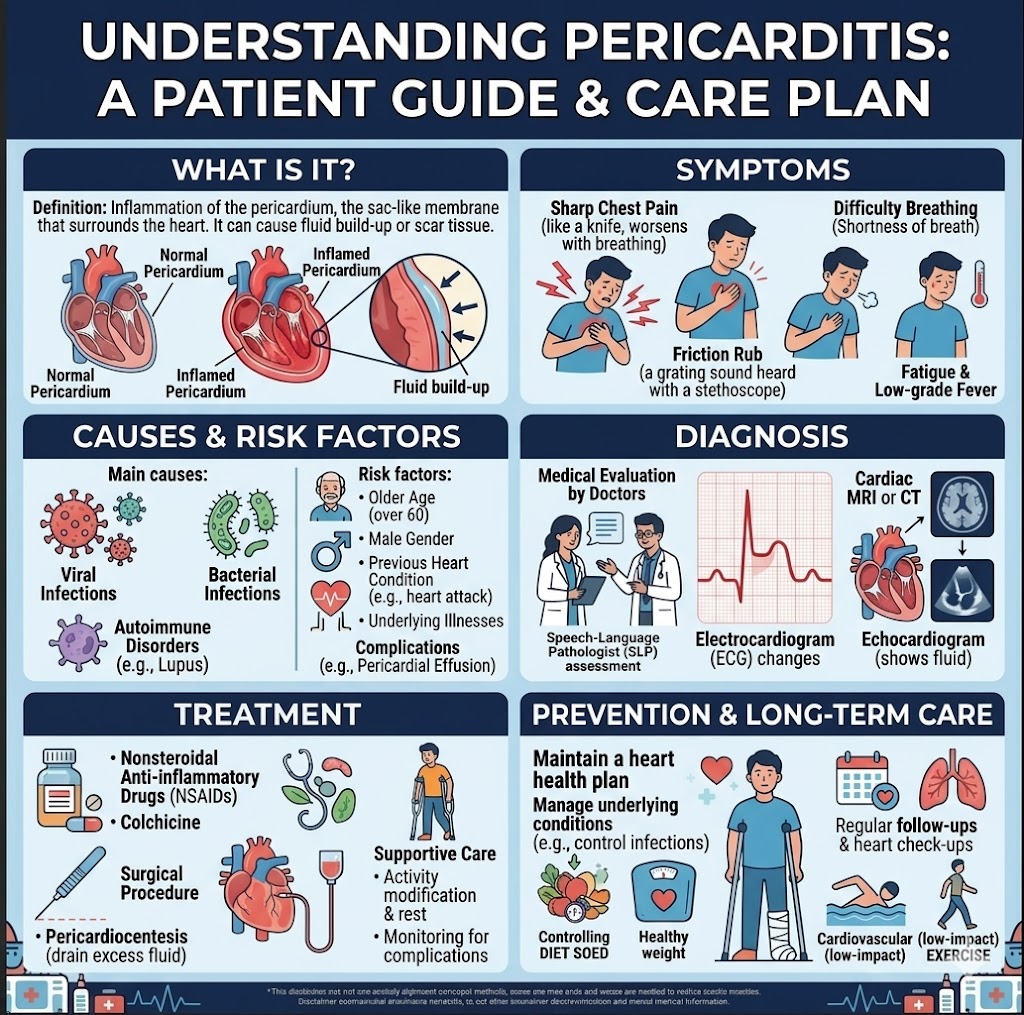
Pericarditis is a condition where the thin, sac-like tissue surrounding your heart, called the pericardium, becomes swollen and irritated. This often leads to sharp chest pain, which occurs as the inflamed layers of the pericardium rub against each other. While pericarditis is frequently mild and may resolve without specific treatment, more serious cases might require medication or, rarely, surgery. Early diagnosis and treatment are crucial to minimize the risk of long-term complications.
Understanding the Condition
Pericarditis: Understanding the Heart's Protective Sac
Understanding the Condition
Common Symptoms
Chest Pain: The most common symptom, typically sharp or stabbing, but can also be dull, achy, or pressure-like. It's usually felt behind the breastbone or on the left side of the chest. The pain may spread to the left shoulder and neck, or to both shoulders. It often worsens when coughing, lying down, or taking a deep breath, and tends to improve when sitting up or leaning forward.
Fatigue: A general feeling of weakness or being unwell.
Swelling: Swelling in the legs, feet, or belly area (abdomen).
Low-grade fever: A mild elevation in body temperature.
Heart Palpitations: A sensation of a pounding or racing heartbeat.
Shortness of Breath: Difficulty breathing, especially when lying down.
Consultation Guide
Which Specialist to Meet
Before your appointment, gather information about your symptoms, including when they started, how severe they are, and what makes them better or worse. List any other health conditions you have and all medications (including over-the-counter drugs and supplements) you are currently taking. Be prepared to discuss your medical history and any recent infections or injuries. Write down any questions you have for the doctor.
Book a doctor visit near me
Rest and activity modification: Limiting physical activity and ensuring adequate rest is crucial for reducing inflammation and promoting healing. Strenuous exercise should be avoided until symptoms resolve and your doctor approves. (Duration: Days to weeks, depending on severity and recovery progress.)
Over-the-counter pain and inflammation relief: Non-steroidal anti-inflammatory medications can help manage chest pain and reduce general inflammation. Always follow dosage instructions or your doctor's advice. (Duration: As needed for symptom relief, typically short-term.)
Prescription anti-inflammatory medications: Stronger prescription anti-inflammatory drugs are often the first line of treatment for moderate to severe pericarditis to reduce inflammation and pain. (Duration: Typically weeks to a few months, with gradual reduction as symptoms improve.)
Corticosteroids: Powerful anti-inflammatory drugs that may be prescribed for severe symptoms or when other treatments are ineffective. They are usually used for short periods due to potential side effects. (Duration: Short courses, often tapered slowly over several weeks to prevent recurrence and side effects.)
Pericardiocentesis: This procedure involves using a needle and a thin tube (catheter) to drain excess fluid (pericardial effusion) from around the heart, relieving pressure and improving heart function. (Duration: A one-time procedure; the catheter may remain in place for a few days for continued drainage.)
Pericardiectomy: In rare cases of chronic, severe pericarditis where the pericardium has become thickened and scarred (constrictive pericarditis), surgical removal of the damaged pericardium may be necessary to allow the heart to function properly. (Duration: A one-time surgical procedure.)
Consultation Guide
A chest X-ray uses a small amount of radiation to create images of your heart, lungs, blood vessels, airways, and the bones of your chest and spine. It can reveal fluid around the heart (pericardial effusion) or other lung problems that might cause chest pain.
You will lie on a motorized table that slides into a large, doughnut-shaped machine. The table will move slowly through the scanner while it takes images. You may hear humming or clicking sounds. In some cases, a contrast dye may be injected into a vein to highlight specific areas, which might cause a warm sensation. The scan usually takes 10 to 30 minutes.
Diagnostic Procedures
Pericarditis is a condition where the thin, sac-like tissue surrounding your heart, called the pericardium, becomes swollen and irritated. This often leads to sharp chest pain, which occurs as the inflamed layers of the pericardium rub against each other. While pericarditis is frequently mild and may resolve without specific treatment, more serious cases might require medication or, rarely, surgery. Early diagnosis and treatment are crucial to minimize the risk of long-term complications.
Initially, you should consult your primary care doctor. If pericarditis is suspected, they will likely refer you to a cardiologist, a doctor specializing in heart conditions, for further diagnosis and treatment.
Preparations Before Your Visit
Electrocardiogram (ECG or EKG)
An ECG is a quick, non-invasive test that records the electrical signals of your heart. It helps assess how fast or slow your heart is beating and can detect abnormal heart rhythms or signs of heart inflammation.
What to Expect
You will lie down while several small, sticky patches (electrodes) are placed on your chest, and sometimes on your arms or legs. Wires connect these patches to a machine that records your heart's electrical activity. The test is painless and typically takes only a few minutes.
This test uses sound waves to create moving pictures of your heart. It shows the heart's size, shape, and how well it's pumping blood. An echocardiogram can help identify fluid buildup around the heart or changes in the pericardium.
What to Expect
You will lie on an examination table, usually on your left side. A gel will be applied to your chest, and a handheld device called a transducer will be moved across your skin. The transducer sends sound waves that bounce off your heart, creating images on a monitor. You may feel slight pressure from the transducer. The test is painless and usually takes 30 to 60 minutes.
What to Expect
You will stand or sit in front of an X-ray plate, and a technician will position you correctly. You may be asked to hold your breath briefly while the image is taken. The procedure is quick, lasting only a few minutes, and is painless.
CT Scan (Computerized Tomography)
A CT scan uses specialized X-ray equipment and computer processing to create detailed cross-sectional images, or 'slices,' of your bones, blood vessels, and soft tissues. It provides more detailed views of the pericardium and surrounding structures than a standard X-ray.
What to Expect
Treatment Options
Medications
Specific anti-inflammatory agent: A medication specifically used to treat and prevent recurrent pericarditis by suppressing inflammation. (Duration: Several months to a year or more, often in combination with other anti-inflammatory drugs.)
Adhere to prescribed medications: If medications are prescribed to prevent recurrence, it is vital to take them exactly as directed, even if you feel better, to maintain control over inflammation.
Prevention & Long-Term Wellbeing
Prevention
Practice good hygiene: Regularly washing your hands thoroughly with soap and water can help prevent the spread of infections, including viral infections that might trigger pericarditis.
Avoid contact with sick individuals: Limit exposure to people experiencing viral or flu-like illnesses. If you are sick, take precautions like covering your mouth when coughing or sneezing to prevent exposing others.
Stay up-to-date on vaccinations: Getting recommended vaccines, such as those for influenza, measles, mumps, rubella, and COVID-19, can help protect against viral diseases that may lead to heart inflammation.
Manage underlying health conditions: Effectively treating and managing chronic conditions like autoimmune diseases (e.g., rheumatoid arthritis), kidney failure, or certain cancers can reduce your risk of developing pericarditis.
Long-Term Monitoring and Lifestyle
Regular medical follow-ups: Even after recovering from pericarditis, regular check-ups with your doctor or a heart specialist are important to monitor your heart health and detect any signs of recurrence or potential complications early.
Maintain a heart-healthy lifestyle: Eating a balanced diet, engaging in regular moderate exercise (as advised by your doctor), managing stress, and avoiding smoking are all crucial for supporting overall heart health and reducing future risks.
Tags & Topics
Notice an error or need an update?
Help us keep medical information accurate. Report incorrect info or suggest an edit.

