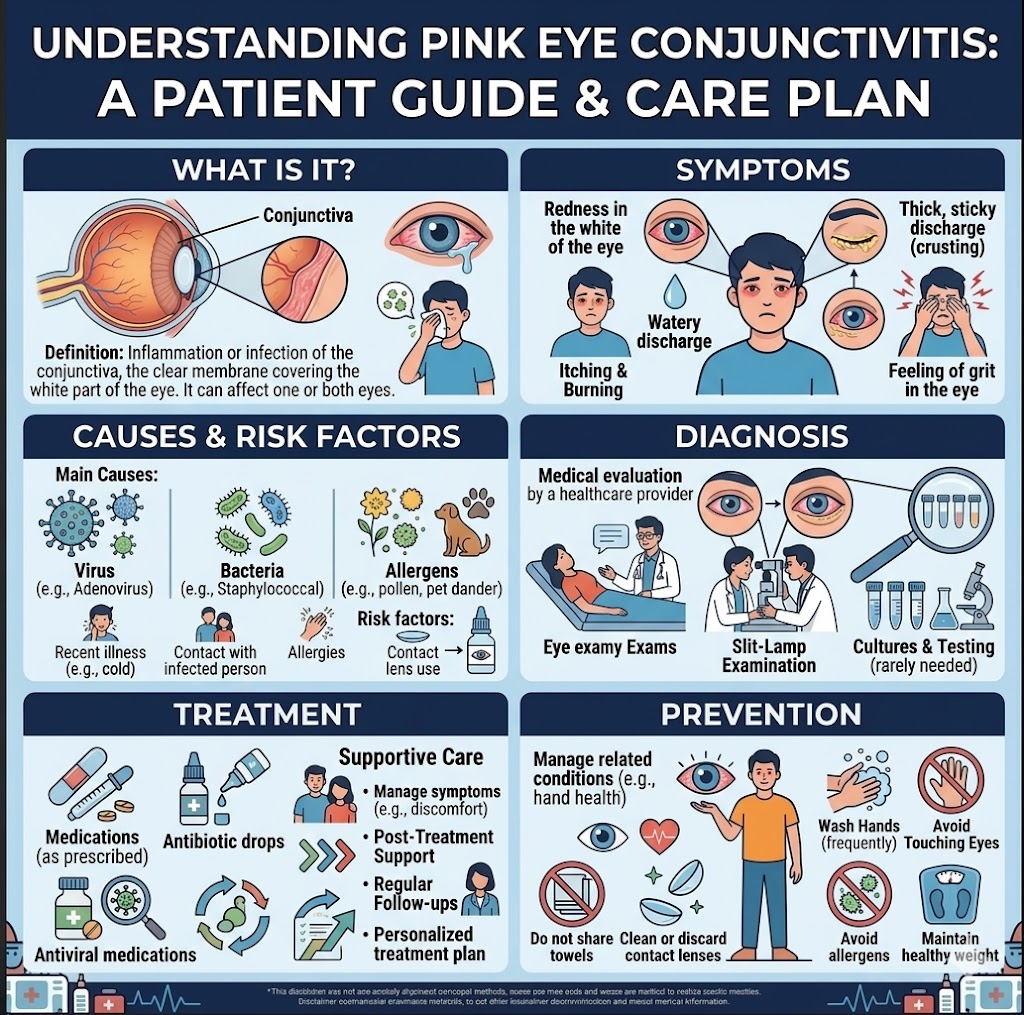
Pink eye, medically known as conjunctivitis, is an inflammation of the conjunctiva, a thin, clear membrane that covers the white part of your eye and lines the inside of your eyelids. This inflammation causes tiny blood vessels in the conjunctiva to swell and become more noticeable, giving the eye a reddish or pink appearance. Pink eye is commonly caused by viral or bacterial infections, allergic reactions, or, in newborns, a blocked tear duct. While it can be irritating, pink eye rarely affects vision. Many forms are contagious, making early diagnosis and preventive measures important to limit its spread.
Understanding the Condition
Pink Eye (Conjunctivitis): A Guide for Non-Medical Persons
Understanding the Condition
Common Symptoms
Redness: Redness in one or both eyes, making the whites appear pink or reddish.
Itchiness: An uncomfortable itching sensation in one or both eyes.
Gritty Feeling: A feeling that something is constantly in your eye, like sand or grit.
Discharge: A watery or thick discharge from one or both eyes, which can form a crust overnight, potentially sealing your eyes shut in the morning.
Light Sensitivity: Increased sensitivity or discomfort when exposed to light, also known as photophobia.
Consultation Guide
Which Specialist to Meet
You should consult a primary care physician (such as a family doctor or pediatrician) for initial evaluation. If symptoms are severe, persistent, or if you wear contact lenses and symptoms do not improve quickly, an ophthalmologist (an eye medical doctor) or an optometrist (an eye care professional) should be consulted.
Preparations Before Your Visit
Before your visit, note down all your symptoms, including when they started, their severity, and anything that seems to make them better or worse. Inform your doctor about any recent exposures to sick individuals or known allergens, and list all current medications, including eye drops. If you wear contact lenses, bring them with you and be prepared to discuss your lens hygiene. Prepare a list of questions to ask your doctor.
Book a doctor visit near me
A doctor will examine your eyes, eyelids, and assess your vision while discussing your symptoms and medical history.
Your doctor will use a small light, possibly with magnification, to look closely at your eyes. They will ask detailed questions about your symptoms, recent activities, and any contact with others who might be sick. This process is generally quick and painless.
If a bacterial or certain viral infection is suspected, a small sample of the eye's discharge may be collected to identify the specific germ causing the infection.
Cool or Warm Compresses: Apply a clean, damp cloth to your eyes to help ease discomfort and loosen any crusting. Use separate cloths for each eye and discard after use. (Duration: As needed, several times a day, until symptoms subside.)
Artificial Tears: Over-the-counter lubricating eye drops can help relieve dryness and irritation. (Duration: As needed, until symptoms resolve.)
Good Hygiene: Frequent hand washing, avoiding touching your eyes, and not sharing personal items are crucial. (Duration: Ongoing during the infection period.)
Contact Lens Holiday: Stop wearing contact lenses immediately at the first sign of pink eye. (Duration: Until cleared by your eye care professional, typically 1-2 weeks after symptoms resolve.)
Limit Spread of Infection: If you or your child has contagious pink eye, practice good hygiene and avoid close contact with others. It may be advisable to stay home from work, school, or childcare until symptoms clear, especially if hygiene cannot be strictly maintained.
Newborn Protection: An antibiotic ointment is routinely applied to newborns' eyes shortly after birth to prevent serious eye infections from bacteria in the birth canal.
Monitor Symptoms: Be vigilant for worsening symptoms, no improvement after a few days of treatment, or any changes in vision. Contact your doctor immediately if you experience eye pain, blurred vision, or severe light sensitivity.
Consultation Guide
Pink eye, medically known as conjunctivitis, is an inflammation of the conjunctiva, a thin, clear membrane that covers the white part of your eye and lines the inside of your eyelids. This inflammation causes tiny blood vessels in the conjunctiva to swell and become more noticeable, giving the eye a reddish or pink appearance. Pink eye is commonly caused by viral or bacterial infections, allergic reactions, or, in newborns, a blocked tear duct. While it can be irritating, pink eye rarely affects vision. Many forms are contagious, making early diagnosis and preventive measures important to limit its spread.
This might involve skin prick tests where tiny amounts of allergens are pricked into your skin, usually on your arm or back, or a blood test to measure specific antibody levels. Skin tests can cause minor, temporary itching or redness at the test sites, while blood tests involve a standard blood draw.
Slit Lamp Examination
For more severe or persistent cases, an ophthalmologist may use a specialized microscope to examine the structures of the eye in greater detail.
Antihistamine Eye Drops: These drops reduce itching, redness, and swelling caused by allergic reactions. (Duration: As needed, especially during allergy seasons or exposure to allergens.)
Anti-inflammatory Eye Drops: May include steroid or mast cell stabilizer drops for more severe allergic reactions. (Duration: As prescribed, potentially for several weeks during peak allergy periods.)
Procedures for Infants
Gentle Massage: For newborns with a blocked tear duct, gently massaging the area can help open the duct. (Duration: Until the duct opens, which may take several months.)
Tear Duct Probing: If massage is unsuccessful, a minor procedure to open the tear duct may be performed by an ophthalmologist. (Duration: One-time procedure.)
Diagnostic Procedures
What to Expect
What to Expect
The doctor will gently rub a sterile cotton swab over the inside of your eyelid or collect a small amount of discharge from your eye. You might feel a slight tickle or mild discomfort, but it is brief. The sample is then sent to a laboratory for analysis.
If allergic conjunctivitis is suspected, tests to identify specific allergens may be recommended.
What to Expect
What to Expect
You will rest your chin and forehead on a support while the doctor looks into your eyes through a microscope. They may use special eye drops that contain a dye to highlight any damage to the clear front surface of your eye (cornea). This exam is painless and provides a very detailed view of your eye's health.
Treatment Options
Home Remedies & Supportive Care
Medications for Infections
Antiviral Eye Drops/Oral Medication: Prescribed for specific viral infections like herpes simplex. Most common viral pink eye cases do not require specific antiviral treatment and resolve on their own. (Duration: Typically 7-14 days, as directed by a doctor.)
Antibiotic Eye Drops or Ointment: Used to treat bacterial pink eye. This helps clear the infection and prevent spread. (Duration: Typically 5-7 days, as directed by a doctor.)
Medications for Allergies
Allergy Management: For those with chronic allergic conjunctivitis, work with a doctor to develop a long-term allergy management plan, which may include allergy medications or lifestyle adjustments.
Prevention & Long-Term Wellbeing
Prevention
Hand Hygiene: Wash your hands frequently and thoroughly with soap and water, especially after coughing, sneezing, or touching your face.
Avoid Touching Eyes: Refrain from rubbing or touching your eyes, as this can transfer germs or allergens.
Personal Items: Do not share towels, washcloths, pillowcases, eye makeup, or personal eye care items. Use a clean towel and washcloth daily, and change pillowcases often.
Contact Lens Care: Clean and store contact lenses properly, replace them as recommended, and avoid extended-wear lenses or sleeping in them. Never share contact lenses.
Allergen Avoidance: If you have allergic conjunctivitis, identify and minimize exposure to your specific triggers, such as pollen, dust mites, or pet dander.
Follow-Up Appointments: Attend all recommended follow-up appointments, particularly for severe cases, recurrent infections, or if pink eye was related to contact lens use, to ensure complete recovery and prevent complications.
Tags & Topics
Notice an error or need an update?
Help us keep medical information accurate. Report incorrect info or suggest an edit.


