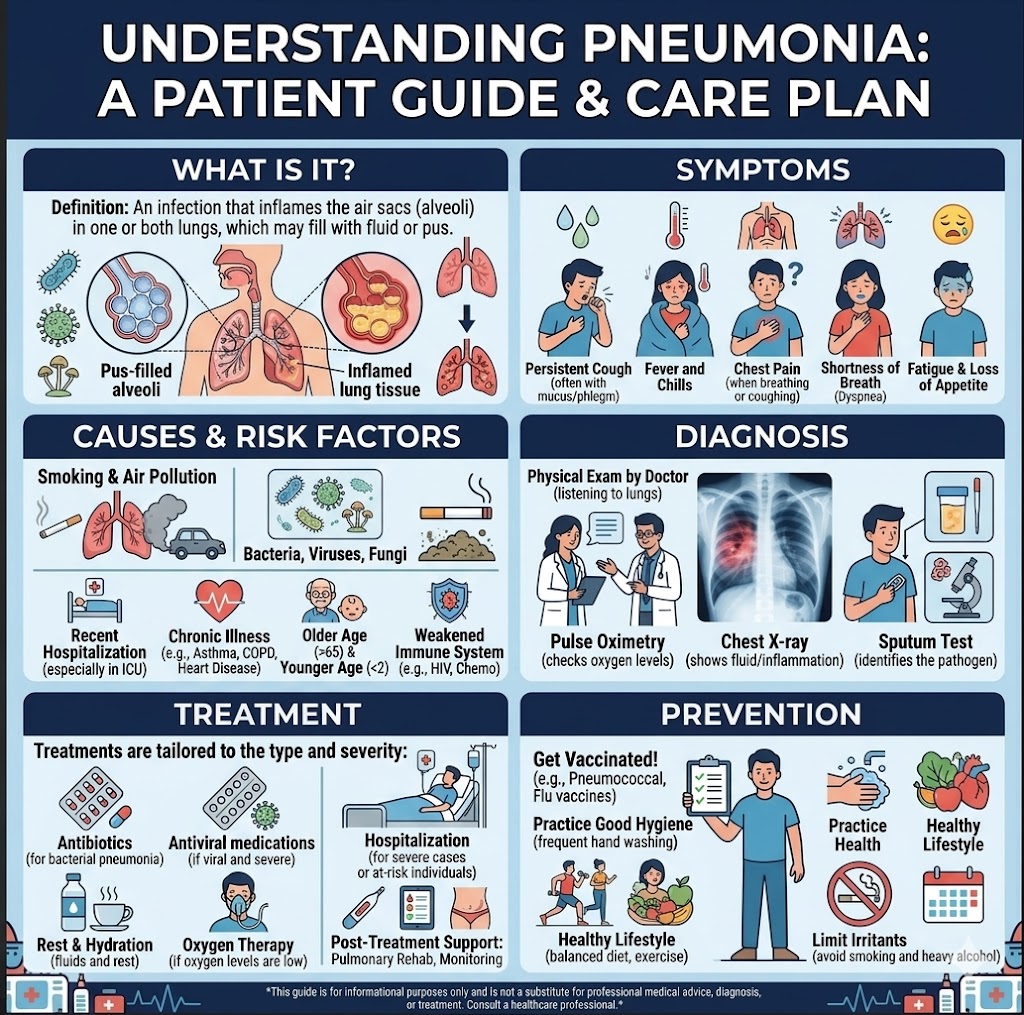
Pneumonia is an infection that causes inflammation in the tiny air sacs of one or both lungs. These air sacs can fill with fluid or pus, leading to a cough with mucus, fever, chills, and difficulty breathing. Various germs, including bacteria, viruses, and fungi, can cause it. The severity ranges from mild to life-threatening, particularly for infants, young children, adults over 65, and individuals with underlying health issues or weakened immune systems. It occurs when your body's natural defenses are overwhelmed, leading to fluid and white blood cells accumulating in the lungs.
Understanding the Condition
Pneumonia: Understanding This Lung Infection
Understanding the Condition
Common Symptoms
Chest Pain: Discomfort when taking a deep breath or coughing.
Confusion or Changes in Mental Awareness: More common in adults aged 65 and older.
Cough: May produce mucus, pus, or sometimes be dry. Can persist for weeks or months, especially with milder forms like "walking pneumonia".
Fever, Sweating, and Shaking Chills: Common signs of infection.
Lower Body Temperature: Can occur in adults older than 65 and people with weakened immune systems instead of a fever.
Nausea, Vomiting, or Diarrhea: Digestive symptoms can sometimes accompany pneumonia.
Shortness of Breath: Feeling winded, even with minimal activity.
Symptoms in Newborns and Infants: May be subtle or include vomiting, fever, cough, restlessness, fatigue, or difficulty breathing and eating.
"Walking Pneumonia" Symptoms: Milder, appearing gradually, often mimicking a cold or flu but lasting longer. You might feel well enough to continue daily activities, hence the name.
Consultation Guide
Which Specialist to Meet
Begin by consulting your primary care doctor. For severe or complicated cases, or if you have pre-existing lung conditions, you might be referred to a pulmonologist (a specialist in lung diseases).
Preparations Before Your Visit
Before your visit, list your symptoms, their duration, and severity. Note recent travel, sick contacts, or changes in routine. Bring a list of all medications, vitamins, and supplements. Be ready to discuss your medical history, including chronic conditions.
Book a doctor visit near me
Report Lingering Symptoms: Inform your doctor if symptoms like cough, fatigue, or shortness of breath persist post-treatment.
Consultation Guide
Pneumonia is an infection that causes inflammation in the tiny air sacs of one or both lungs. These air sacs can fill with fluid or pus, leading to a cough with mucus, fever, chills, and difficulty breathing. Various germs, including bacteria, viruses, and fungi, can cause it. The severity ranges from mild to life-threatening, particularly for infants, young children, adults over 65, and individuals with underlying health issues or weakened immune systems. It occurs when your body's natural defenses are overwhelmed, leading to fluid and white blood cells accumulating in the lungs.
Avoid Inhaling Fat-Based Substances: Be cautious with petroleum jelly in nostrils; prolonged inhalation can cause lipoid pneumonia. Use water-soluble alternatives or saline.
Limit Contact with Sick Individuals: Avoid close contact with sick people; if ill, limit exposure to others to prevent spread.
Diagnostic Procedures
Uses radiation to image lungs and chest, revealing inflammation or fluid indicative of pneumonia.
What to Expect
You stand or sit; a technician positions you for different views. You'll hold your breath briefly. It's quick, painless, and may require removing metal items.
CT Scan (Computed Tomography)
Provides detailed cross-sectional images of lungs, identifying extent of pneumonia or complications like abscesses or fluid.
What to Expect
You lie on a table that slides into a large scanner. You may need to hold your breath. A contrast dye might be used for enhanced images, causing a warm sensation. Painless, takes 15-30 minutes.
Identify infection signs, severity, and sometimes the specific germ if spread to bloodstream.
What to Expect
A small blood sample is drawn from a vein in your arm with a needle. It's a quick procedure.
Lab test of mucus (sputum) coughed up to identify the specific germ causing the infection, guiding treatment.
What to Expect
You'll cough deeply and spit mucus into a sterile cup. Sometimes a nebulizer may assist in producing sputum.
Non-invasive test measuring blood oxygen levels; low levels indicate impaired lung function due to pneumonia.
What to Expect
A small clip on your finger, earlobe, or toe measures oxygen via light. It's painless and takes seconds.
For complex cases, a flexible tube with a camera is inserted into airways to visualize lungs and collect samples.
What to Expect
This is a hospital procedure performed under sedation. Your throat is numbed. The tube goes through your nose or mouth. Takes 30-60 minutes; monitoring follows.
Treatment Options
Home Remedies and Supportive Care
Medications
Antibiotics: For bacterial pneumonia; complete full course. (Duration: 5-10 days)
Antivirals: For viral pneumonia (e.g., flu), reduces severity. (Duration: 5-7 days)
Antifungals: For fungal pneumonia, often in immunocompromised. (Duration: Weeks to months)
Fever/Pain Relievers: Over-the-counter for fever and chest pain. (Duration: As needed)
Cough Medications: May ease bothersome coughs; consult doctor. (Duration: As needed)
Hospital-Based Procedures and Therapies
Oxygen Therapy: Supplemental oxygen for low blood levels. (Duration: Days to weeks)
Intravenous (IV) Fluids: For hydration and rapid medication in severe cases. (Duration: During hospitalization)
Breathing Machine (Ventilator): Supports breathing for severe cases. (Duration: Varies widely)
Chest Tube Drainage: Drains infected fluid from around lungs. (Duration: Days to over a week)
Lung Abscess Drainage: Drains pus from lung cavity. (Duration: Until abscess resolved)
Surgical Procedures
Thoracotomy: Rarely, surgery for severe pleural complications. (Duration: Single procedure)
Abscess Surgery: Very rarely, to remove infected lung part. (Duration: Single procedure)
Prevention & Long-Term Wellbeing
Rest: Essential for recovery. (Duration: Days to weeks)
Hydration: Drink fluids to loosen mucus, prevent dehydration. (Duration: Throughout illness)
Avoid Irritants: Stay away from smoke and lung irritants. (Duration: Until full recovery)
Use a Humidifier: Cool-mist humidifier eases coughing. (Duration: As needed)
Prevention
Get Vaccinated: Receive recommended pneumococcal and flu vaccines. Discuss with your doctor for current guidelines.
Ensure Children are Vaccinated: Specific pneumonia vaccines for children under 2 and 2-5 at risk. Flu shots for over 6 months.
Practice Good Hygiene: Wash hands thoroughly, use sanitizer. Cover coughs/sneezes into elbow or tissue.
Don't Smoke: Smoking damages lung defenses, increasing infection vulnerability. Quitting is vital.
Maintain a Strong Immune System: Get adequate sleep, regular exercise, and eat a healthy, balanced diet.
Follow-up Appointments: Attend all scheduled doctor visits for complete recovery and complication monitoring.
Lung Health Management: Manage chronic lung conditions (e.g., asthma, COPD) effectively with your doctor.
Tags & Topics
Notice an error or need an update?
Help us keep medical information accurate. Report incorrect info or suggest an edit.


