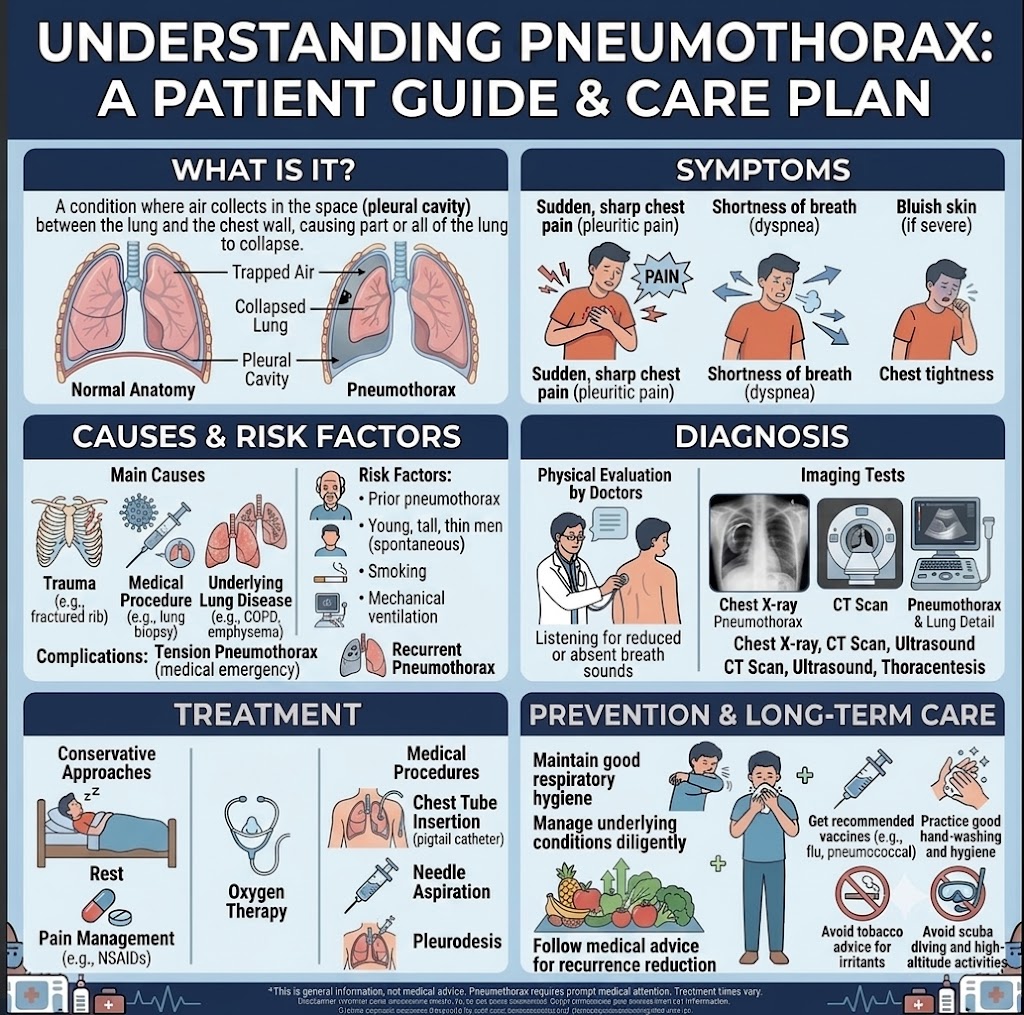
A pneumothorax, commonly known as a collapsed lung, occurs when air escapes from the lung and gets trapped in the space between the lung and the chest wall. This trapped air pushes on the lung, causing it to shrink or collapse partially or completely. This condition can arise from chest injuries, medical procedures, or underlying lung diseases, or sometimes without an apparent cause. Symptoms often include sudden chest pain and shortness of breath. While a small pneumothorax may resolve naturally, larger or more severe cases require urgent medical intervention and can be life-threatening.
Understanding the Condition
Pneumothorax: Understanding a Collapsed Lung
Understanding the Condition
A pneumothorax, commonly known as a collapsed lung, occurs when air escapes from the lung and gets trapped in the space between the lung and the chest wall. This trapped air pushes on the lung, causing it to shrink or collapse partially or completely. This condition can arise from chest injuries, medical procedures, or underlying lung diseases, or sometimes without an apparent cause. Symptoms often include sudden chest pain and shortness of breath. While a small pneumothorax may resolve naturally, larger or more severe cases require urgent medical intervention and can be life-threatening.
Common Symptoms
Sudden Chest Pain: Often sharp and can worsen with breathing or movement.
Shortness of Breath: Feeling like you can't get enough air, ranging from mild to severe depending on the extent of the lung collapse. As these symptoms can indicate serious, potentially life-threatening conditions, prompt medical attention is crucial. If chest pain is severe or breathing becomes increasingly difficult, seek immediate emergency care.
Consultation Guide
Which Specialist to Meet
Initially, you will likely be seen by an Emergency Physician or your Primary Care Provider. For ongoing care or complex cases, a Pulmonologist (a lung specialist) or a Thoracic Surgeon (a surgeon specializing in chest organs) may be involved.
Preparations Before Your Visit
Observation and Rest: For very small collapses without severe symptoms, watchful waiting and rest allow the body to naturally reabsorb trapped air, leading to lung re-expansion. (Duration: Days to a few weeks)
Recognize Recurrence Symptoms: Be aware of the symptoms of a collapsed lung (sudden chest pain, shortness of breath) and seek immediate medical attention if they reappear.
Consultation Guide
Awareness of Risk Factors: Individuals who are tall, underweight, have a family history of pneumothorax, or have had a previous collapsed lung are at higher risk and should be particularly vigilant.
Diagnostic Procedures
A chest X-ray uses a small amount of radiation to create images of your heart, lungs, blood vessels, airways, and the bones of your chest and spine. It is a quick and effective tool to detect a collapsed lung, identify fluid around the lungs, or reveal other chest problems.
What to Expect
You will typically stand or sit against a special plate, and the X-ray technician will ask you to hold your breath for a few seconds while the image is taken. The procedure is generally quick, painless, and non-invasive.
CT (Computed Tomography) Scan
A CT scan provides more detailed, cross-sectional images (like "slices") of your body's internal structures, including bones, blood vessels, and soft tissues. It combines multiple X-ray views taken from different angles with computer processing, offering a clearer picture of the lung and surrounding areas than a standard X-ray, especially useful for complex diagnoses or planning treatment.
What to Expect
You will lie on a motorized table that slides into a large, donut-shaped machine. You must lie very still during the scan, which can take several minutes. You might hear whirring noises. In some cases, a contrast dye might be administered intravenously to enhance image clarity, though not always necessary for pneumothorax.
Treatment Options
Before your visit, be ready to discuss your medical history, including any previous lung conditions, injuries, or surgeries, and list all current medications. Prepare any questions you have for the doctor. Wearing comfortable clothing is advisable.
Book a doctor visit near me
Observation & Initial Management
Pain Management: Medications (e.g., over-the-counter or prescription pain relievers) are used to control chest pain. (Duration: As needed)
Procedures to Remove Air
Needle Aspiration: A thin needle is inserted between the ribs into the air-filled space to withdraw excess air with a syringe, allowing the lung to re-expand. (Duration: Quick procedure (15-30 min), followed by observation)
Chest Tube Insertion: A small tube is placed between the ribs to continuously drain air, often connected to suction, until the air leak seals and the lung re-expands. (Duration: Stays in place for several days to over a week)
Surgical Interventions
Minimally Invasive Surgery (VATS): Using small incisions, a camera, and instruments, surgeons repair air leaks, remove air blisters (blebs), or perform pleurodesis (a procedure to make the lung stick to the chest wall) to prevent recurrence. (Duration: Recovery generally takes a few weeks, with full activity in 1-2 months)
Open Surgery (Thoracotomy): For complex or recurrent cases, a larger incision allows direct access for comprehensive lung repair and pleurodesis. (Duration: Recovery is more extensive, often requiring several weeks to months)
Prevention & Long-Term Wellbeing
Oxygen Therapy: Supplemental oxygen can aid air reabsorption and relieve shortness of breath. (Duration: As needed during recovery)
Prevention
Avoid Smoking: Smoking significantly increases the risk of pneumothorax, even without existing lung disease. Quitting is vital for lung health.
Manage Underlying Lung Conditions: If you have conditions like chronic obstructive pulmonary disease (COPD) or cystic fibrosis, diligently managing them with your doctor can reduce the risk of lung damage leading to collapse.
Long-Term Monitoring & Lifestyle
Follow-up Medical Care: Regular check-ups with a pulmonologist or your primary care provider are essential, especially after a pneumothorax, to monitor lung health and prevent recurrence.
Activity Modifications (Post-Recovery): Discuss with your doctor when it's safe to resume strenuous activities, sports, or travel (especially air travel or scuba diving), as pressure changes can pose risks.
Maintain a Healthy Lifestyle: Eating a balanced diet and engaging in regular, appropriate exercise (as cleared by your doctor) supports overall lung function and recovery.
Tags & Topics
Notice an error or need an update?
Help us keep medical information accurate. Report incorrect info or suggest an edit.


