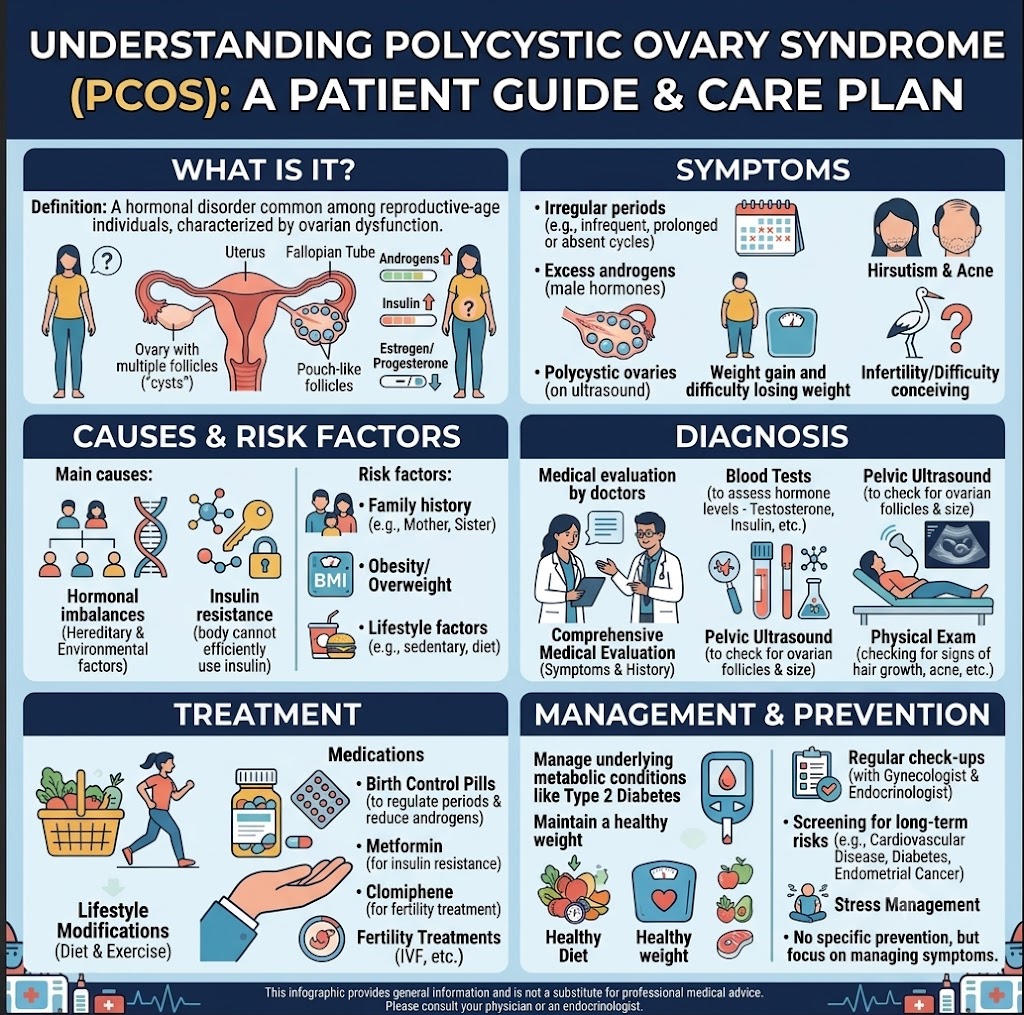
Polycystic Ovary Syndrome (PCOS) is a common hormonal disorder affecting women during their reproductive years. It's characterized by irregular or prolonged menstrual periods, elevated levels of male hormones (androgens), and ovaries that may develop many small fluid-filled sacs (follicles) and fail to regularly release eggs. While the exact cause of PCOS is unknown, factors like genetic predisposition, insulin resistance, and low-grade inflammation are believed to play a role. Early diagnosis and management are vital to reduce the risk of long-term health complications such as type 2 diabetes and heart disease.
Understanding the Condition
Polycystic Ovary Syndrome (PCOS): Understanding and Managing the Condition
Understanding the Condition
Common Symptoms
Irregular Periods: This is one of the most common signs. You might have fewer than nine periods a year, or periods that occur more than 35 days apart. Periods may also be unusually long, lasting many days longer than typical. These irregularities can make it difficult to become pregnant.
Excess Androgen (Male Hormones): High levels of male hormones can lead to noticeable changes like excessive facial and body hair growth (hirsutism). Other signs can include severe acne and thinning hair on the scalp, similar to male-pattern baldness. Symptoms are often more noticeable or severe in individuals with obesity.
Polycystic Ovaries: Your ovaries might appear larger and contain numerous small fluid-filled sacs (follicles) that hold immature eggs. These follicles do not regularly release eggs, disrupting the normal menstrual cycle and ovulation.
Consultation Guide
Which Specialist to Meet
Start with your general practitioner or family doctor, who can refer you to a gynecologist (a doctor specializing in women's reproductive health) or an endocrinologist (a doctor specializing in hormone disorders).
Preparations Before Your Visit
Before your visit, make a detailed list of your symptoms, including information about your menstrual cycle (dates, duration, flow). Note any medications you are currently taking, and gather information about your family's medical history, especially concerning diabetes or similar conditions. Prepare a list of questions you have for the doctor.
Book a doctor visit near me
Weight Management: Losing even a modest amount of weight (5-10% of body weight) can significantly improve PCOS symptoms, including irregular periods and insulin resistance. (Duration: Ongoing, long-term commitment)
Hormonal Birth Control: Pills, patches, or rings containing combined hormones (estrogen and progestin) can regulate menstrual cycles, reduce male hormone levels (decreasing excess hair growth and acne), and protect the uterine lining. (Duration: Long-term, as needed for symptom management and contraception)
Maintain a Healthy Weight: Sustaining a healthy weight through diet and exercise is fundamental for managing PCOS symptoms, improving insulin sensitivity, and reducing the risk of developing complications.
Consistent Healthy Lifestyle: Adopting a diet low in processed foods and high in fiber, combined with regular physical activity, is crucial for long-term health and symptom control.
Stress Management Techniques: Incorporate practices such as mindfulness, meditation, yoga, or counseling to manage stress, which can sometimes exacerbate hormone imbalances.
Consultation Guide
Polycystic Ovary Syndrome (PCOS) is a common hormonal disorder affecting women during their reproductive years. It's characterized by irregular or prolonged menstrual periods, elevated levels of male hormones (androgens), and ovaries that may develop many small fluid-filled sacs (follicles) and fail to regularly release eggs. While the exact cause of PCOS is unknown, factors like genetic predisposition, insulin resistance, and low-grade inflammation are believed to play a role. Early diagnosis and management are vital to reduce the risk of long-term health complications such as type 2 diabetes and heart disease.
Diagnostic Procedures
A physical examination where your doctor visually inspects your external genitalia and then manually checks for any abnormalities in your uterus, ovaries, and fallopian tubes. A speculum may be used to view the cervix.
What to Expect
You will lie on an exam table with your feet in stirrups. The doctor first examines the external area, then gently inserts a warmed, lubricated speculum into your vagina to view the cervix. Next, two gloved fingers are inserted into your vagina while the other hand presses on your lower abdomen to feel internal organs. You might feel pressure or mild discomfort. The exam usually takes only a few minutes.
Transvaginal Ultrasound
This imaging test uses sound waves to create detailed pictures of your uterus and ovaries. It helps identify the presence of multiple small fluid-filled sacs (follicles) on the ovaries, which are typical of PCOS, and assesses their size.
What to Expect
You will lie on your back, similar to a pelvic exam. A thin, lubricated wand-like device, called a transducer, will be gently inserted a few inches into your vagina. This transducer emits sound waves that bounce off your internal organs and create images on a monitor. You might feel some pressure as the transducer is moved, but it is generally not painful. The procedure typically takes 15-30 minutes.
Blood Tests (Hormone Levels)
These tests measure various hormones, including male hormones (androgens), luteinizing hormone (LH), and follicle-stimulating hormone (FSH), to help confirm a PCOS diagnosis and rule out other conditions.
What to Expect
A healthcare professional will draw a small sample of blood, usually from a vein in your arm, using a needle. You might feel a brief sting or pinch. The blood is collected in a tube and sent to a lab for analysis.
Blood Tests (Glucose Tolerance Test)
This test measures your body's ability to process sugar (glucose) and is used to screen for insulin resistance, prediabetes, or type 2 diabetes, which are common in people with PCOS.
What to Expect
You will typically need to fast overnight. A first blood sample is taken. Then, you will drink a specific amount of a sugary liquid. Additional blood samples will be taken at specific intervals (usually 1 and 2 hours) to see how your body responds to the sugar.
Blood Tests (Cholesterol and Lipids)
This test measures your cholesterol levels (total, 'bad' LDL, 'good' HDL) and triglycerides, assessing your risk for heart and blood vessel disease, which can be elevated in PCOS.
What to Expect
You will usually need to fast for 9-12 hours before the test. A blood sample will be drawn from a vein in your arm, similar to other blood tests.
Early Diabetes Screening: Due to the heightened risk of type 2 diabetes, regular screening with glucose tolerance tests is recommended.
Treatment Options
Medications
Anti-Androgen Medications: These medicines block the effects of male hormones in the body, helping to reduce excess hair growth and severe acne. (Duration: Long-term, often used in combination with hormonal birth control)
Insulin-Sensitizing Medications: These drugs improve your body's response to insulin, which can help lower insulin levels, improve ovulation, and reduce male hormone production. (Duration: Long-term)
Ovulation-Inducing Medications: For women trying to conceive, these medications stimulate the ovaries to release eggs. (Duration: Short-term cycles, under careful medical supervision)
Hair Removal Procedures: Options like electrolysis or laser hair removal can effectively manage excess body and facial hair. (Duration: Multiple sessions for initial results, with periodic maintenance)
Surgical Procedures
Ovarian Drilling: A laparoscopic procedure where a surgeon makes small holes in the ovaries. This can sometimes help to restore regular ovulation, particularly when fertility medications are not effective. (Duration: One-time procedure; effects may last several years)
Prevention & Long-Term Wellbeing
Lifestyle Changes
Healthy Eating: Focus on a balanced diet rich in whole grains, lean proteins, fruits, and vegetables, while limiting processed foods, unhealthy fats, and added sugars to help manage insulin levels. (Duration: Ongoing, long-term commitment)
Regular Physical Activity: Aim for at least 30 minutes of moderate exercise most days of the week to improve insulin sensitivity and support weight management. (Duration: Ongoing, long-term commitment)
Prevention and Long-Term Wellbeing Strategies
Regular Medical Monitoring: Schedule routine check-ups with your healthcare provider to monitor your hormone levels, blood sugar, blood pressure, and cholesterol, as PCOS increases risks for related health issues.
Cardiovascular Health Focus: Closely monitor blood pressure and cholesterol levels, and follow lifestyle recommendations to reduce the risk of heart and blood vessel disease.
Uterine Lining Health Checks: For individuals with very infrequent periods, periodic evaluations of the uterine lining may be necessary to screen for potential endometrial cancer.
Mental Health Support: Seek support or therapy if experiencing depression, anxiety, or disordered eating, which are more common with PCOS.
Tags & Topics
Notice an error or need an update?
Help us keep medical information accurate. Report incorrect info or suggest an edit.


