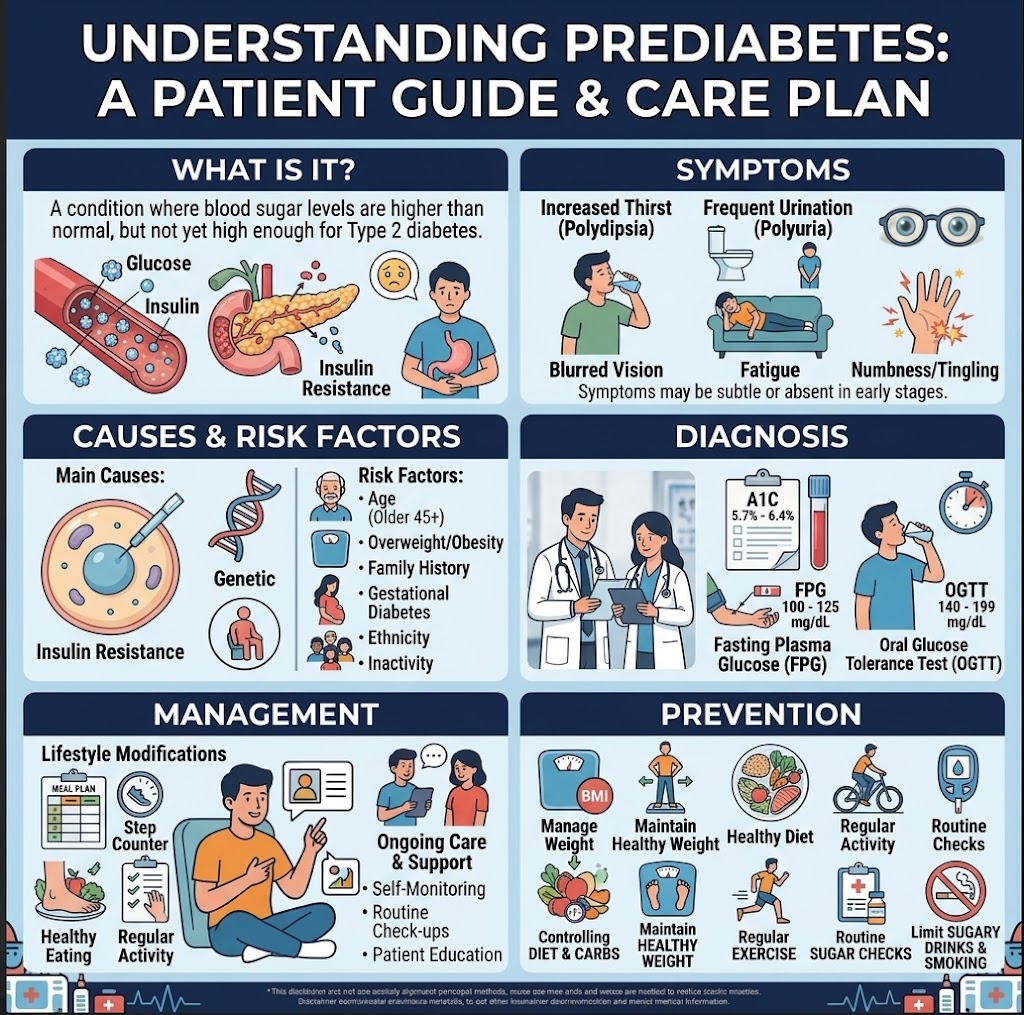
Prediabetes means your blood sugar levels are higher than normal but not yet high enough for a type 2 diabetes diagnosis. It's a critical warning sign that, without lifestyle changes, significantly increases your risk of developing type 2 diabetes. Even at this stage, early damage to your heart, blood vessels, and kidneys can begin. The good news is that progression can often be prevented.
Understanding the Condition
Prediabetes: Understanding and Managing Elevated Blood Sugar
Understanding the Condition
Common Symptoms
No Obvious Signs: Prediabetes often has no noticeable symptoms.
Darkened Skin: A possible sign is patches of darkened skin, often on the neck, armpits, or groin.
Signs of Developing Type 2 Diabetes: If prediabetes progresses to type 2 diabetes, symptoms may include: increased thirst, frequent urination, increased hunger, blurred vision, numbness or tingling in hands or feet, frequent infections, slow-healing sores, and unintended weight loss.
Consultation Guide
Which Specialist to Meet
Start with your primary care doctor for screening and initial guidance. They may refer you to an endocrinologist, a specialist in hormone conditions like diabetes.
Preparations Before Your Visit
Before your appointment, prepare a list of your symptoms, all medications you take (including supplements), and your family medical history. You might need to fast for 8-12 hours for certain blood tests.
Book a doctor visit near me
Consultation Guide
Medication (if prescribed): In some cases, a doctor might consider medication to help control blood sugar or manage related risk factors like high blood pressure or cholesterol, especially if lifestyle changes aren't enough. These medications can improve insulin sensitivity or reduce glucose production. (Duration: As directed by your doctor, potentially long-term.)
Diagnostic Procedures
Prediabetes means your blood sugar levels are higher than normal but not yet high enough for a type 2 diabetes diagnosis. It's a critical warning sign that, without lifestyle changes, significantly increases your risk of developing type 2 diabetes. Even at this stage, early damage to your heart, blood vessels, and kidneys can begin. The good news is that progression can often be prevented.
A1C Test (Glycated Hemoglobin Test)
This common blood test averages your blood sugar levels over the past 2-3 months by measuring the percentage of hemoglobin (a protein in red blood cells) coated with sugar. A higher A1C indicates higher average blood sugar.
What to Expect
A healthcare professional will draw a small blood sample from your arm. The procedure is quick, typically taking minutes, and requires no special preparation like fasting.
Glucose Tolerance Test (Oral Glucose Tolerance Test)
This test measures how your body processes sugar after consuming a sugary drink. It helps diagnose prediabetes or type 2 diabetes, and screens for gestational diabetes during pregnancy.
What to Expect
You'll fast overnight. A first blood sample is taken for fasting sugar. Then, you drink a sugary liquid. More blood samples are taken at specific intervals (typically 1 and 2 hours) to track your body's sugar response. The process takes a few hours.
Prevention & Long-Term Wellbeing
Lifestyle Changes
Healthy Eating: Focus on a balanced diet rich in fruits, vegetables, whole grains, and lean proteins. Limit processed foods, sugary drinks, and unhealthy fats. (Duration: Lifelong commitment.)
Physical Activity: Aim for at least 150 minutes of moderate-intensity aerobic exercise (e.g., brisk walking) per week, plus muscle-strengthening activities twice weekly. (Duration: Lifelong commitment.)
Weight Management: Losing 5-10% of your body weight can significantly improve blood sugar levels and reduce risk. (Duration: Ongoing effort.)
Medical Management (if necessary)
Prevention & Monitoring
Balanced Diet: Adopt a diet of whole, unprocessed foods: fresh produce, whole grains, lean proteins, minimizing sugary drinks and unhealthy fats.
Regular Exercise: Integrate consistent physical activity (aerobic, strength training) to improve insulin sensitivity and manage weight.
Maintain Healthy Weight: Achieve and maintain a healthy body weight through diet and exercise; modest weight loss is impactful.
Regular Medical Check-ups: Schedule routine visits for monitoring blood sugar, blood pressure, and cholesterol. Early detection is key.
Quit Smoking: If you smoke, quitting is crucial as it worsens insulin resistance and increases risks.
Manage Other Health Conditions: Control conditions like high blood pressure and cholesterol, often linked to prediabetes.
Adequate Sleep: Ensure quality sleep. Address disorders like sleep apnea, as they impact blood sugar control.
Tags & Topics
Notice an error or need an update?
Help us keep medical information accurate. Report incorrect info or suggest an edit.


