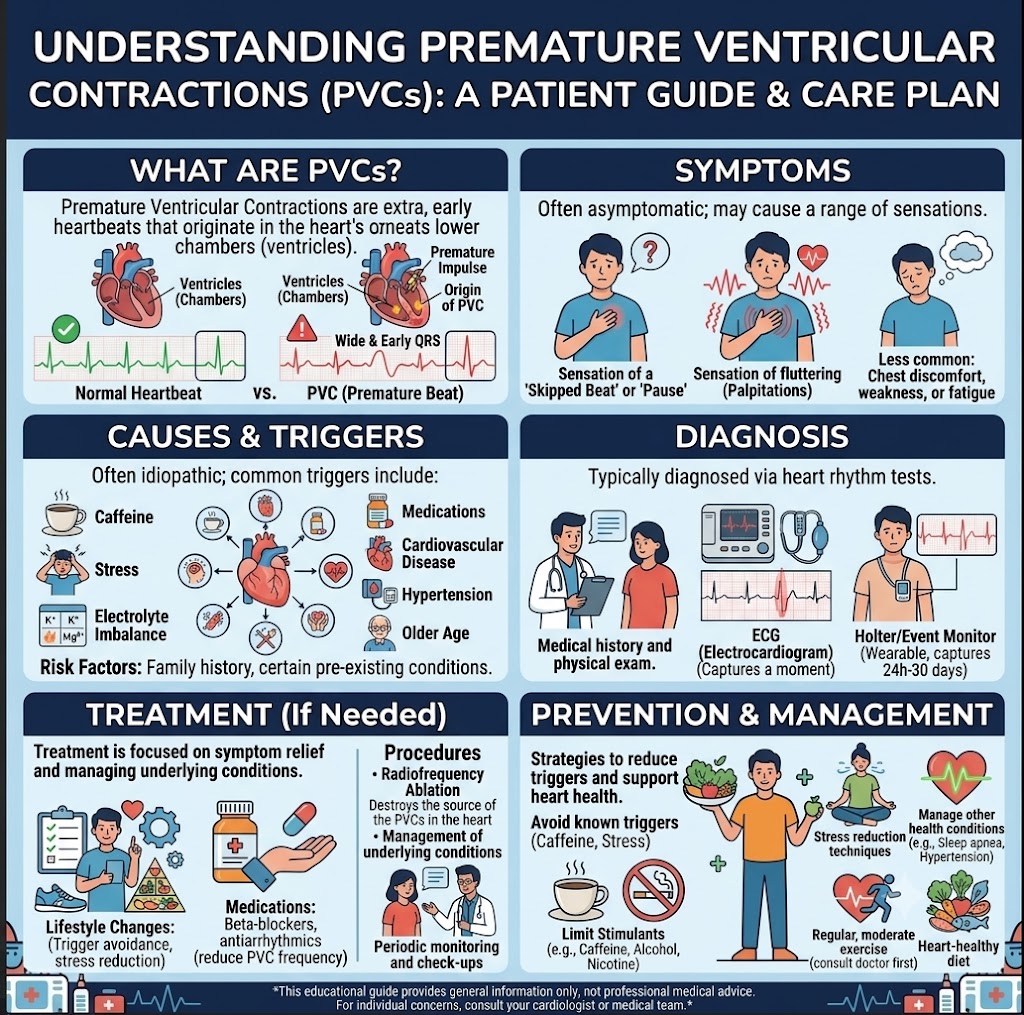
Premature ventricular contractions (PVCs) are a common type of irregular heartbeat, also known as an arrhythmia. They are extra heartbeats that start in the heart's lower chambers (ventricles) and interrupt the normal heart rhythm. While these extra beats can sometimes feel unsettling, they are often harmless, especially in individuals with otherwise healthy hearts. Treatment is typically considered if PVCs are very frequent, cause bothersome symptoms, or if there is an underlying heart condition.
Understanding the Condition
Understanding Premature Ventricular Contractions (PVCs)
Understanding the Condition
Premature ventricular contractions (PVCs) are a common type of irregular heartbeat, also known as an arrhythmia. They are extra heartbeats that start in the heart's lower chambers (ventricles) and interrupt the normal heart rhythm. While these extra beats can sometimes feel unsettling, they are often harmless, especially in individuals with otherwise healthy hearts. Treatment is typically considered if PVCs are very frequent, cause bothersome symptoms, or if there is an underlying heart condition.
Common Symptoms
No Symptoms: Many people with PVCs experience no noticeable symptoms at all.
Skipped Heartbeat: A sensation that your heart has skipped a beat or paused momentarily.
Pounding or Fluttering in the Chest: A noticeable forceful beat or a rapid, quivering sensation in the chest.
Increased Awareness of Heartbeat: A feeling of being unusually conscious of your heart beating.
Consultation Guide
Which Specialist to Meet
If you experience changes in your heartbeat or symptoms of PVCs, your initial visit should be with your primary care doctor. They can assess your symptoms and, if necessary, refer you to a cardiologist (a heart specialist) or an electrophysiologist (a cardiologist specializing in heart rhythm disorders).
Preparations Before Your Visit
Before your appointment, prepare by noting any symptoms you've experienced, including when they occur and how long they last. Bring a list of all your current medications (prescription and over-the-counter), supplements, and any known allergies. Be ready to discuss your personal and family medical history, especially regarding heart conditions. It can also be helpful to keep a diary of your symptoms, noting potential triggers like caffeine, stress, or physical activity.
Book a doctor visit near me
Before wearing the Holter monitor, small electrodes will be attached to your chest, similar to an ECG. These electrodes connect to a small recording device that you can wear on your belt or a shoulder strap. You will be instructed to continue your normal daily activities (though you may need to avoid showering or swimming to keep the device dry, unless given specific instructions for a waterproof model). You might be asked to keep a diary of your activities and any symptoms you experience while wearing the monitor. After the recording period, you'll return the device to your doctor's office so the data can be analyzed.
Regular Medical Check-ups: Maintain regular visits with your doctor to monitor your heart health and any changes in your PVCs or associated symptoms.
Manage Underlying Conditions: Effectively treating any co-existing heart conditions, high blood pressure, thyroid issues, or sleep apnea can help reduce PVC frequency.
Symptom Awareness: Pay attention to your body and report any new or worsening symptoms to your healthcare provider promptly.
Diagnostic Procedures
Electrocardiogram (ECG or EKG)
An ECG is a quick and painless test that records the electrical signals of your heart. It provides a snapshot of your heart's rhythm and electrical activity at the moment of the test, helping doctors identify irregular heartbeats, heart attacks, or other heart conditions.
What to Expect
During an ECG, you will lie down, and several small, sticky patches called electrodes will be placed on your chest, and sometimes on your arms or legs. These electrodes are connected by wires to an ECG machine, which records your heart's electrical activity. The test typically takes only a few minutes, and you will need to lie still. The results are displayed on a screen or printed out.
A Holter monitor is a small, portable device that continuously records your heart's electrical activity, usually for 1 to 2 days, as you go about your daily life. It's often used when an ECG doesn't capture intermittent or infrequent irregular heartbeats, providing a more comprehensive look at your heart rhythm over time.
What to Expect
A stress test, also known as an exercise stress test, evaluates how your heart functions under physical exertion. During exercise, your heart works harder and faster, and the test can reveal changes in blood flow within the heart that might not be apparent at rest, helping diagnose conditions like coronary artery disease or certain arrhythmias.
What to Expect
You will typically walk on a treadmill or ride a stationary bike while your heart rate, blood pressure, and breathing are continuously monitored. If you are unable to exercise, a medication may be given to simulate the effects of exercise on your heart. Electrodes will be placed on your chest to record an ECG throughout the test. Your healthcare professional will monitor your condition and stop the test if necessary. In some cases, an imaging test (like an echocardiogram or nuclear scan) may be performed alongside the stress test for more detailed information.
Treatment Options
Medications
Beta-Blockers: These medications can help slow your heart rate and reduce the frequency of PVCs by blocking the effects of adrenaline. (Duration: Long-term, as prescribed)
Calcium Channel Blockers: These drugs can help control heart rate and reduce PVCs in some individuals. (Duration: Long-term, as prescribed)
Antiarrhythmic Drugs: For more severe or persistent PVCs, stronger medications that specifically target heart rhythm may be prescribed. (Duration: Long-term, as prescribed)
Catheter Ablation: This minimally invasive procedure uses energy to destroy the small area of heart tissue that is causing the extra beats. It is typically considered for very frequent, bothersome PVCs that don't respond to medication or for PVCs that are affecting heart function. (Duration: Single procedure, with potential for repeat if needed)
Medication Adherence: If prescribed, take all medications exactly as directed by your doctor to ensure optimal heart rhythm control.
Prevention & Long-Term Wellbeing
Lifestyle and Home Remedies
Limit Stimulants: Reducing or avoiding caffeine, alcohol, and nicotine can significantly decrease the frequency of PVCs. (Duration: Ongoing)
Manage Stress: Practicing relaxation techniques such as deep breathing, meditation, or yoga can help reduce stress, which is a common trigger for PVCs. (Duration: Ongoing)
Balanced Diet and Hydration: Eating a heart-healthy diet rich in fruits, vegetables, and whole grains, and ensuring adequate hydration, supports overall heart health. (Duration: Ongoing)
Regular Exercise: Engaging in moderate physical activity as advised by your doctor can improve cardiovascular fitness. (Duration: Ongoing)
Prevention and Long-Term Monitoring
Tags & Topics
Notice an error or need an update?
Help us keep medical information accurate. Report incorrect info or suggest an edit.

