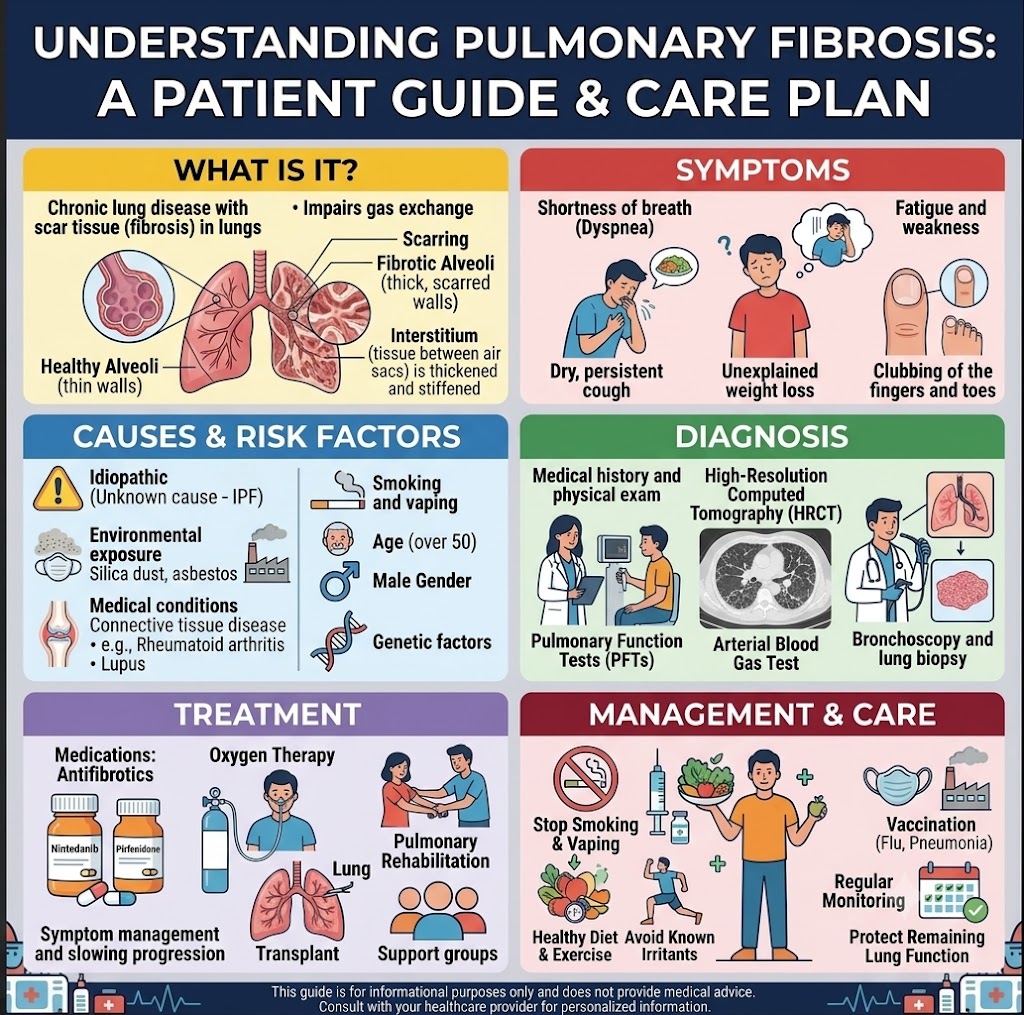
Pulmonary fibrosis is a serious lung disease where lung tissue becomes damaged and scarred. This scarring makes the lungs thick and stiff, hindering their ability to work correctly and making it hard to breathe. The condition worsens over time, though the speed varies greatly among individuals. Sometimes the cause of this scarring isn't clear; this is called idiopathic pulmonary fibrosis, which commonly affects middle-aged and older adults. While the damage cannot be reversed, treatments can slow progression, ease symptoms, and improve quality of life. For some, a lung transplant may be an option.
Understanding the Condition
Pulmonary Fibrosis: When Lungs Scar and Breathing Becomes Hard
Understanding the Condition
Pulmonary fibrosis is a serious lung disease where lung tissue becomes damaged and scarred. This scarring makes the lungs thick and stiff, hindering their ability to work correctly and making it hard to breathe. The condition worsens over time, though the speed varies greatly among individuals. Sometimes the cause of this scarring isn't clear; this is called idiopathic pulmonary fibrosis, which commonly affects middle-aged and older adults. While the damage cannot be reversed, treatments can slow progression, ease symptoms, and improve quality of life. For some, a lung transplant may be an option.
Common Symptoms
Shortness of Breath: Difficulty breathing, especially during physical activity, which often gradually worsens over time.
Extreme Tiredness: Feeling unusually exhausted and lacking energy, even after rest.
Prepare a detailed list of your symptoms, including when they started and how they've changed. Bring a list of all medications, supplements, and vitamins you take. Be ready to discuss your medical history, any exposures to toxins, and ask any questions you have.
Book a doctor visit near me
Pulmonary Rehabilitation: A comprehensive program involving exercise training, breathing techniques, nutritional counseling, and education to improve physical stamina, manage symptoms, and enhance quality of life. (Duration: Typically several weeks to months of structured sessions, with ongoing exercises at home)
Manage Complications: Be vigilant for symptoms of complications like pulmonary hypertension or infections, and report them promptly to your doctor for timely intervention.
Consultation Guide
Acute Exacerbation: A sudden, rapid worsening of shortness of breath over days or weeks, which can be life-threatening. This may be triggered by an infection or another condition, but often the exact cause is unknown.
Consultation Guide
Which Specialist to Meet
You should consult a pulmonologist (a doctor specializing in lung diseases). Depending on the suspected cause, you might also see a rheumatologist (for autoimmune-related conditions) or a thoracic surgeon (for potential surgical evaluations).
Preparations Before Your Visit
You will lie on a motorized table that slides into a large, donut-shaped machine. You may need to hold your breath at certain times. Sometimes, an intravenous (IV) contrast dye is used to highlight specific areas, which might cause a temporary warm sensation. The scan usually takes 15-30 minutes.
This test shows how your heart works during physical activity. Since pulmonary fibrosis often causes shortness of breath, a stress test helps differentiate lung-related breathing issues from potential heart problems.
Anti-inflammatory/Immunosuppressants: In some forms of pulmonary fibrosis (especially those with an identifiable cause like autoimmune conditions), medications to reduce inflammation or suppress the immune system may be used. (Duration: Varies based on response and specific condition, from months to years)
Oxygen Therapy: Supplemental oxygen helps improve breathing and reduce shortness of breath, especially as the disease progresses and oxygen levels in the blood drop. (Duration: As needed, ranging from intermittent to continuous use, for life)
Diagnostic Procedures
This common imaging test uses a small amount of radiation to create pictures of your heart, lungs, blood vessels, and bones of the chest and spine, helping detect fluid, infections, or structural changes.
What to Expect
You will stand or sit in front of an X-ray machine, usually asked to hold your breath for a few seconds. The procedure is quick, painless, and typically takes only a few minutes.
CT Scan (Computerized Tomography)
This advanced imaging technique uses X-rays from multiple angles to create detailed, cross-sectional images (slices) of your lungs and surrounding structures, offering more clarity than a standard X-ray.
What to Expect
A common lung function test that measures how much air you can breathe in and out, and how quickly you can empty your lungs, helping assess lung capacity and airflow.
What to Expect
You will sit and breathe into a mouthpiece connected to a machine. You'll be asked to take a deep breath and then exhale as hard and fast as you can for several seconds, repeating this a few times. You might feel a little lightheaded or short of breath momentarily.
A procedure where a thin, flexible tube with a camera and light (bronchoscope) is inserted to visualize the airways and lungs directly. It allows the doctor to examine the lung's interior and collect tissue or fluid samples (biopsy).
What to Expect
You will receive a sedative to help you relax, and a local anesthetic will be sprayed into your throat to numb it. The bronchoscope is gently passed through your nose or mouth, down your throat, and into your lungs. You might feel some pressure or a sensation of needing to cough, but you typically won't feel pain. The procedure usually takes 30-60 minutes.
An ultrasound of the heart that uses sound waves to create moving pictures of your heart. It helps assess heart structure, function, and blood flow, which is important for checking for complications like pulmonary hypertension.
What to Expect
You will lie on an exam table. A gel is applied to your chest, and a handheld device (transducer) is moved across your skin. The sound waves create images on a monitor. The test is painless and typically takes 30-60 minutes.
What to Expect
You will walk on a treadmill or ride a stationary bike while your heart rate, blood pressure, and breathing are monitored. If you cannot exercise, medication may be given to simulate the effect of exercise on your heart. The test typically lasts 15-30 minutes, including preparation.
Regular Medical Follow-up: Adhere to scheduled doctor visits and diagnostic tests to monitor lung function, disease progression, and treatment effectiveness.
Treatment Options
Medications
Anti-fibrotic Drugs: Specific medications designed to slow down the scarring process in the lungs, potentially preserving lung function longer. (Duration: Long-term, often for life, as prescribed by your doctor)
Lung Transplant: For select individuals with severe, progressive pulmonary fibrosis who have not responded to other treatments, replacing one or both diseased lungs with healthy donor lungs can be a life-saving option. (Duration: A single surgery, followed by lifelong immunosuppressant medication and medical follow-up)
Adhere to Treatment Plan: Strictly follow medication schedules and therapy recommendations as prescribed by your healthcare team.
Vaccinations: Receive recommended vaccinations, especially for influenza and pneumonia, to prevent respiratory infections that can worsen lung health.
Long-Term Management and Support
Prevention & Long-Term Wellbeing
Unintended Weight Loss: Losing weight without making changes to diet or exercise.
Aching Muscles and Joints: General body aches and stiffness in muscles and joints.
Clubbing: A physical change where the tips of the fingers or toes widen and become more rounded.
Lifestyle and Self-Care
Avoid Smoking: Quitting smoking is crucial to prevent further lung damage and improve overall lung health. (Duration: Ongoing, for life)
Avoid Environmental Toxins: Minimize exposure to known lung irritants like silica, asbestos, certain dusts, and animal droppings, especially in occupational settings, by using protective equipment. (Duration: Ongoing, for life)
Prevention of Progression
Healthy Lifestyle: Maintain a balanced diet, stay physically active within your capabilities, and get adequate rest to support overall health and energy levels.
Emotional and Psychological Support: Seek support from family, friends, support groups, or mental health professionals to cope with the emotional challenges of living with a chronic lung condition.
Tags & Topics
Notice an error or need an update?
Help us keep medical information accurate. Report incorrect info or suggest an edit.


