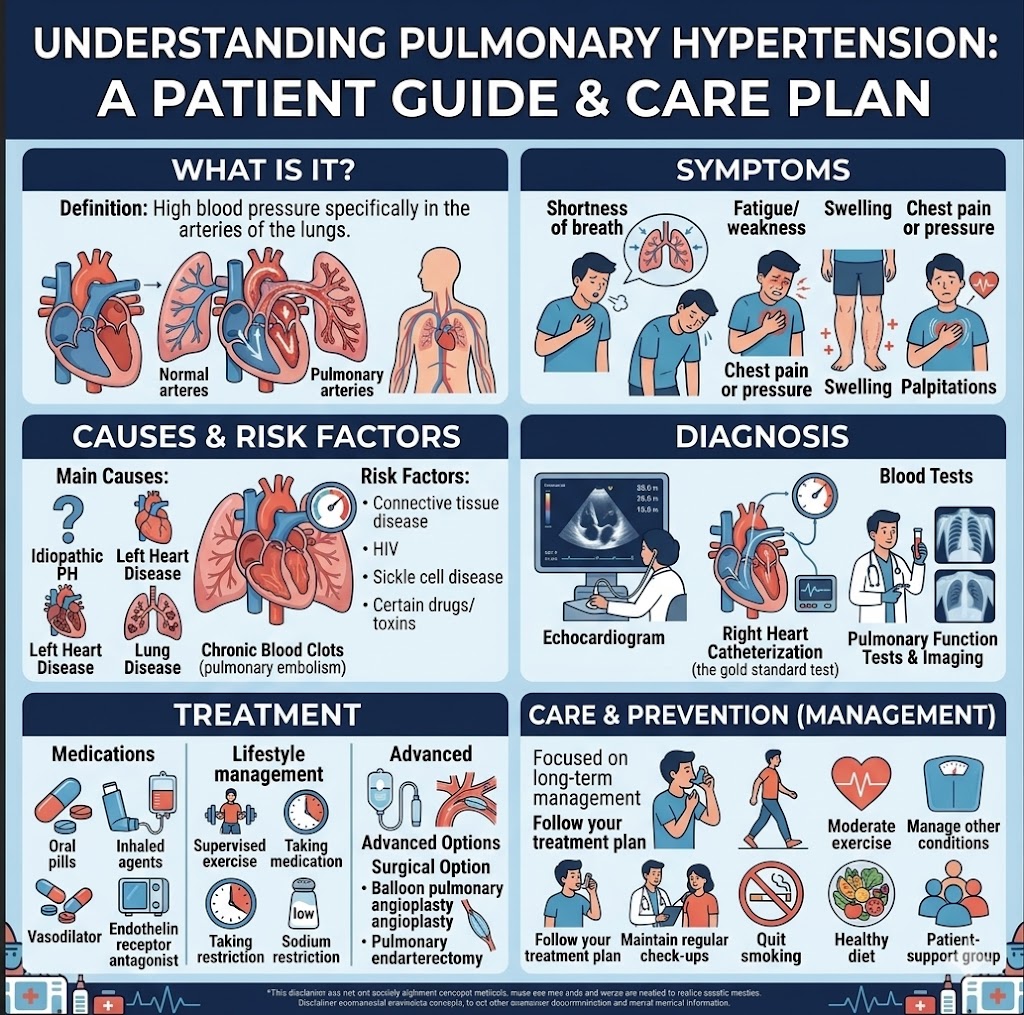
Pulmonary hypertension (PH) is a severe form of high blood pressure that specifically affects the arteries in the lungs and the right side of the heart. In a common type, called pulmonary arterial hypertension (PAH), the small blood vessels in the lungs become narrowed, blocked, or damaged. This makes it difficult for blood to flow through the lungs, causing pressure to build up in the lung arteries. The heart then has to work much harder to pump blood, which can eventually weaken the right side of the heart and lead to heart failure. PH can progressively worsen and become life-threatening. While there is no cure, various treatments are available to manage symptoms, improve quality of life, and extend life expectancy.
Understanding the Condition
Pulmonary Hypertension: Understanding High Blood Pressure in the Lungs
Understanding the Condition
Pulmonary hypertension (PH) is a severe form of high blood pressure that specifically affects the arteries in the lungs and the right side of the heart. In a common type, called pulmonary arterial hypertension (PAH), the small blood vessels in the lungs become narrowed, blocked, or damaged. This makes it difficult for blood to flow through the lungs, causing pressure to build up in the lung arteries. The heart then has to work much harder to pump blood, which can eventually weaken the right side of the heart and lead to heart failure. PH can progressively worsen and become life-threatening. While there is no cure, various treatments are available to manage symptoms, improve quality of life, and extend life expectancy.
Common Symptoms
Shortness of Breath: Initially noticed during physical activity, eventually occurring even at rest.
Blue or Gray Skin: A discoloration (cyanosis) that may be more or less apparent depending on skin tone, indicating low oxygen levels.
Chest Pressure or Pain: Discomfort or pain in the chest area.
Swelling: Accumulation of fluid in the ankles, legs, and abdominal area. Note: These symptoms can also be indicative of other health issues; an accurate diagnosis by a healthcare professional is essential.
Consultation Guide
Which Specialist to Meet
You should consult with a cardiologist (heart specialist), a pulmonologist (lung specialist), or a physician specifically trained in pulmonary hypertension. A genetic counselor may also be helpful if there's a family history of the condition.
Preparations Before Your Visit
Before your visit, gather your full medical history, including any existing conditions, past surgeries, and a complete list of all medications, supplements, and illicit drugs you use. Prepare a list of your symptoms, including when they started and how often they occur. Write down any questions you have. It can be beneficial to bring a family member or friend for support and to help remember information.
Book a doctor visit near me
Avoid High Altitudes: May worsen symptoms or increase risk for some individuals.
Smoking Cessation: Vital for improving lung health and cardiovascular function.
Pulmonary Rehabilitation: Supervised program of exercise, education, and support to improve lung function.
Consultation Guide
Dizziness or Fainting: Caused by reduced blood flow to the brain, especially during exertion.
Fast Pulse or Pounding Heartbeat: A noticeable increase in heart rate or sensation of the heart beating strongly.
Combines X-rays and computer processing for detailed cross-sectional images of internal organs, blood vessels, and tissues, helping identify PH causes.
You lie on a table that slides into a large scanner, which rotates around your body. You'll need to stay still and may receive a contrast dye that causes a warm sensation.
Uses sound waves to create moving pictures of your heart, showing chamber size, valve function, and blood flow. Estimates pulmonary artery pressure.
Diagnostic Procedures
Cardiac Catheterization
Measures blood pressure directly in heart and lung arteries, assessing PH severity and heart function.
What to Expect
A thin tube (catheter) is inserted into a vein (usually groin/arm) and guided to the heart. Local anesthetic and mild sedative are given. Pressures are measured, and X-ray images may be taken. Takes 30 minutes to a few hours; requires lying flat afterward.
Uses radiation to create images of the heart, lungs, blood vessels, and bones, revealing changes like lung issues or an enlarged heart.
What to Expect
You stand or sit against an X-ray plate, holding your breath briefly. It's a quick, painless procedure with no special preparation.
CT Scan (Computed Tomography Scan)
What to Expect
What to Expect
Gel is applied to your chest, and a wand-like device (transducer) is moved across it. It's painless, though you might feel slight pressure. Takes 30-60 minutes.
Analyzes DNA for gene changes linked to specific, heritable types of pulmonary hypertension.
What to Expect
Typically involves a simple blood draw or cheek swab, with minimal physical risk. Results are discussed with a genetic counselor.
Polysomnography (Sleep Study)
Monitors brain waves, oxygen, heart rate, breathing, and movements during sleep to diagnose disorders like sleep apnea that can affect PH.
What to Expect
Sensors are attached to your body overnight in a sleep center or at home. It's painless but may feel unfamiliar.
What to Expect
Treatment Options
Evaluates heart function under physical strain (exercise or medication) by monitoring heart rate, blood pressure, and ECG.
Electrodes and a blood pressure cuff are applied. You exercise on a treadmill/bike, or receive medication, while supervised by a professional.
Medications
Vasodilators (Blood Vessel Relaxers): Medications that relax and widen narrowed lung blood vessels, improving flow and reducing pressure. (Duration: Ongoing, often lifelong.)
Endothelin Receptor Antagonists: These medications block substances that narrow blood vessels, promoting relaxation and better blood flow. (Duration: Ongoing, often lifelong.)
Prostanoids: Powerful blood vessel relaxers administered via inhalation, injection, or infusion to open lung vessels. (Duration: Ongoing, often lifelong.)
Phosphodiesterase-5 (PDE5) Inhibitors: Relax lung arteries and improve blood flow by enhancing natural vasodilators. (Duration: Ongoing, often lifelong.)
Soluble Guanylate Cyclase (sGC) Stimulators: Relax lung arteries and improve blood flow via a specific pathway. (Duration: Ongoing, often lifelong.)
Anticoagulants (Blood Thinners): Reduce the risk of blood clots forming in lung arteries. (Duration: Long-term, as directed.)
Diuretics (Water Pills): Reduce fluid buildup (swelling) and ease the heart's workload. (Duration: As needed, or long-term.)
Oxygen Therapy: Supplemental oxygen eases shortness of breath and improves blood oxygen levels. (Duration: As needed or continuously.)
Atrial Septostomy: A surgical procedure creating a small hole between heart's upper chambers to relieve pressure on the right side. (Duration: One-time procedure.)
Extracorporeal Membrane Oxygenation (ECMO): Temporary life support using a machine as artificial lung/heart, allowing organs to rest. (Duration: Temporary, days to weeks in critical cases.)
Surgical Procedures
Lung Transplant: Replaces diseased lungs with healthy donor lungs for severe, unresponsive PH. (Duration: One-time procedure, followed by lifelong immunosuppression.)
Avoid Illicit Drugs and Certain Medications: Avoid specific drugs (e.g., methamphetamines, cocaine) and discuss all medications with your doctor.
Manage Underlying Health Conditions: Treat conditions like scleroderma, lupus, or congenital heart defects to reduce PH risk/progression.
Regular Medical Check-ups: Crucial for monitoring progression, adjusting treatments, and managing complications.
Healthy Weight Management: Reduces strain on heart and lungs.
Prevention & Long-Term Wellbeing
Prevention
Genetic Counseling: For family history of PH, assesses risk and provides guidance.
Long-Term Monitoring & Lifestyle
Balanced Diet and Hydration: Low-sodium diet to manage fluid, and adequate hydration.
Vaccinations: Get flu and pneumonia shots to prevent infections.
Stress Management: Practice relaxation techniques (meditation, yoga).
Pregnancy Planning: Discuss risks with specialists; PH is life-threatening during pregnancy.
Tags & Topics
Notice an error or need an update?
Help us keep medical information accurate. Report incorrect info or suggest an edit.

