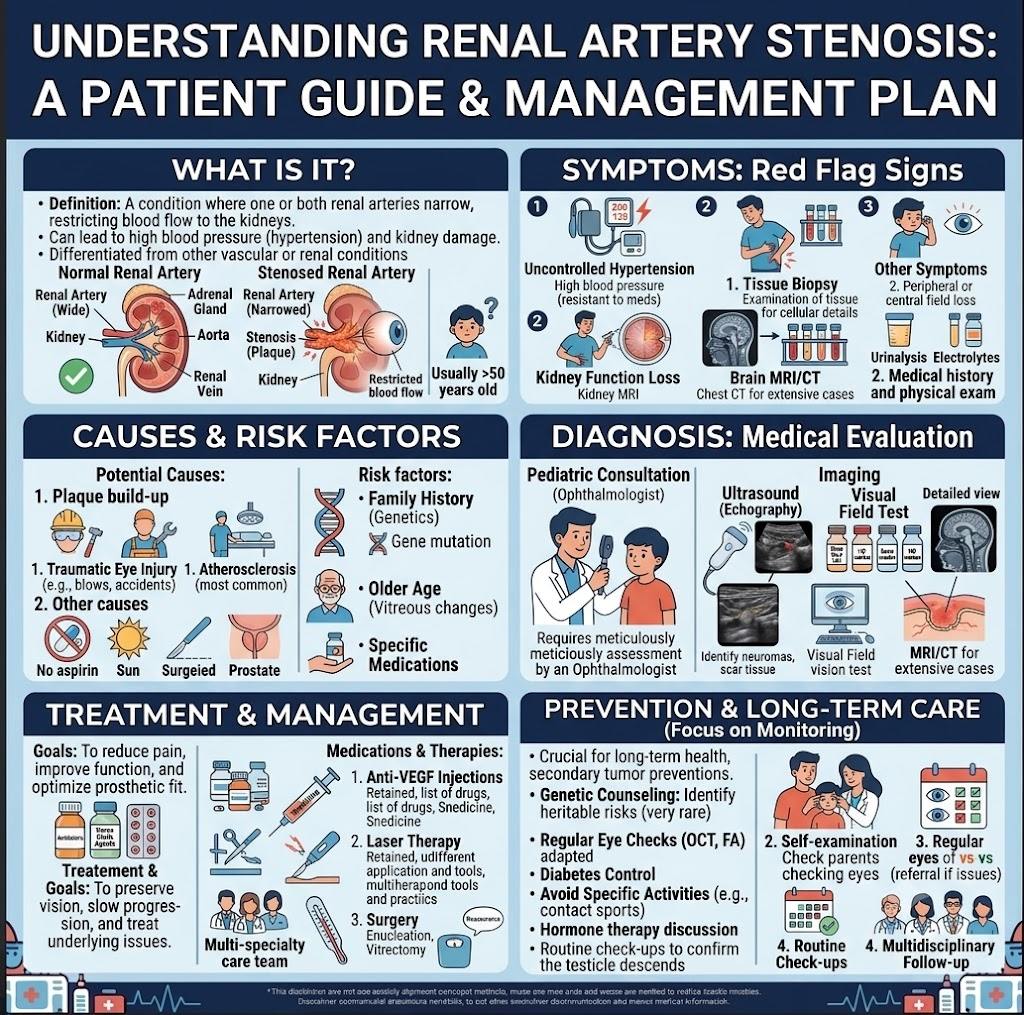
Renal artery stenosis is a condition where one or more of the main arteries supplying blood to your kidneys become narrow. These crucial arteries, called renal arteries, are vital because they deliver oxygen-rich blood that the kidneys need to filter waste from your blood and remove excess fluids from your body. When these arteries narrow, the kidneys receive less blood flow. This can damage kidney tissue over time and lead to a significant increase in blood pressure throughout your body.
Understanding the Condition
Renal Artery Stenosis: Understanding and Managing Narrowed Kidney Arteries
Understanding the Condition
Common Symptoms
High Blood Pressure (Sudden Onset or Worsening): Unexplained sudden increases in blood pressure, or existing high blood pressure that becomes more difficult to control.
Before your visit, gather all your medical records, including a list of your current medications (prescription, over-the-counter, and supplements) with dosages. Be prepared to discuss your symptoms in detail, your personal and family medical history, and any lifestyle habits like smoking or exercise. Write down any questions you have for the doctor.
Book a doctor visit near me
Consultation Guide
Renal artery stenosis is a condition where one or more of the main arteries supplying blood to your kidneys become narrow. These crucial arteries, called renal arteries, are vital because they deliver oxygen-rich blood that the kidneys need to filter waste from your blood and remove excess fluids from your body. When these arteries narrow, the kidneys receive less blood flow. This can damage kidney tissue over time and lead to a significant increase in blood pressure throughout your body.
Early or Late Onset High Blood Pressure: High blood pressure appearing before age 30 or after age 55 without a clear cause.
Local anesthetic, possibly mild sedation. Catheter inserted (usually groin/arm); dye injection causes warmth. 30-90 minutes; lie flat for hours post-procedure.
Diagnostic Procedures
These tests check kidney function (creatinine, urea) and cholesterol levels, both relevant for artery health.
What to Expect
A quick blood draw from your arm. May require fasting.
A urine sample provides information on kidney health, like detecting protein or blood.
What to Expect
You'll provide a midstream urine sample into a sterile container.
Renal Duplex Ultrasound
Non-invasive test using sound waves to image renal arteries and measure blood flow, detecting narrowing.
What to Expect
Gel applied to abdomen; a handheld device (transducer) moved over the area. Generally painless, 30-60 minutes.
Uses X-rays and contrast dye to create detailed images of renal arteries, showing narrowing.
What to Expect
Lie on a table; IV for contrast dye (temporary warm sensation). Hold breath briefly. 15-30 minutes.
Uses magnetic fields and radio waves (sometimes with contrast) for detailed renal artery images, without X-rays.
What to Expect
Lie still in a noisy, tunnel-shaped machine; IV for contrast. 30-60 minutes.
Renal Angiography (Digital Subtraction Angiography - DSA)
Invasive 'gold standard' procedure. A catheter is guided to renal arteries, and contrast dye shows blockages on X-ray.
What to Expect
Periodic Kidney Function Assessment: Regular blood and urine tests help track your kidney health and detect any signs of worsening function early, allowing for timely intervention.
Treatment Options
Difficult-to-Manage High Blood Pressure: Blood pressure that remains high despite taking multiple medications.
Whooshing Sound Over Kidneys (Bruit): A healthcare professional may hear a distinct 'whooshing' sound with a stethoscope placed over your abdomen, indicating turbulent blood flow through a narrowed artery.
Fluid Buildup and Swelling: Accumulation of fluid in the body's tissues, often noticed as swelling in the legs, ankles, or feet.
Consultation Guide
Which Specialist to Meet
You should consult with a primary care physician who may then refer you to specialists such as a Nephrologist (a doctor specializing in kidney diseases), a Cardiologist (a doctor specializing in heart and blood vessel conditions, particularly related to blood pressure), or a Vascular Specialist (a doctor focused on diseases of the arteries and veins).
Preparations Before Your Visit
Medications
Blood Pressure Lowering Medications: Various medications help relax blood vessels, remove excess fluid, or slow the heart rate to lower blood pressure and protect kidney function. These are chosen based on individual needs. (Duration: Typically long-term or lifelong, under medical supervision.)
Cholesterol-Lowering Medications: Medications can reduce the amount of harmful cholesterol in the blood, slowing the progression of plaque buildup in the arteries. (Duration: Often long-term or lifelong.)
Antiplatelet or Anticoagulant Medications: These medications help prevent blood clots from forming in narrowed arteries, reducing the risk of further blockages or complications. (Duration: Long-term, as directed by your doctor.)
Renal Artery Bypass Surgery: In cases unsuitable for angioplasty, a surgeon may create a bypass around the narrowed section of the renal artery using a healthy blood vessel from another part of the body or a synthetic tube. This restores blood flow. (Duration: Hospital stay typically 5-7 days; full recovery can take several weeks to months.)
Ongoing Monitoring by Your Doctor: Consistent follow-up appointments allow your healthcare team to monitor your blood pressure, kidney function, and overall cardiovascular health, making adjustments to your treatment plan as needed.
Strict Blood Pressure Control: Diligent adherence to prescribed medications and lifestyle changes is crucial to keep blood pressure within target ranges, protecting your kidneys and preventing complications.
Prevention & Long-Term Wellbeing
Lifestyle Changes
Heart-Healthy Diet and Regular Exercise: Adopting a diet low in saturated fats, cholesterol, and sodium, combined with regular physical activity (e.g., 30 minutes of moderate exercise most days), helps manage blood pressure and cholesterol levels, reducing stress on arteries. (Duration: Ongoing, lifelong commitment.)
Quitting Tobacco Use: Smoking significantly damages blood vessels and accelerates atherosclerosis. Stopping tobacco use is one of the most impactful steps to protect your arteries and overall health. (Duration: Lifelong abstinence.)
Balloon Angioplasty with or without Stent: A thin catheter with a balloon at its tip is guided to the narrowed renal artery. The balloon is inflated to widen the artery, and often a small mesh tube (stent) is left in place to keep it open. This improves blood flow to the kidney. (Duration: Procedure takes 1-3 hours; recovery typically 1-2 days in the hospital, followed by several weeks of limited activity. Stent remains permanently.)
Long-Term Monitoring
Prevention
Sustained Healthy Habits: Continuing a balanced diet, regular exercise, maintaining a healthy weight, and avoiding tobacco are fundamental to preventing further arterial damage and supporting long-term wellbeing.
Tags & Topics
Notice an error or need an update?
Help us keep medical information accurate. Report incorrect info or suggest an edit.

