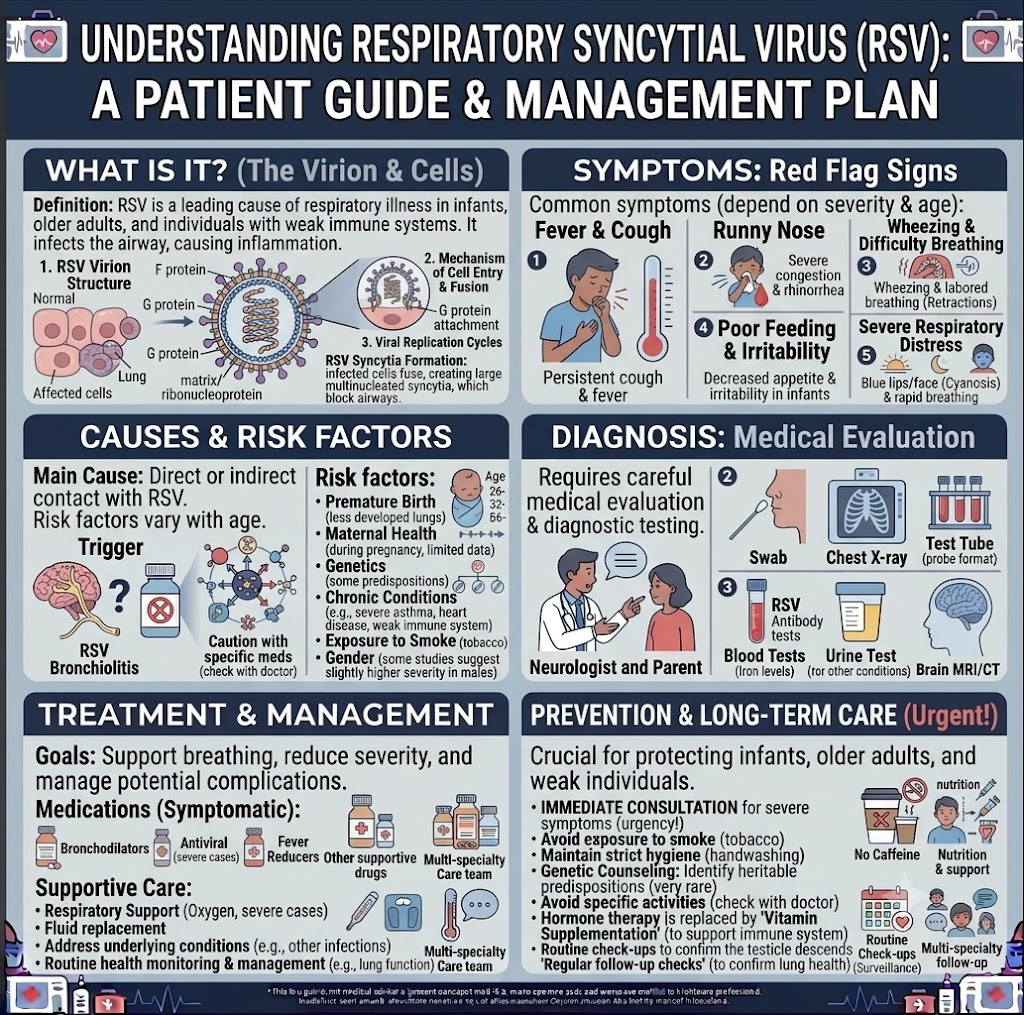
Respiratory Syncytial Virus, commonly known as RSV, is a highly common respiratory virus that causes infections of the lungs and airways. Most children experience an RSV infection by their second birthday. While often mild, RSV can affect people of all ages, including adults. For healthy older children and adults, RSV symptoms typically resemble a common cold, and self-care is usually sufficient for recovery. However, RSV can lead to severe illness in certain vulnerable groups. These include infants under 12 months (especially those born prematurely), older adults, individuals with pre-existing heart or lung conditions, and anyone with a weakened immune system. RSV and other respiratory viruses like COVID-19 can have similar symptoms and, if contracted together, may worsen illness severity.
Understanding the Condition
Respiratory Syncytial Virus (RSV): Understanding and Management
Understanding the Condition
Respiratory Syncytial Virus, commonly known as RSV, is a highly common respiratory virus that causes infections of the lungs and airways. Most children experience an RSV infection by their second birthday. While often mild, RSV can affect people of all ages, including adults. For healthy older children and adults, RSV symptoms typically resemble a common cold, and self-care is usually sufficient for recovery. However, RSV can lead to severe illness in certain vulnerable groups. These include infants under 12 months (especially those born prematurely), older adults, individuals with pre-existing heart or lung conditions, and anyone with a weakened immune system. RSV and other respiratory viruses like COVID-19 can have similar symptoms and, if contracted together, may worsen illness severity.
Common Symptoms
Mild, Cold-like Symptoms: Typically seen in healthy adults and older children, these symptoms often appear 4-6 days after exposure and mimic a common cold. They include a runny nose, sore throat, mild headache, dry cough, low-grade fever, and sneezing.
Severe Respiratory Symptoms: These symptoms may indicate the infection has spread to the lower airways (like pneumonia or bronchiolitis). Signs include a higher fever, severe cough, wheezing (a whistling sound during breathing), rapid or troubled breathing, and potentially a bluish tint to the skin, lips, or fingernails (indicating low oxygen levels).
Severe Symptoms in Infants: Infants are often most severely affected. Look for short, shallow, and rapid breathing; visible struggling to breathe (chest muscles pulling in with each breath); wheezing; persistent cough; poor feeding or decreased appetite; unusual tiredness, sluggishness, or reduced activity; and irritability.
Consultation Guide
Which Specialist to Meet
For general concerns or mild symptoms, your family doctor or general practitioner is the best first point of contact. For children, especially infants, a pediatrician should be consulted. If the illness becomes severe or complicated, your doctor may refer you to a pulmonologist (lung specialist) or an infectious disease specialist. For critically ill infants, a neonatologist (for premature babies) or a pediatric intensivist may be involved.
Preparations Before Your Visit
Before your appointment, gather information about your symptoms or your child's symptoms, including when they started, how severe they are, and any triggers. Be prepared to discuss recent exposure to sick individuals and provide a complete medical history, including any chronic heart or lung conditions or immune system issues. List all current medications you or your child are taking. Preparing a list of questions will help you make the most of your visit.
Book a doctor visit near me
This test is the most common way to identify an RSV infection. It involves collecting a sample of cells and mucus from the nasal passages or the back of the throat. This sample is then analyzed in a laboratory to detect specific viral proteins or genetic material unique to RSV. It helps confirm the diagnosis and distinguish RSV from other respiratory illnesses like the flu or COVID-19, as some symptoms can be similar.
Managing Congestion and Cough: Using a cool-mist humidifier in your room can help moisten the air and ease coughing and sore throat. Saline nasal drops or sprays can help loosen mucus, and gentle suctioning (especially for infants) can clear stuffy noses. (Duration: As needed for symptom relief during the illness.)
Medications (Symptomatic Relief)
Fever and Pain Relief: Over-the-counter medications can help reduce fever and alleviate general discomfort or headaches. Always follow dosage instructions and consult a doctor before giving any medication to children, especially avoiding aspirin for children due to the risk of Reye's syndrome. (Duration: Typically for the duration of acute symptoms, which can be several days.)
Follow-up Care: Individuals, particularly infants and those with chronic health conditions who experienced severe RSV, should follow up with their doctor to monitor recovery and address any lingering symptoms or potential complications.
Monitoring for Respiratory Issues: Some children, especially those who had severe RSV infections, may experience recurrent wheezing or develop asthma-like symptoms later on. Close monitoring and medical consultation are important if these issues arise.
Diagnostic Procedures
Nasal Swab Test for Respiratory Viruses
What to Expect
A healthcare professional will gently insert a sterile swab into one of your nostrils and rotate it for a few seconds. This might feel slightly uncomfortable or ticklish for a brief moment. For infants and young children, a similar process may be used, or a small tube might be used to suction mucus from the nose. The collected sample is then placed into a sterile container and sent to a lab for testing. Results can be available within hours to a few days, depending on the lab and the type of test used.
Chest X-ray (Radiography)
A chest X-ray is a common imaging test that uses a small amount of radiation to create pictures of the internal structures of your chest. These images can show your heart, lungs, blood vessels, airways, and the bones of your chest and spine. For RSV, a chest X-ray is primarily used if a severe infection, such as pneumonia (lung infection) or bronchiolitis (inflammation of small airways), is suspected. It can reveal inflammation, fluid in or around the lungs, or signs of lung damage.
What to Expect
The procedure is quick and generally painless. You will typically be asked to stand or sit against a special plate, or lie down on a table. The X-ray technician will position you correctly and may ask you to hold your breath briefly while the images are taken. Usually, two views are taken: one from the front (or back) and one from the side. The X-ray machine then sends a small amount of radiation through your chest to create the images. You won't feel anything during the X-ray itself. The total time for the procedure is usually just a few minutes.
Treatment Options
Supportive Care (Home Remedies)
Rest and Hydration: Resting helps your body conserve energy to fight the infection. Drinking plenty of fluids like water, clear broths, or juice is crucial to prevent dehydration, especially if you have a fever. (Duration: Throughout the illness, typically 1 to 2 weeks for mild cases.)
Inhaled Bronchodilators (in select cases): For individuals experiencing significant wheezing or airway constriction, a healthcare provider might prescribe inhaled medications to help open up the airways. (Duration: Short-term, as directed by a doctor.)
Hospitalization (for Severe Cases)
Oxygen Therapy: If breathing becomes severely difficult or oxygen levels are low, supplemental oxygen may be provided through nasal tubes or a mask to ensure adequate oxygen delivery to the body. (Duration: Varies, from a few days to weeks, depending on the severity of respiratory distress.)
Intravenous (IV) Fluids: For individuals who are too ill to drink enough fluids or are severely dehydrated, fluids can be administered directly into a vein to maintain hydration. (Duration: As long as oral intake is insufficient or dehydration persists.)
Mechanical Ventilation: In very severe cases where the lungs cannot adequately support breathing, a breathing machine (ventilator) may be used to assist or take over the patient's breathing. (Duration: Until lung function improves sufficiently, potentially several days to weeks.)
Prevention & Long-Term Wellbeing
Prevention
Practicing Good Hand Hygiene: Frequently wash your hands thoroughly with soap and water for at least 20 seconds, especially after coughing, sneezing, or caring for someone who is sick. Use an alcohol-based hand sanitizer if soap and water are not available.
Avoiding Contact with Sick Individuals: If you are sick, stay home to prevent spreading the virus. Avoid close contact, such as kissing, shaking hands, and sharing cups or eating utensils, with others, especially infants and high-risk individuals.
Covering Coughs and Sneezes: Always cover your mouth and nose with a tissue when you cough or sneeze, then dispose of the tissue immediately. If a tissue isn't available, use the inside of your elbow.
Cleaning and Disinfecting Surfaces: Regularly clean and disinfect frequently touched surfaces, such as doorknobs, countertops, and toys, especially in shared spaces or if someone in the household is sick.
Passive Immunization (for High-Risk Infants): For very specific high-risk infants (e.g., those born prematurely or with certain heart/lung conditions), monthly injections of antibodies can be administered during RSV season to help prevent severe illness. This is a protective measure, not a vaccine.
RSV Vaccination: Vaccines against RSV are now available for certain populations, including pregnant individuals (to protect their newborns) and older adults. Discuss with your doctor if vaccination is appropriate for you or your family.
Long-Term Monitoring
Tags & Topics
Notice an error or need an update?
Help us keep medical information accurate. Report incorrect info or suggest an edit.


