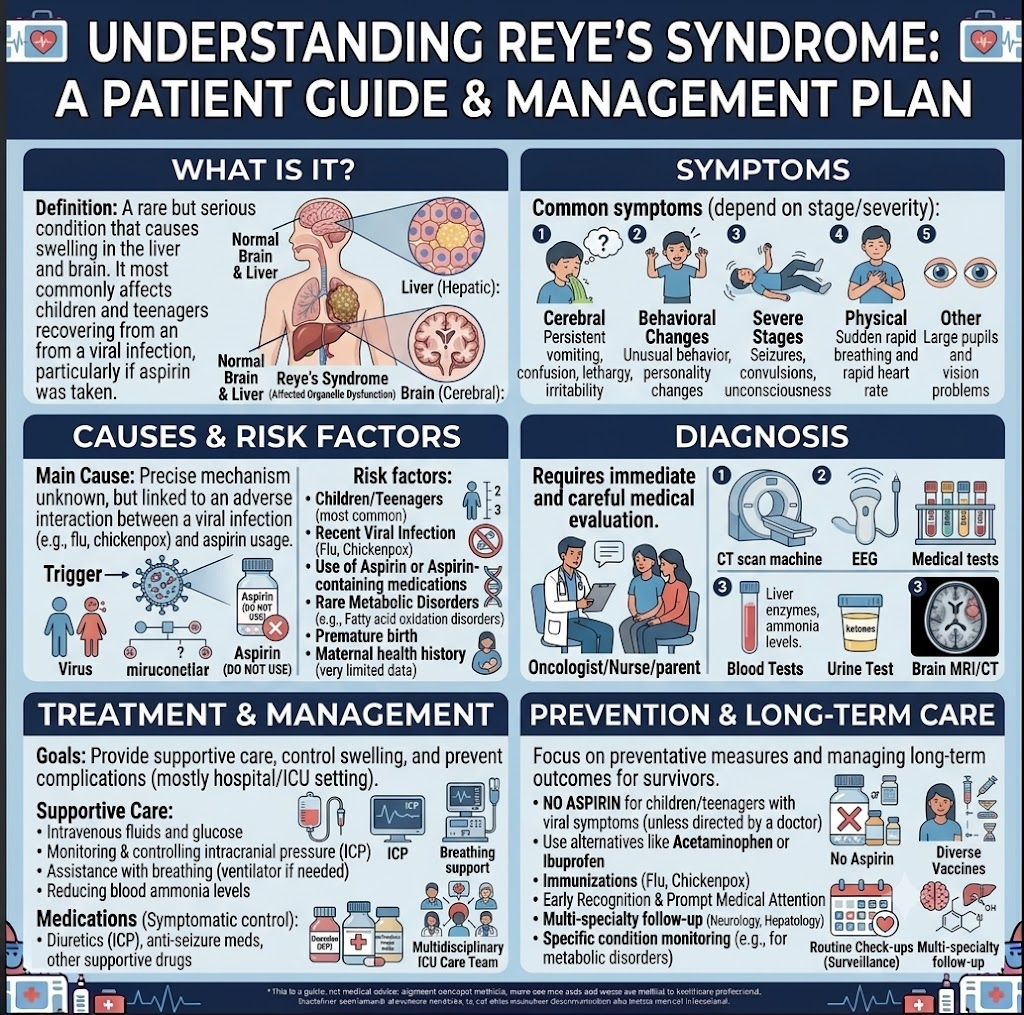
Reye's syndrome is a rare but severe condition causing dangerous swelling in the liver and brain. It primarily affects children and teenagers, usually after a viral infection like the flu or chickenpox. Emergency medical treatment is critical, as early diagnosis and care can save lives. Aspirin use during these viral illnesses is strongly linked to Reye's syndrome.
Understanding the Condition
Common Symptoms
General Onset: Symptoms typically appear 3 to 5 days after a viral infection. Reye's syndrome can lead to low blood sugar, increased ammonia and acidity in the blood, liver swelling with fat buildup, and dangerous brain swelling.
For Children Younger Than 2: Rapid breathing, persistent vomiting, unusual sluggishness.
For Older Children and Teenagers: Continuous, severe vomiting, excessive sleepiness or unusual fatigue.
Worsening Symptoms (Any Age, require emergency care): Irritable, aggressive, or irrational behavior; confusion, hallucinations; weakness or inability to move limbs; profound sluggishness, decreased consciousness, seizures, or coma.
Consultation Guide
Which Specialist to Meet
Seek immediate emergency care. For follow-up, consult a pediatrician, neurologist (brain specialist), and gastroenterologist (liver specialist). A geneticist may be involved if an underlying metabolic condition is suspected.
Preparations Before Your Visit
Be ready to describe all symptoms, their timeline, any recent viral illnesses, and all medications given. Share family medical history, especially any metabolic conditions. Prepare your questions.
Book a doctor visit near me
Diagnostic Procedures
Reye's syndrome is a rare but severe condition causing dangerous swelling in the liver and brain. It primarily affects children and teenagers, usually after a viral infection like the flu or chickenpox. Emergency medical treatment is critical, as early diagnosis and care can save lives. Aspirin use during these viral illnesses is strongly linked to Reye's syndrome.
Uses X-rays and a computer to create detailed 'slice' images of the brain, skull, and blood vessels, quickly showing issues like bleeding or swelling.
What to Expect
You lie on a table that slides into a large, open scanner. It's quick and painless, though you must stay still. A contrast dye might be injected to enhance images. Minimal radiation is used, with benefits typically outweighing risks.
Brain Magnetic Resonance Imaging (MRI)
Uses strong magnets and radio waves to produce highly detailed images of the brain, neck, and spine, helping detect changes or abnormalities.
What to Expect
You lie in a tube-shaped machine. It's important to stay very still, and you will hear loud noises (ear protection is provided). The scan can take 30-60 minutes. It is radiation-free, though some find the enclosed space uncomfortable. Contrast dye may be used.
Removes a small liver tissue sample for lab analysis to check for damage, disease, or fat buildup, crucial for diagnosing Reye's syndrome.
What to Expect
The skin over your liver will be numbed. A thin needle is inserted to collect the tissue; you might feel pressure. You'll hold your breath briefly. The procedure is quick, followed by a few hours of rest.
Lumbar Puncture (Spinal Tap)
Collects a sample of cerebrospinal fluid (CSF) from the lower back to diagnose infections, bleeding, neurological conditions, or abnormal proteins.
What to Expect
You'll lie on your side with knees to chest. The lower back is numbed before a thin needle is inserted to collect fluid. You might feel pressure. The procedure takes about 30 minutes, and lying flat afterward helps prevent headaches.
Removes a small skin sample for lab analysis, a general diagnostic tool for skin conditions, or for genetic testing if an underlying metabolic disorder is suspected.
What to Expect
The skin is numbed. Depending on the need, a razor scrapes the surface (shave biopsy), a circular tool takes a deeper sample (punch biopsy), or a scalpel removes an area (excisional biopsy). Stitches may be needed.
Treatment Options
Emergency and Supportive Care
Intensive Care Unit (ICU) Management: Immediate hospitalization and close monitoring in an ICU are essential to support vital organ functions and manage rapidly changing conditions. (Duration: Varies from several days to weeks, based on illness severity.)
Fluid and Metabolic Balance: Careful management of IV fluids, glucose to stabilize blood sugar, and treatments to reduce high ammonia and acidity levels in the blood. (Duration: Throughout the acute phase of the illness.)
Managing Complications
Brain Swelling Reduction: Medications administered intravenously to decrease dangerous pressure and swelling in the brain. (Duration: As needed during the critical period.)
Seizure Control: Specific medications given to prevent and manage seizures, if they occur. (Duration: As long as seizure risk is present.)
Respiratory Support: Mechanical ventilation (breathing machine) may be used if breathing becomes severely compromised. (Duration: Until independent breathing is restored.)
Long-Term Rehabilitation
Rehabilitation Therapies: For those with lasting brain damage, therapies like physical, occupational, and speech therapy can help regain function and improve quality of life. (Duration: Ongoing for months or years, individualized to needs.)
Prevention & Long-Term Wellbeing
Reye's Syndrome: Understanding and Prevention
- Understanding the Condition
Prevention
Avoid Aspirin for Children and Teenagers: Never give aspirin or aspirin-containing products to children or teenagers recovering from viral infections (flu, chickenpox, colds). Always check medicine labels for ingredients like acetylsalicylic acid or salicylates.
Use Safe Pain/Fever Relievers: Opt for children's acetaminophen or ibuprofen for pain and fever, following dosage instructions carefully. Consult a healthcare professional if unsure.
Newborn Screening Awareness: Be aware if your child was screened for metabolic conditions like fatty acid oxidation disorders at birth, as these increase Reye's risk, making aspirin avoidance even more critical.
Long-Term Monitoring
Ongoing Medical Follow-up: Survivors need regular follow-up with specialists to monitor for any lasting neurological or developmental effects, ensuring appropriate support and interventions.
Tags & Topics
Notice an error or need an update?
Help us keep medical information accurate. Report incorrect info or suggest an edit.


