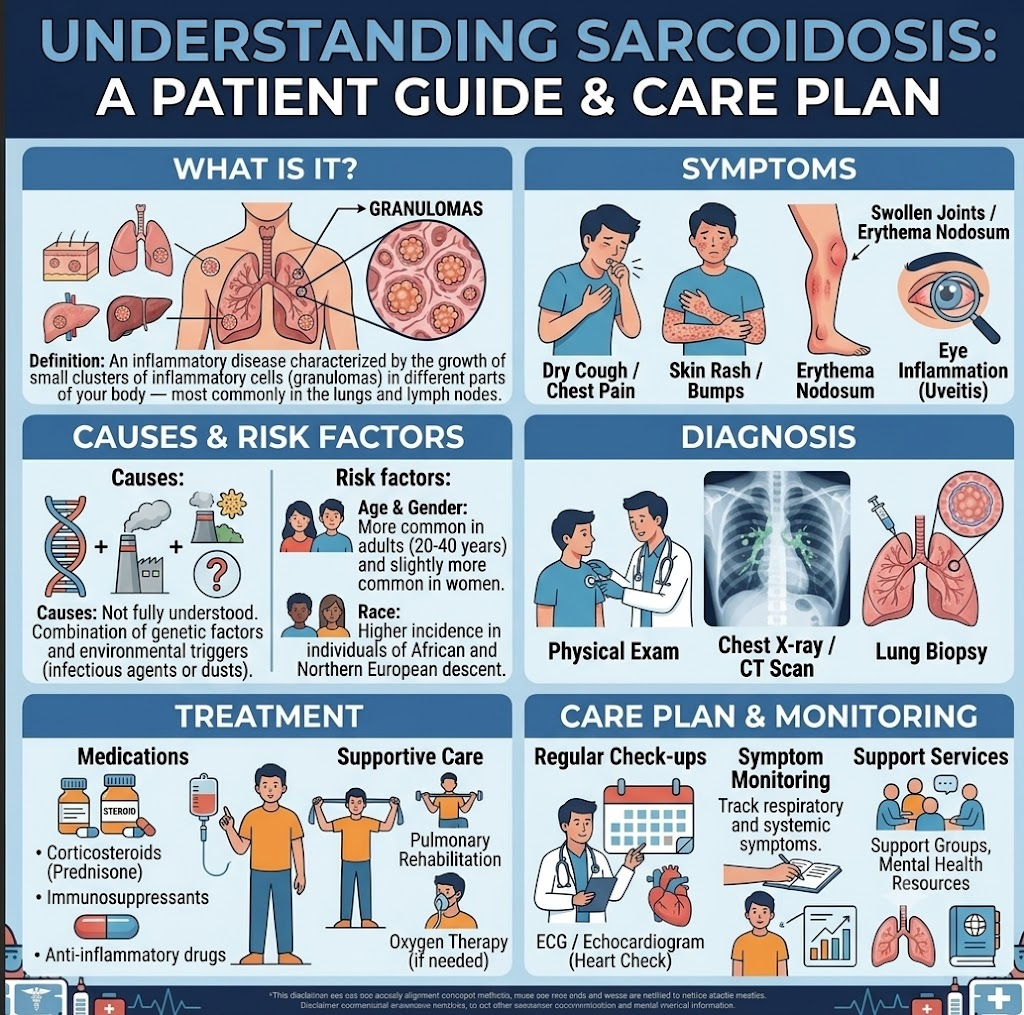
Sarcoidosis is a condition where the body's immune system overreacts, forming tiny clumps of inflammatory cells called granulomas. These granulomas can appear in almost any organ, most commonly in the lungs and lymph nodes in the chest, but also in the eyes, skin, heart, and other areas. While the exact cause isn't fully understood, it's believed to involve a combination of genetic factors and environmental triggers like bacteria, viruses, or certain chemicals. Often, sarcoidosis is mild and may disappear on its own without treatment. However, in some individuals, it can become chronic, causing inflammation and potential damage to affected organs.
Understanding the Condition
Sarcoidosis: Understanding an Inflammatory Condition
Understanding the Condition
Common Symptoms
General Symptoms: Many people have no symptoms, and the condition is found incidentally. When symptoms do occur, they can include extreme tiredness, a slight fever, swollen lymph nodes (in the chest, neck, armpits, or groin), unexplained weight loss, and pain and swelling in joints like the ankles.
Lung-Specific Symptoms: As sarcoidosis most frequently affects the lungs, symptoms can include a persistent dry cough, shortness of breath, a whistling sound during breathing (wheezing), and chest pain.
Consultation Guide
Which Specialist to Meet
You should begin by consulting your primary care doctor. They may refer you to specialists depending on which organs are affected. This could include a pulmonologist (lung specialist), ophthalmologist (eye specialist), dermatologist (skin specialist), cardiologist (heart specialist), rheumatologist (joint specialist), or neurologist (nerve specialist).
Preparations Before Your Visit
Before your visit, make a list of all your symptoms, including when they started and how severe they are. Note any recent illnesses, medications you're taking (including over-the-counter drugs and supplements), and your family medical history. Prepare questions for your doctor.
Book a doctor visit near me
Symptom Management: Prioritize rest and use over-the-counter pain relievers for joint pain. Maintain a healthy, balanced diet. (Duration: Ongoing as needed)
Avoid Triggers: Minimize exposure to environmental triggers like dust, chemicals, or allergens if they worsen symptoms. (Duration: Ongoing)
Consultation Guide
Sarcoidosis is a condition where the body's immune system overreacts, forming tiny clumps of inflammatory cells called granulomas. These granulomas can appear in almost any organ, most commonly in the lungs and lymph nodes in the chest, but also in the eyes, skin, heart, and other areas. While the exact cause isn't fully understood, it's believed to involve a combination of genetic factors and environmental triggers like bacteria, viruses, or certain chemicals. Often, sarcoidosis is mild and may disappear on its own without treatment. However, in some individuals, it can become chronic, causing inflammation and potential damage to affected organs.
Liver Transplant: If sarcoidosis causes severe, irreversible liver failure, a transplant replaces the damaged liver with a healthy donor liver. (Duration: One-time procedure, lifelong care)
Ocular Surgery: Surgeries for conditions like cataracts or glaucoma may be performed if sarcoidosis causes significant eye damage. (Duration: One-time procedure)
Diagnostic Procedures
A quick, painless imaging test that uses a small amount of radiation to create pictures of the structures inside your body, especially bones. It helps detect problems in the lungs and chest.
What to Expect
You will be asked to stand, sit, or lie down, and a technologist will position the X-ray machine. Hold still for a few seconds. The procedure is quick and painless.
CT Scan (Computerized Tomography Scan)
A more detailed imaging test than a standard X-ray, a CT scan uses a series of X-rays from different angles to create cross-sectional, "slice-like" images of bones, blood vessels, and soft tissues, offering a clearer view of internal organs.
What to Expect
You'll lie on a table that slides into a large, doughnut-shaped machine. The scanner rotates, taking images. You must remain still. Sometimes, a contrast dye is given to enhance images.
This procedure involves removing a small sample of skin tissue for examination under a microscope by a pathologist. It's used to diagnose sarcoidosis when it affects the skin.
What to Expect
The skin area is cleaned and numbed with a local anesthetic. A small tool removes the tissue. Stitches may be needed, and the site is then bandaged.
Treatment Options
Medications
Anti-inflammatory Medications: Corticosteroids are common initial treatments, reducing inflammation and calming the immune response. (Duration: Weeks to months, often tapered)
Immune-Suppressing Medications: For severe cases or when corticosteroids are insufficient, stronger drugs suppress the immune system to prevent granuloma formation. (Duration: Months to years, with monitoring)
Therapies
Pulmonary Rehabilitation: For lung involvement, this program includes exercises, education, and breathing techniques to improve lung function and quality of life. (Duration: Weeks to months)
Oxygen Therapy: If sarcoidosis severely impairs lung function, supplemental oxygen helps with breathing. (Duration: Ongoing, as prescribed)
Surgical Procedures
Lung Transplant: In rare, severe end-stage lung damage, a diseased lung may be replaced with a healthy donor lung. (Duration: One-time procedure, lifelong care)
Regular Medical Follow-ups: Consistent appointments with doctors are crucial to monitor organ function, assess disease activity, detect complications early, and adjust treatment.
Bone Health Management: Discuss with your doctor about bone density screening and strategies (e.g., vitamin D, calcium) to maintain strong bones, especially with medication use.
Mental and Emotional Support: Seek support from family, friends, support groups, or professionals to manage stress and improve coping strategies for a chronic condition.
Prevention & Long-Term Wellbeing
Home Remedies & Lifestyle
Prevention
Environmental Awareness: While direct prevention isn't fully understood, minimizing exposure to potential environmental triggers like certain dusts or chemicals, especially if you have a family history, may be beneficial.
Long-Term Monitoring & Support
Healthy Lifestyle: Maintain a balanced diet, engage in regular, moderate physical activity, and ensure adequate rest to support overall health and energy.
Tags & Topics
Notice an error or need an update?
Help us keep medical information accurate. Report incorrect info or suggest an edit.


