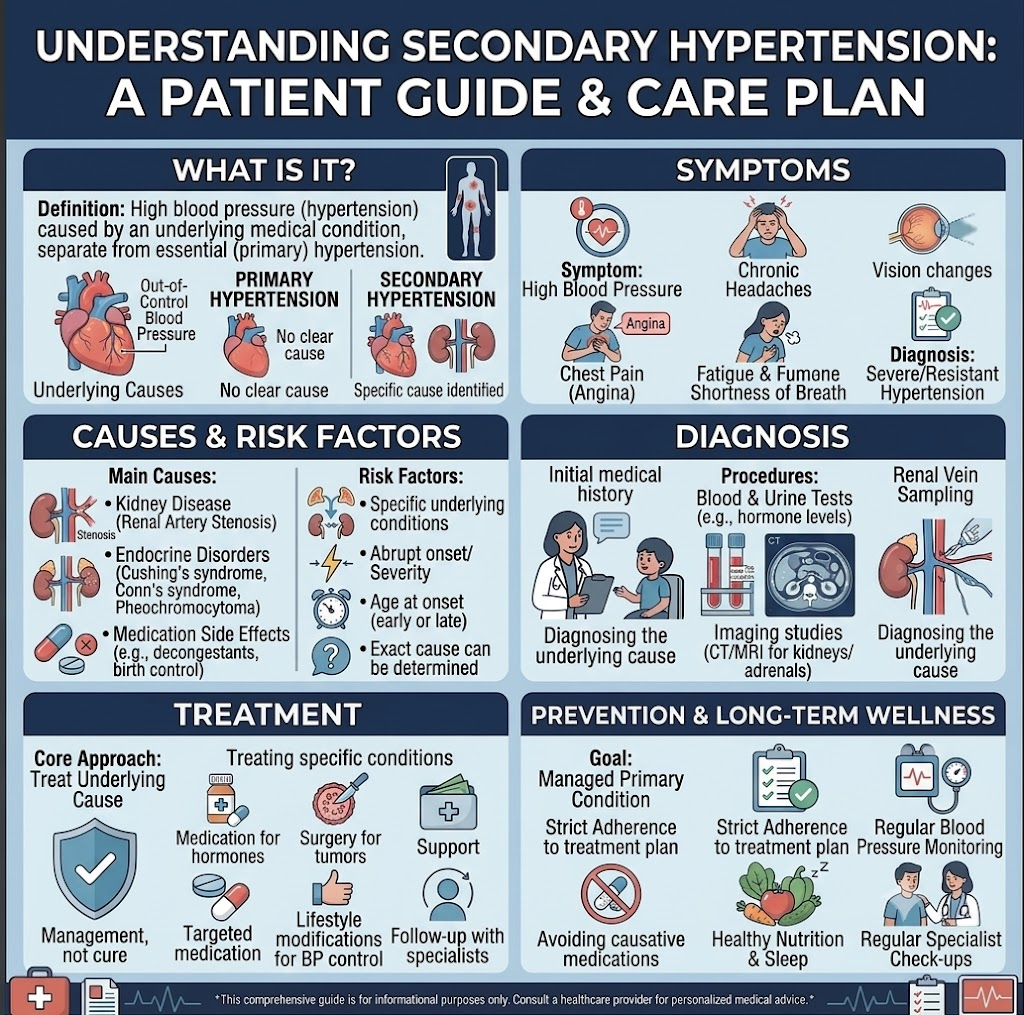
Secondary high blood pressure, also known as secondary hypertension, is high blood pressure that isn't the usual type. Instead, it's caused by another underlying health problem. This can include conditions affecting your kidneys, arteries, heart, or hormone-producing glands. It can also develop during pregnancy. Unlike the more common type of high blood pressure (often called primary or essential hypertension), secondary high blood pressure usually responds well to treating the root cause. Finding and managing the underlying condition is crucial to control blood pressure and reduce the risk of serious problems like heart disease, kidney failure, and stroke.
Understanding the Condition
Understanding Secondary High Blood Pressure
Understanding the Condition
Common Symptoms
Often No Specific Symptoms: Like the usual type of high blood pressure, secondary high blood pressure often doesn't cause clear symptoms, even when blood pressure reaches dangerously high levels. Regular blood pressure checks are essential for detection.
Signs Suggesting Secondary High Blood Pressure: If you have high blood pressure along with any of these signs, your doctor might investigate if it's secondary high blood pressure: very high blood pressure that appears suddenly; blood pressure that doesn't respond well to multiple medications; blood pressure that starts at a very young age (before 30) or after age 55; no family history of high blood pressure and not being overweight; or other specific symptoms related to conditions affecting your kidneys, hormones, or heart.
Consultation Guide
Which Specialist to Meet
Before your appointment, make a list of all your symptoms, even minor ones, and when they started. Note any current medications, vitamins, and supplements you take. Be prepared to discuss your medical history, any family history of high blood pressure or other conditions, and any changes in your lifestyle. If you monitor your blood pressure at home, bring your readings with you. Prepare a list of questions for your doctor to ensure all your concerns are addressed.
Book a doctor visit near me
Consultation Guide
Secondary high blood pressure, also known as secondary hypertension, is high blood pressure that isn't the usual type. Instead, it's caused by another underlying health problem. This can include conditions affecting your kidneys, arteries, heart, or hormone-producing glands. It can also develop during pregnancy. Unlike the more common type of high blood pressure (often called primary or essential hypertension), secondary high blood pressure usually responds well to treating the root cause. Finding and managing the underlying condition is crucial to control blood pressure and reduce the risk of serious problems like heart disease, kidney failure, and stroke.
You should start by consulting your primary care doctor. If secondary high blood pressure is suspected, your doctor may refer you to specialists depending on the suspected cause. These could include a nephrologist (kidney specialist), an endocrinologist (hormone specialist), or a cardiologist (heart specialist).
Preparations Before Your Visit
A blood pressure test measures the force of blood against the walls of your arteries as your heart pumps. It's a standard part of most health checkups and is crucial for screening and monitoring high blood pressure. For secondary high blood pressure, frequent monitoring helps your doctor understand patterns and the effectiveness of treatment for the underlying cause.
A urinalysis is a test of your urine. It helps detect and manage a wide range of conditions, including urinary tract infections, kidney disease, and diabetes. For secondary high blood pressure, it's particularly useful for checking kidney function, as several kidney problems can cause blood pressure to rise.
An electrocardiogram (ECG or EKG) is a quick and non-invasive test that records the electrical signals of your heart. It shows how fast or slow your heart is beating, its rhythm, and can detect signs of heart strain, enlargement, or damage. For secondary high blood pressure, an ECG can help assess if the high pressure has affected your heart's health or caused any changes to its structure or function.
Blood Pressure Lowering Medications: These medications help reduce your blood pressure directly. They might be used while the underlying cause is being investigated or alongside treatments for the primary condition to ensure blood pressure is controlled. Several types are available, and your doctor will choose the best one(s) for you. (Duration: Often lifelong, or until the underlying cause is fully resolved and blood pressure stabilizes without medication.)
Artery Repair Procedures: For high blood pressure caused by narrowed kidney arteries, procedures like angioplasty (inserting a tiny balloon to open the artery) or stenting (placing a small mesh tube to keep the artery open) can restore proper blood flow to the kidneys. (Duration: One-time procedure with a recovery period, followed by ongoing monitoring.)
Dialysis (for advanced kidney disease): In cases where kidney disease is severe and causes high blood pressure, dialysis may be necessary. This treatment artificially filters waste and excess fluid from the blood when the kidneys can no longer do so effectively, which can help manage associated high blood pressure. (Duration: Ongoing, typically multiple sessions per week, unless a kidney transplant is performed.)
Manage Existing Health Conditions: If you have conditions known to cause secondary high blood pressure, such as diabetes, thyroid disorders, or kidney disease, diligently follow your doctor's treatment plan to keep them under control. This can help prevent the development or worsening of high blood pressure.
Adherence to Treatment Plan: Consistently follow your doctor's recommendations for medications, lifestyle changes, and follow-up tests. This is critical for managing both your blood pressure and the underlying cause, preventing complications.
Diagnostic Procedures
What to Expect
A healthcare professional will use an inflatable cuff wrapped around your arm. The cuff will inflate, briefly squeezing your arm, and then slowly deflate. This process measures two numbers: the top number (systolic, when your heart beats) and the bottom number (diastolic, when your heart rests between beats). The process is quick and generally painless, though the squeeze can feel slightly uncomfortable for a few seconds.
What to Expect
You'll be asked to provide a urine sample in a sterile cup. You might be given instructions for a 'clean-catch' method, which involves cleaning the genital area before collecting a midstream sample to prevent contamination. The sample is then sent to a lab where it's checked for appearance, concentration, and content (e.g., presence of protein, blood cells, or sugar). The collection process is quick and painless.
An ultrasound, also called sonography, uses high-frequency sound waves to create live images of structures inside your body. It's a valuable tool for examining organs like the kidneys, adrenal glands (which produce hormones), and major blood vessels to identify any abnormalities or blockages that could be causing high blood pressure.
What to Expect
You will usually lie down on an examination table. A clear gel will be applied to your skin over the area being examined (e.g., abdomen for kidneys or adrenal glands). A handheld device called a transducer will be pressed against your skin and moved around the area. The transducer sends out sound waves and picks up the echoes, which are converted into images on a monitor. The procedure is generally painless, though you might feel slight pressure from the transducer. Depending on the area, you might be asked to fast or have a full bladder beforehand.
Electrocardiogram (ECG or EKG)
What to Expect
Small, sticky patches called electrodes will be placed on your chest and sometimes on your arms or legs. These patches are connected by wires to an ECG machine. You will be asked to lie still for a few minutes while the machine records your heart's electrical activity. The test is quick, painless, and does not involve any electrical shocks.
Scheduled Follow-Up Appointments: Attend all scheduled appointments with your primary care doctor and any specialists. These visits allow your healthcare team to monitor your condition, adjust treatments, and conduct necessary diagnostic tests to ensure long-term health.
Treatment Options
Medications
Medications for Hormone Imbalances: If secondary high blood pressure is due to an overactive hormone-producing gland (like the thyroid or adrenal glands), specific medications can help regulate hormone levels and bring them back to normal. (Duration: Varies depending on the condition; can be short-term before surgery or long-term for chronic imbalances.)
Medications for Kidney Conditions: Certain medications can help manage kidney diseases that contribute to high blood pressure, improving kidney function and reducing the strain on your cardiovascular system. (Duration: Often long-term, requiring ongoing management.)
Surgical Procedures
Tumor Removal Surgery: If a tumor on an adrenal gland or another hormone-producing gland is causing the high blood pressure, surgical removal of the tumor can often cure the condition and normalize blood pressure. (Duration: One-time procedure with a recovery period, followed by monitoring to ensure hormone levels are balanced.)
Therapies
Prevention & Long-Term Wellbeing
Lifestyle Changes (Supportive Home Remedies)
Balanced Diet: Eating a diet rich in fruits, vegetables, whole grains, and lean proteins, while limiting salt, unhealthy fats, and processed foods, can help manage blood pressure and support overall health. (Duration: Ongoing, for life.)
Regular Physical Activity: Engaging in at least 30 minutes of moderate-intensity exercise most days of the week can significantly contribute to lowering blood pressure and improving heart health. (Duration: Ongoing, for life.)
Weight Management: Achieving and maintaining a healthy weight can reduce the strain on your heart and blood vessels, positively impacting blood pressure levels. (Duration: Ongoing, for life.)
Stress Reduction: Practicing stress-reducing techniques such as meditation, deep breathing, yoga, or engaging in hobbies can help manage blood pressure fluctuations and promote overall well-being. (Duration: Ongoing, for life.)
Prevention
Adopt a Heart-Healthy Lifestyle: Maintain a healthy weight, eat a balanced diet low in sodium, engage in regular physical activity, and avoid smoking and excessive alcohol. These habits can reduce the risk of many underlying conditions that lead to secondary high blood pressure.
Long-Term Monitoring
Regular Blood Pressure Checks: Even if your blood pressure is controlled, continue to monitor it regularly, both at home and during doctor visits. This helps detect any changes or recurrence of the underlying condition early.
Tags & Topics
Notice an error or need an update?
Help us keep medical information accurate. Report incorrect info or suggest an edit.

