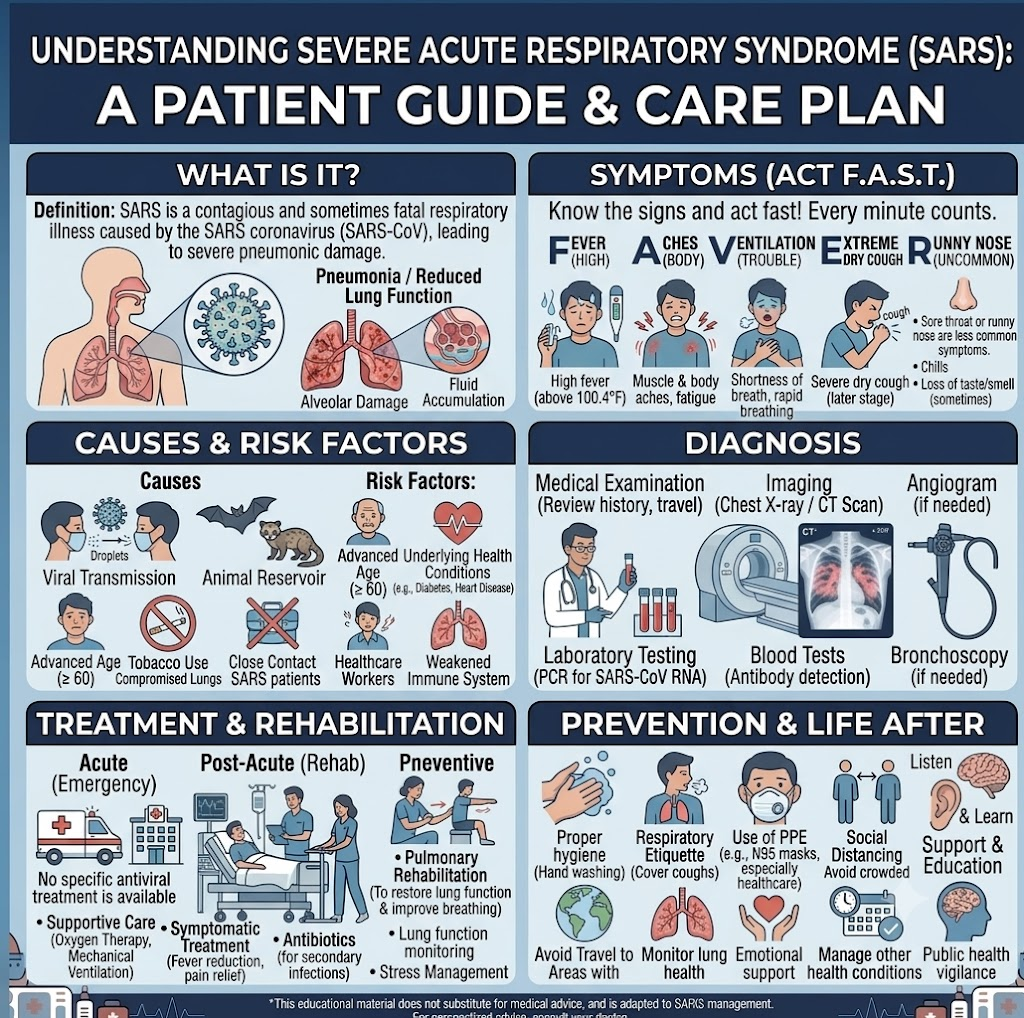
Severe Acute Respiratory Syndrome (SARS) is a highly contagious illness caused by a specific type of coronavirus known as SARS-CoV-1. This disease primarily affects the lungs and airways, leading to severe respiratory problems. First identified in November 2002, the SARS-CoV-1 virus rapidly spread globally within a few months, mainly through person-to-person contact. Thanks to intensive international efforts from health experts, the spread was swiftly contained. No new cases of SARS have been reported anywhere in the world since 2004, making it a condition that is currently not circulating.
Understanding the Condition
Severe Acute Respiratory Syndrome (SARS): A Comprehensive Guide for Non-Medical Readers
Understanding the Condition
Common Symptoms
Initial Flu-like Symptoms: These typically appear 2-7 days after exposure and include: Fever (often high, above 100.4 F or 38 C), Body Aches (muscle pain and stiffness), Headache (persistent and often severe), and Diarrhea (can occur in some individuals).
Later Respiratory Symptoms: Usually developing after about a week: Dry Cough (a persistent cough without mucus), Shortness of Breath (difficulty breathing or feeling breathless). SARS is a serious illness that can lead to life-threatening lung inflammation (pneumonia) and potentially death.
Consultation Guide
Which Specialist to Meet
Your primary care physician (family doctor or internal medicine doctor) is the initial point of contact for assessing flu-like symptoms or respiratory infections. If SARS were to re-emerge or if your condition is severe, they might refer you to a pulmonologist (a lung specialist) or an infectious disease specialist.
Preparations Before Your Visit
Before your visit, prepare a detailed list of your symptoms, including when they started and how they have changed. Note any recent travel, especially international trips, and any known exposure to sick individuals. Bring a list of all medications you are currently taking, including over-the-counter drugs and supplements. Be ready to discuss your medical history and ask any questions you may have.
Book a doctor visit near me
The doctor will ask about your symptoms and medical history. You will be asked to breathe deeply while the doctor listens to your chest. Your temperature and vital signs will be checked.
Rest: Essential for your body to conserve energy and fight the infection. (Duration: Continuous until symptoms resolve, typically several weeks for full recovery.)
Fluids: Drink plenty of water, clear broths, and electrolyte solutions to prevent dehydration. (Duration: Continuous until symptoms resolve.)
Humidifier Use: Using a cool-mist humidifier can help ease cough and sore throat. (Duration: As needed for symptom relief.)
Antipyretics and Pain Relievers: Stronger medications may be prescribed to manage high fever and severe body aches. (Duration: Varies based on symptoms and doctor's prescription, typically for the duration of acute illness (days to weeks).)
Consultation Guide
Severe Acute Respiratory Syndrome (SARS) is a highly contagious illness caused by a specific type of coronavirus known as SARS-CoV-1. This disease primarily affects the lungs and airways, leading to severe respiratory problems. First identified in November 2002, the SARS-CoV-1 virus rapidly spread globally within a few months, mainly through person-to-person contact. Thanks to intensive international efforts from health experts, the spread was swiftly contained. No new cases of SARS have been reported anywhere in the world since 2004, making it a condition that is currently not circulating.
A healthcare professional will insert a long, flexible swab into your nose (nasopharyngeal swab) or rub a swab over the back of your throat (oropharyngeal swab). This can be briefly uncomfortable or cause a tickling sensation, potentially triggering a cough or sneeze. The sample is then sent to a lab for analysis.
Chest X-ray or CT Scan
These imaging tests provide detailed pictures of your lungs to look for signs of pneumonia, fluid buildup, or other lung damage caused by the infection.
Diagnostic Procedures
A doctor will carefully examine you, listen to your lungs with a stethoscope to check for abnormal sounds, and assess your breathing effort. They will also check for fever, rash, and other signs of infection.
What to Expect
Blood samples are taken to check for signs of infection, inflammation, and to assess the function of your organs. This can include a complete blood count (CBC) to look at white blood cells, and chemistry panels to evaluate kidney and liver function.
What to Expect
A healthcare professional will draw a small amount of blood, usually from a vein in your arm, using a needle. You might feel a brief pinch or sting. The process typically takes only a few minutes.
Viral Detection Tests (e.g., PCR Tests)
These tests aim to directly detect the genetic material of the SARS-CoV-1 virus. Samples are typically collected from the respiratory tract where the virus is most active.
What to Expect
What to Expect
For a chest X-ray, you will stand or sit against an imaging plate, and you'll be asked to hold your breath for a few seconds while the image is taken. It's quick and painless. For a CT scan, you will lie on a table that slides into a large, donut-shaped machine. You'll need to stay still, and the machine might make some whirring noises. The procedure is painless but takes a bit longer than an X-ray.
Treatment Options
Home Remedies and Supportive Care
Fever Reduction: Use over-the-counter medications to lower fever and alleviate body aches. (Duration: As needed, typically for the duration of fever (days to weeks).)
Medication (Prescribed by a Doctor)
Cough Suppressants: If cough is severe and interferes with rest, specific medications might be used. (Duration: As prescribed, typically for short periods during acute illness.)
Antiviral Medications: While specific antivirals for SARS-CoV-1 were not established, general broad-spectrum antivirals might be considered based on evolving medical knowledge for similar viral threats. (Duration: As prescribed, typically for several days to a week.)
Antibiotics: These are only used if a secondary bacterial infection develops, as antibiotics do not work against viruses. (Duration: As prescribed, usually 7-14 days.)
Hospital Procedures and Therapies (for severe cases)
Oxygen Therapy: Supplemental oxygen is provided through a mask or nasal tubes if you have difficulty breathing. (Duration: Continuous as long as necessary, from days to several weeks.)
Breathing Support (Ventilation): For severe respiratory failure, a breathing tube may be inserted into your windpipe, and a mechanical ventilator will assist or take over breathing. (Duration: Depends on the severity of illness; can range from days to several weeks or months for critical cases.)
Intravenous Fluids and Nutrition: To ensure hydration and provide nutrients if you are unable to eat or drink sufficiently. (Duration: As long as necessary, typically during hospitalization.)
Prevention & Long-Term Wellbeing
Prevention of Respiratory Illnesses
Frequent Hand Washing: Wash hands thoroughly with soap and water for at least 20 seconds, especially after coughing, sneezing, or touching shared surfaces. Use an alcohol-based hand sanitizer if soap and water are unavailable.
Avoid Touching Face: Refrain from touching your eyes, nose, and mouth with unwashed hands to prevent germ transmission.
Practice Respiratory Etiquette: Cover your mouth and nose with a tissue when you cough or sneeze, or cough/sneeze into your elbow. Dispose of tissues immediately.
Avoid Close Contact: If you are sick, stay home. If someone else is sick, try to maintain distance to reduce the risk of transmission.
Clean and Disinfect: Regularly clean and disinfect frequently touched surfaces and objects like doorknobs, phones, and keyboards.
Maintaining Long-Term Respiratory Health
Healthy Lifestyle: Eat a balanced diet, get regular exercise, and ensure adequate sleep to support your immune system.
Avoid Smoking: Smoking severely compromises lung health and increases susceptibility to respiratory infections.
Vaccinations: Stay up-to-date with recommended vaccinations, such as for influenza and pneumonia, to protect against other respiratory diseases.
Manage Chronic Conditions: If you have conditions like asthma or diabetes, manage them effectively as they can increase vulnerability to severe respiratory infections.
Tags & Topics
Notice an error or need an update?
Help us keep medical information accurate. Report incorrect info or suggest an edit.


