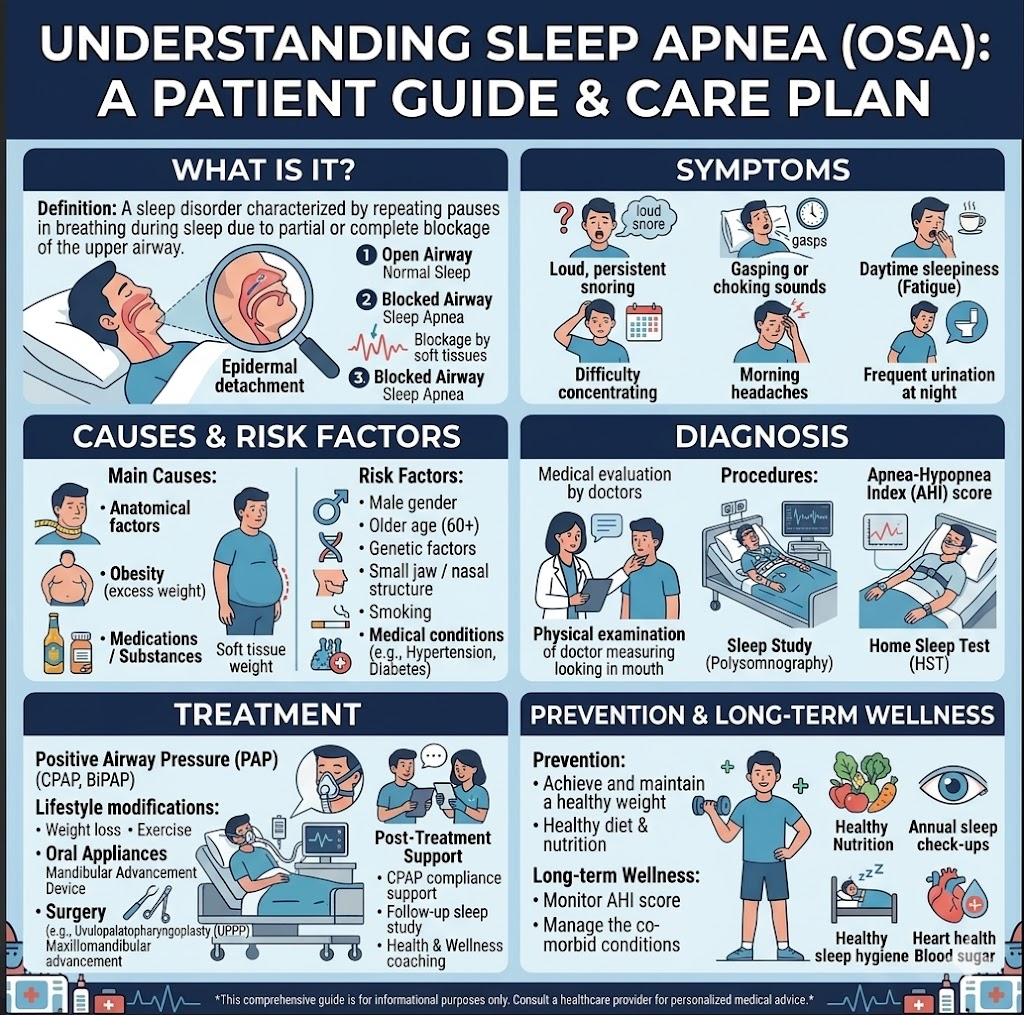
Sleep apnea is a serious medical condition where your breathing repeatedly stops and starts while you sleep, leading to loud snoring and extreme tiredness. The main types are Obstructive Sleep Apnea (OSA), where throat muscles block the airway; Central Sleep Apnea (CSA), where the brain fails to send proper breathing signals; and Complex Sleep Apnea, a combination. Effective treatment is essential to relieve symptoms and prevent severe health complications, especially heart problems.
Understanding the Condition
Sleep Apnea: When Breathing Stops During Sleep
Understanding the Condition
Sleep apnea is a serious medical condition where your breathing repeatedly stops and starts while you sleep, leading to loud snoring and extreme tiredness. The main types are Obstructive Sleep Apnea (OSA), where throat muscles block the airway; Central Sleep Apnea (CSA), where the brain fails to send proper breathing signals; and Complex Sleep Apnea, a combination. Effective treatment is essential to relieve symptoms and prevent severe health complications, especially heart problems.
Common Symptoms
Loud Snoring: Often noted by a bed partner.
Breathing Pauses: Episodes where breathing stops, typically reported by another person.
Gasping for Air: Suddenly waking up gasping or choking.
Dry Mouth: Waking with a very dry mouth or sore throat.
Morning Headaches: Headaches upon waking.
Trouble Sleeping (Insomnia): Difficulty falling or staying asleep.
Excessive Daytime Sleepiness: Feeling very tired, sometimes falling asleep inappropriately.
Difficulty Concentrating: Trouble focusing, remembering, or paying attention.
Irritability or Mood Changes: Feeling quick-tempered, moody, or depressed.
Behavioral Issues: In children, poor school performance or behavior problems.
Consultation Guide
Which Specialist to Meet
Start with your primary care doctor. They may refer you to a sleep specialist (a doctor specializing in sleep disorders), an Ear, Nose, and Throat (ENT) doctor for airway issues, or a neurologist for central sleep apnea concerns. Other specialists like a cardiologist might also be involved.
Preparations Before Your Visit
Before your visit, keep a sleep diary for a week or two, noting your sleep and wake times, any awakenings, snoring, and how tired you feel during the day. List all your symptoms, current medications, any known medical conditions, your family's medical history, and prepare a list of questions you have for the doctor.
Book a doctor visit near me
Consistent Treatment Adherence: Strictly follow your prescribed treatment, such as using your CPAP machine every night, to effectively manage symptoms and prevent complications.
Consultation Guide
Treat Nasal Congestion: Managing allergies or other causes of nasal stuffiness can improve breathing through the nose. (Duration: As needed)
Continuous Positive Airway Pressure (CPAP) Therapy: A machine delivers a constant, gentle stream of air pressure through a mask worn nightly, keeping your airway open while you sleep. Most effective for obstructive sleep apnea. (Duration: Used nightly, long-term)
Oral Appliances: Custom-made mouthpieces from a dentist reposition your jaw or tongue to keep the throat open during sleep. (Duration: Worn nightly)
Quit Smoking: Smoking is a major risk factor; quitting can improve upper airway health and reduce inflammation.
Address Nasal Congestion: Treating allergies or structural issues that cause stuffy nose can improve breathing during sleep.
Manage Underlying Health Conditions: Effectively controlling conditions like heart failure, high blood pressure, and type 2 diabetes can help reduce sleep apnea risk and severity. For central sleep apnea, minimizing opioid use and managing congestive heart failure are key.
Long-Term Management and Monitoring
Diagnostic Procedures
Polysomnography (Sleep Study)
This comprehensive test diagnoses sleep disorders by recording various body functions while you sleep, including brain waves, blood oxygen levels, heart rate, breathing patterns, and eye/leg movements. It identifies if and why your sleep is being disrupted.
What to Expect
A sleep study is usually done overnight at a specialized sleep center or hospital. Small sensors are placed on your scalp, face, chest, and limbs, connected by wires to monitoring equipment. You'll be asked to sleep as normally as possible while a technician monitors your data from another room.
Home Sleep Apnea Test
This is a simpler test primarily used to diagnose obstructive sleep apnea in people with a high probability of having it. It records fewer metrics than a full sleep study, typically focusing on your breathing rate, airflow, blood oxygen levels, and heart rate.
What to Expect
Your doctor will provide you with a portable device and instructions to use it at home. Sensors are typically worn on a finger (to measure oxygen), chest (to measure breathing effort), and near your nose (to measure airflow). You’ll set up the equipment yourself before going to bed and then return the device to the clinic for analysis.
Treatment Options
Septoplasty: Surgery to straighten a crooked wall (septum) between your nostrils, improving nasal airflow. (Duration: One-time procedure; recovery typically 1-2 weeks)
Regular Medical Check-ups: Maintain scheduled follow-up appointments with your sleep specialist and primary care doctor to monitor your condition, adjust treatment as needed, and screen for related health issues.
Educate Sleep Partner: Inform your sleep partner about your condition and its treatment, as their support can be beneficial for monitoring progress and adherence.
Monitor for Complications: Be vigilant for signs of high blood pressure, diabetes, or heart problems, and discuss any concerns with your doctor promptly.
Prevention & Long-Term Wellbeing
Lifestyle Changes and Home Remedies
Weight Management: Losing excess weight can significantly reduce the severity of obstructive sleep apnea. (Duration: Ongoing)
Avoid Alcohol and Sedatives: These substances relax throat muscles, worsening breathing problems during sleep. (Duration: Ongoing, especially before bedtime)
Quit Smoking: Smoking contributes to inflammation and fluid retention in the airway, making sleep apnea worse. (Duration: Long-term)
Sleep Position: Sleeping on your side can help keep your airway open compared to sleeping on your back. (Duration: Nightly)
Tonsillectomy/Adenoidectomy: Removal of enlarged tonsils and/or adenoids (lymph tissues in the throat and nasal cavity) that block the airway, especially common in children. (Duration: One-time procedure; recovery typically 10-14 days)
Uvulopalatopharyngoplasty (UPPP): A procedure to remove excess tissue from the back of the throat and soft palate to enlarge the airway. (Duration: One-time procedure; recovery several weeks)
Tracheostomy: A rare procedure for severe, life-threatening sleep apnea where a surgeon creates an opening in the windpipe (trachea) and inserts a breathing tube. (Duration: Can be temporary or permanent)
Endoscopic Sleeve Gastroplasty: A minimally invasive weight-loss procedure where the stomach size is reduced internally using sutures, benefiting those with obesity-related sleep apnea. (Duration: One-time procedure; requires permanent lifestyle changes for long-term weight loss success)
Prevention
Maintain a Healthy Weight: Crucial for reducing obstructive sleep apnea risk and severity.
Limit Alcohol and Sedative Use: Avoid these substances, especially before bed, to prevent throat muscles from relaxing excessively.
Healthy Lifestyle: Continue healthy eating habits and regular physical activity to support weight management and overall health.
Tags & Topics
Notice an error or need an update?
Help us keep medical information accurate. Report incorrect info or suggest an edit.


