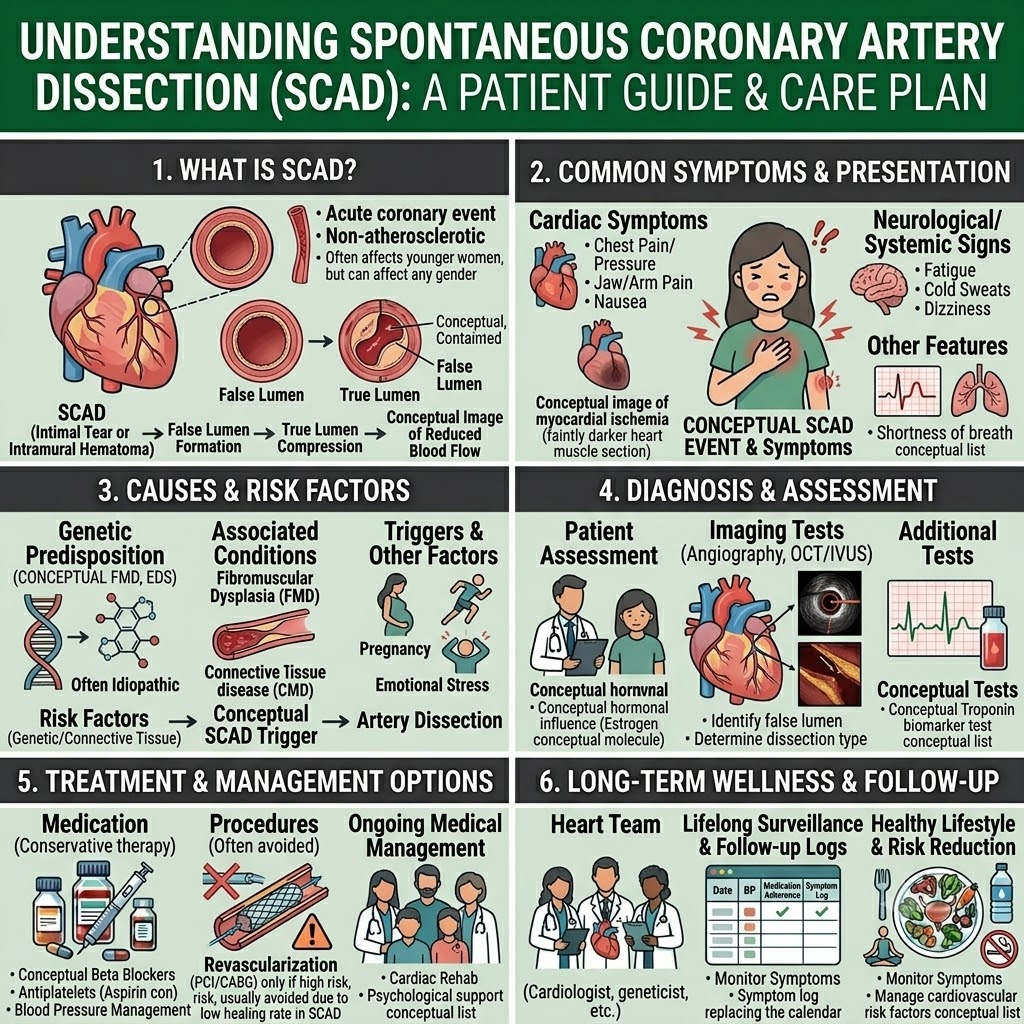
Spontaneous Coronary Artery Dissection (SCAD) is an emergency heart condition where a tear forms in a heart artery wall. Blood collects between artery layers, restricting or blocking flow to the heart muscle. This can cause a heart attack, irregular heartbeats, or sudden death. SCAD primarily affects women in their 40s and 50s but can occur in anyone. Many patients lack typical heart disease risk factors. Immediate emergency care is vital.
Understanding the Condition
Spontaneous Coronary Artery Dissection (SCAD): A Guide to a Heart Emergency
Understanding the Condition
Common Symptoms
Chest pain or pressure: Tightness, squeezing, or discomfort in the chest.
Pain in arms, shoulders, back, or jaw: Discomfort radiating to other upper body parts.
Shortness of breath: Difficulty breathing.
Unusual sweating: Breaking into a cold sweat without reason.
Extreme tiredness: Sudden, overwhelming fatigue.
Upset stomach: Nausea or vomiting.
Rapid heartbeat or fluttery feeling in the chest: Palpitations.
Dizziness: Feeling lightheaded or faint.
Consultation Guide
Which Specialist to Meet
For suspected SCAD or heart attack symptoms, seek emergency medical care immediately. Afterward, you will likely consult a cardiologist (heart specialist). For long-term management, a SCAD-specialized cardiologist or vascular specialist may be recommended, potentially with genetic counselors if a related condition is suspected.
Preparations Before Your Visit
Before your follow-up, list all symptoms (onset, severity, triggers). Provide a complete medical history, including medications and family heart history. Prepare specific questions for your doctor.
Book a doctor visit near me
Post-Childbirth Awareness: Women post-delivery should be vigilant for SCAD symptoms.
Symptom Vigilance: Be aware of recurring SCAD or heart attack symptoms and seek emergency help immediately if they occur.
Consultation Guide
Spontaneous Coronary Artery Dissection (SCAD) is an emergency heart condition where a tear forms in a heart artery wall. Blood collects between artery layers, restricting or blocking flow to the heart muscle. This can cause a heart attack, irregular heartbeats, or sudden death. SCAD primarily affects women in their 40s and 50s but can occur in anyone. Many patients lack typical heart disease risk factors. Immediate emergency care is vital.
A quick, painless imaging test using small amounts of radiation to create images of chest structures, including heart and lungs. While not specific for SCAD, it helps rule out other causes of chest pain or assess general heart size.
Regular Medical Check-ups: Essential for those with risk factors like Fibromuscular Dysplasia (FMD) or certain genetic conditions.
Diagnostic Procedures
This X-ray test uses a dye to visualize the heart's blood vessels (coronary arteries). A thin, flexible tube (catheter) is inserted into an artery and guided to the heart to deliver the dye, revealing tears or blockages like those in SCAD.
What to Expect
You'll lie on a table. The insertion site (usually wrist or groin) is numbed. The catheter is carefully threaded to your heart; you may feel pressure. Contrast dye is injected, causing a warm flush, as X-ray images are taken. The procedure takes 30-60 minutes. After removal, pressure is applied to the site.
CT Coronary Angiogram (CCTA)
A non-invasive imaging test using a powerful X-ray machine and injected contrast dye to create detailed 3D images of your heart and its arteries. It can help identify tears or blockages without direct catheter insertion.
What to Expect
You'll lie on a table that slides into a large CT scanner. An IV is placed for dye injection (expect a warm sensation or metallic taste). You'll need to lie still and hold your breath briefly during scans. The actual scan is quick, lasting minutes, though preparation takes longer.
What to Expect
You'll stand or sit, positioned by a technician. You'll hold your breath for a few seconds during the X-ray. The process is very fast, taking only minutes, with no discomfort.
Treatment Options
Immediate Medical Intervention: Prompt assessment, stabilization (oxygen, pain management, heart monitoring) by emergency medical professionals. (Duration: Critical initial hours to days)
Medications
Beta-Blockers: Slow heart rate and reduce blood pressure, easing arterial stress. (Duration: Often long-term)
Blood Pressure Medications: Manage hypertension to reduce arterial strain. (Duration: Often long-term)
Pain Relievers: Manage chest pain. (Duration: As needed in acute phase)
Anti-Clotting Medications: May be used to prevent blood clots, depending on individual risk. (Duration: Varies (months to long-term))
Procedures and Surgical Interventions
Coronary Artery Bypass Graft (CABG) Surgery: Creates new blood flow paths around severely blocked arteries using a healthy vessel. Reserved for severe cases. (Duration: Surgery 3-6 hours. Recovery weeks to months.)
Therapies
Cardiology Follow-up: Regular visits for ongoing monitoring, medication review, and screening for recurrence or other heart issues.
Prevention & Long-Term Wellbeing
Percutaneous Coronary Intervention (PCI) / Angioplasty and Stenting: A balloon-tipped catheter opens a blocked artery, sometimes with a stent. Used cautiously in SCAD due to delicate artery walls. (Duration: Procedure 1-3 hours. Recovery days to weeks.)
Cardiac Rehabilitation: Personalized program of supervised exercise, heart-healthy education, and emotional support to aid recovery and improve well-being. (Duration: Typically 3-6 months)
Prevention and Risk Management
Manage Blood Pressure: Maintain healthy blood pressure with your doctor's guidance.
Avoid Illegal Drug Use: Recreational drugs, especially stimulants like cocaine, heighten SCAD risk.
Stress Management: Develop healthy coping mechanisms for extreme physical and emotional stress, a potential SCAD trigger.
Long-Term Monitoring and Lifestyle
Lifestyle Modifications: Adopt a heart-healthy diet, engage in doctor-approved moderate exercise, maintain a healthy weight, and avoid smoking.
Emotional Support: Seek support from family, groups, or professionals to manage anxiety or depression after a heart event.
Tags & Topics
Notice an error or need an update?
Help us keep medical information accurate. Report incorrect info or suggest an edit.

