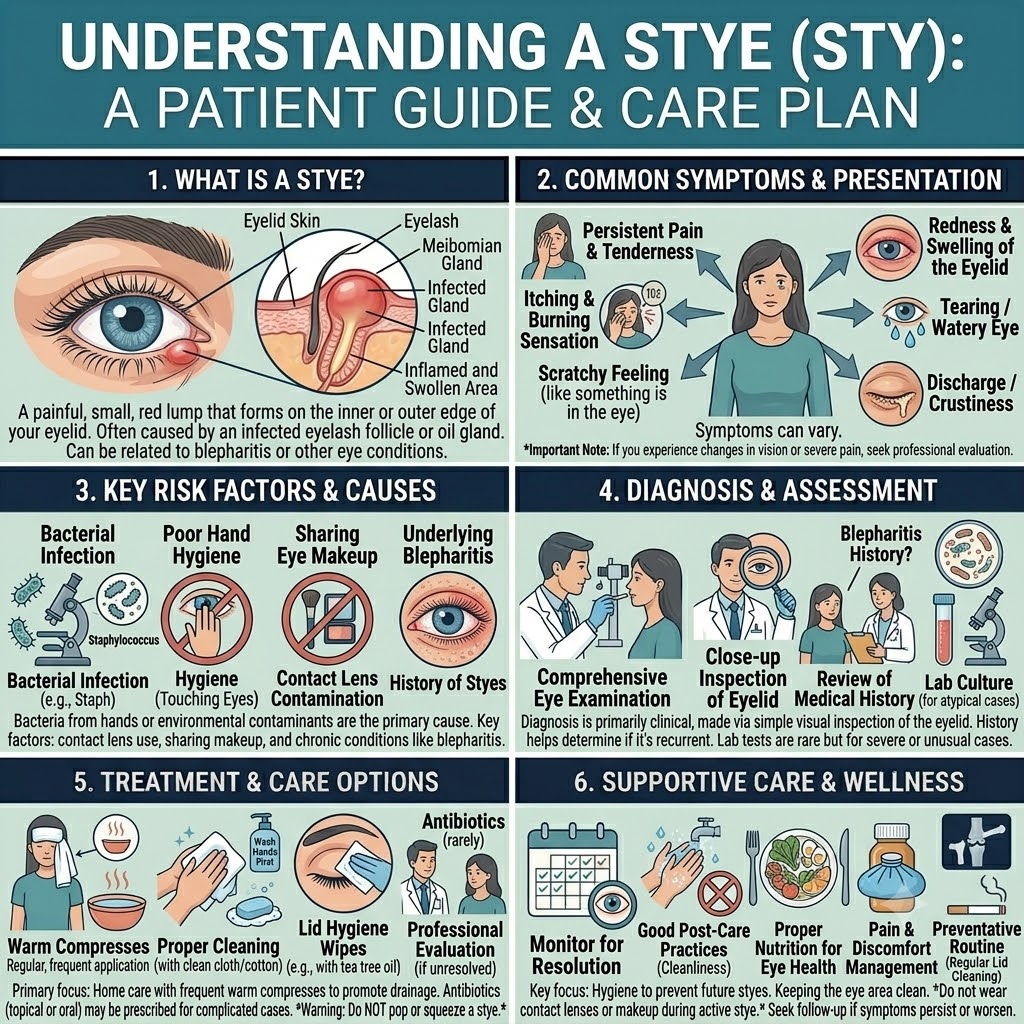
A stye (pronounced STY), also known as a hordeolum, is a common, often painful, red bump that forms on the edge of your eyelid. It typically resembles a small boil or pimple. Styes are usually caused by a bacterial infection of the tiny oil glands or hair follicles located near the base of your eyelashes. They often contain pus. Most styes appear on the outer part of the eyelid, but some can form on the inner surface. While uncomfortable, styes are generally harmless to your vision and usually resolve on their own within a few days. It's important to distinguish a stye from a chalazion, which is a non-infectious, usually painless lump deeper in the eyelid caused by a blocked oil gland. Although they look similar, a stye is typically painful and caused by infection, while a chalazion is generally not.
Understanding the Condition
Stye: A Common Eyelid Bump
Understanding the Condition
Common Symptoms
Painful Lump: A tender, red bump that forms on the edge of the eyelid, often resembling a small boil or pimple.
Swelling: Localized swelling of the eyelid where the stye is located.
Tenderness: The affected area is sensitive to touch.
Pus: The stye may develop a yellowish head and eventually drain pus.
Crusting: Crusting along the eyelid margin, especially in the morning.
Scratchy Sensation: A feeling like something is irritating the eye or a gritty sensation.
Watery Eye: Increased tearing from the affected eye.
Light Sensitivity: Discomfort or increased sensitivity to bright lights.
Consultation Guide
Which Specialist to Meet
You may initially consult with your primary care physician. If the stye is persistent, recurrent, affects your vision, or seems severe, you should see an ophthalmologist, who is a doctor specializing in eye care.
Preparations Before Your Visit
Before your visit, be prepared to describe your symptoms, including when they started and how they've progressed. Mention any previous styes, allergies, or underlying medical conditions like blepharitis or rosacea, and list all medications you are currently taking. Avoid wearing eye makeup or contact lenses to your appointment.
Book a doctor visit near me
Consultation Guide
A stye (pronounced STY), also known as a hordeolum, is a common, often painful, red bump that forms on the edge of your eyelid. It typically resembles a small boil or pimple. Styes are usually caused by a bacterial infection of the tiny oil glands or hair follicles located near the base of your eyelashes. They often contain pus. Most styes appear on the outer part of the eyelid, but some can form on the inner surface. While uncomfortable, styes are generally harmless to your vision and usually resolve on their own within a few days. It's important to distinguish a stye from a chalazion, which is a non-infectious, usually painless lump deeper in the eyelid caused by a blocked oil gland. Although they look similar, a stye is typically painful and caused by infection, while a chalazion is generally not.
Diagnostic Procedures
Physical Eye Examination
A healthcare professional will visually inspect your eyelid and eye to accurately diagnose a stye.
What to Expect
During the examination, the doctor will look closely at your eyelid, checking for the characteristic red, swollen lump. They may gently touch the area to assess tenderness and look for signs of infection. This is a quick, straightforward, and generally painless process that does not require special equipment or extensive procedures, usually taking place in a standard examination room.
Treatment Options
Warm Compresses: Apply a clean washcloth soaked in warm (not hot) water to the closed eyelid. The warmth helps to draw out the pus and encourage the stye to drain naturally, which can relieve pain and speed healing. (Duration: 5 to 10 minutes, 3 to 4 times a day. Continue until the stye drains and heals, typically within several days.)
Medications
Topical Antibiotics: If the stye doesn't improve with warm compresses or if the infection appears to be spreading, your eye doctor may prescribe antibiotic eye drops or an antibiotic ointment. These help to fight the bacterial infection directly on the eyelid surface. (Duration: Typically 7-10 days, or as directed by your healthcare provider.)
Oral Antibiotics: For more severe or widespread infections, or if the stye is unresponsive to topical treatments, your doctor might prescribe antibiotic pills. These work internally to clear the infection. (Duration: Typically 7-14 days, or as prescribed by your healthcare provider.)
Surgical Procedures
Incision and Drainage: If a stye becomes very large, does not drain on its own, or is causing significant discomfort, a doctor may perform a minor in-office procedure. This involves making a tiny incision in the stye to drain the trapped pus, providing immediate relief and promoting healing. (Duration: A quick procedure, with relief often experienced shortly after. Full resolution of the stye usually occurs within a few days post-drainage.)
Prevention & Long-Term Wellbeing
Prevention
Maintain Eyelid Hygiene: Gently clean your eyelids daily with a mild, non-irritating cleanser, especially if you've had styes before or have conditions like blepharitis (eyelid inflammation). This helps keep oil glands clear.
Practice Good Hand Hygiene: Always wash your hands thoroughly with soap and water before touching your eyes, rubbing them, or handling contact lenses. This prevents transferring bacteria to your eyelids.
Follow Safe Cosmetic Practices: Always remove all eye makeup before going to bed. Avoid sharing eye makeup, and replace mascara, eyeliners, and eyeshadows every three to six months, as bacteria can accumulate in them over time.
Proper Contact Lens Care: If you wear contact lenses, ensure you wash your hands before inserting or removing them. Clean and store your lenses according to manufacturer instructions, and replace them on schedule to prevent bacterial contamination.
Long-Term Monitoring
Manage Underlying Conditions: If you have medical conditions such as blepharitis or rosacea, which can increase your risk of styes, work with your doctor to effectively manage these conditions. Proper management can significantly reduce the frequency of stye recurrences.
Regular Eye Check-ups: Schedule routine visits with an eye care professional. They can monitor your eye health, offer personalized advice, and address any potential issues that might contribute to styes before they become problematic.
Tags & Topics
Notice an error or need an update?
Help us keep medical information accurate. Report incorrect info or suggest an edit.


