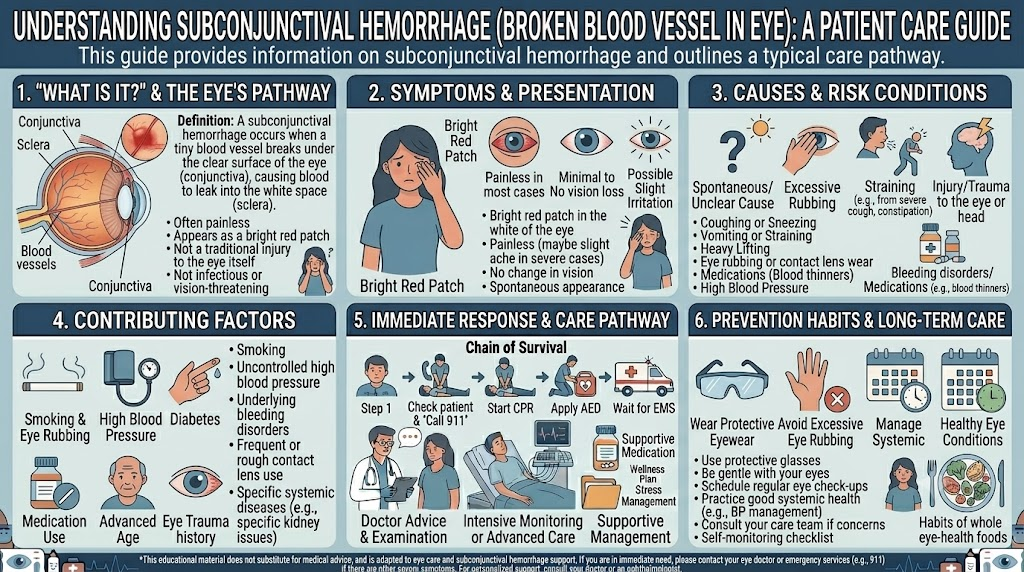
A subconjunctival hemorrhage, commonly known as a broken blood vessel in the eye, occurs when a tiny blood vessel bursts within the conjunctiva. The conjunctiva is a clear, protective tissue that covers the white part of your eye and lines your eyelids. When this happens, blood leaks and becomes trapped between the conjunctiva and the white of the eye, creating a bright red patch. While alarming in appearance, it's generally a harmless condition, similar to a bruise on the skin, and usually resolves on its own without specific treatment within a few days to a few weeks. However, recurrent hemorrhages or associated symptoms may warrant a medical check-up to rule out underlying conditions like high blood pressure.
Understanding the Condition
Understanding Subconjunctival Hemorrhage: A Broken Blood Vessel in the Eye
Understanding the Condition
A subconjunctival hemorrhage, commonly known as a broken blood vessel in the eye, occurs when a tiny blood vessel bursts within the conjunctiva. The conjunctiva is a clear, protective tissue that covers the white part of your eye and lines your eyelids. When this happens, blood leaks and becomes trapped between the conjunctiva and the white of the eye, creating a bright red patch. While alarming in appearance, it's generally a harmless condition, similar to a bruise on the skin, and usually resolves on its own without specific treatment within a few days to a few weeks. However, recurrent hemorrhages or associated symptoms may warrant a medical check-up to rule out underlying conditions like high blood pressure.
Common Symptoms
Bright Red Patch on the White of the Eye: The most noticeable sign is a distinct, bright red area on the white part of your eye. This occurs due to the pooled blood from the broken vessel.
No Pain, Discharge, or Vision Changes: Despite its dramatic appearance, a subconjunctival hemorrhage typically does not cause pain, eye discharge, or any changes to your vision. If you experience these symptoms, it could indicate a different, more serious eye condition.
Mild Discomfort or Irritation: Some individuals may experience a mild sensation of itching or irritation on the surface of the eye, but this is usually minor and temporary.
Consultation Guide
Which Specialist to Meet
Initially, you should consult with your primary care physician (general practitioner). They can assess the condition, check for common underlying causes like high blood pressure, and determine if further investigation is needed. If you experience frequent or recurrent subconjunctival hemorrhages, or if they are accompanied by other symptoms like easy bruising or bleeding elsewhere, an ophthalmologist (an eye specialist) may be recommended for a more detailed eye examination, or a hematologist (blood disorder specialist) for blood clotting issues.
Preparations Before Your Visit
A healthcare professional will discuss your symptoms, recent activities, and medical history. They will then visually inspect your eye to confirm the presence of a subconjunctival hemorrhage. This is often sufficient for diagnosis, as the condition is usually apparent upon examination.
Consultation Guide
Since high blood pressure can be a risk factor for subconjunctival hemorrhage, a blood pressure test is often performed. This test measures the force of your blood against the walls of your arteries as your heart pumps, helping to identify or monitor hypertension (high blood pressure).
Addressing Underlying Causes
Diagnostic Procedures
Medical History and Physical Examination
What to Expect
You will sit in a comfortable position while your doctor asks about when the red patch appeared, if you had any injury, or if you've been straining recently. They will then gently examine your eye using a light, looking for the characteristic bright red patch on the white part of your eye. This examination is quick and painless.
What to Expect
You will be asked to sit quietly with your arm supported at heart level. A soft cuff will be wrapped around your upper arm. The cuff will then inflate, momentarily squeezing your arm tightly, which some people find slightly uncomfortable but not painful. This pressure lasts only a few seconds. As the cuff slowly deflates, a device measures your blood pressure. The process is quick, usually taking less than a minute.
Additional Blood Tests (If Indicated)
If you experience frequent subconjunctival hemorrhages or have other signs of easy bruising or bleeding, your doctor may recommend blood tests. These tests can help identify underlying bleeding or clotting disorders.
What to Expect
A healthcare professional will draw a small sample of blood, usually from a vein in your arm. This involves a brief pinprick sensation. The blood sample will then be sent to a lab for analysis, which may include checking your blood cell counts, platelet function, and clotting factors.
Treatment Options
For an initial consultation, no specific preparation is usually needed. However, if your doctor suspects high blood pressure as a contributing factor, you may be advised to avoid caffeine, strenuous exercise, and smoking for at least 30 minutes before your blood pressure is measured. Be prepared to discuss any recent activities like heavy lifting, straining, coughing, sneezing, or any medications you are currently taking, especially blood thinners.
Book a doctor visit near me
Self-Care and Observation
Natural Resolution: The majority of subconjunctival hemorrhages resolve on their own without the need for medical treatment. The blood is gradually reabsorbed by the body, similar to how a bruise fades. (Duration: A few days to a few weeks, with the red patch changing color from bright red to yellow as it heals.)
Blood Pressure Management: If high blood pressure is identified as a contributing factor, your doctor will recommend strategies to manage it. This may involve lifestyle changes or prescribed medication to keep your blood pressure within a healthy range. (Duration: Ongoing, as directed by your healthcare professional.)
Medication Review: If you are taking blood-thinning medications, your doctor may review your dosage or consider alternative treatments if these are believed to be contributing to the hemorrhages. Never stop or change medications without consulting your doctor. (Duration: As advised by your doctor, potentially ongoing.)
Manage High Blood Pressure: If you have high blood pressure, regularly monitor it and consistently follow your doctor's recommendations for medication and lifestyle adjustments to keep it under control. This can reduce the risk of blood vessel rupture.
Avoid Excessive Straining: Be mindful of activities that involve intense straining, such as vigorous coughing, sneezing, vomiting, or heavy lifting. If unavoidable, try to do so gently or with proper technique to minimize pressure on delicate blood vessels.
Protect Your Eyes: Avoid rubbing your eyes vigorously. If you are involved in activities where there's a risk of eye injury, such as certain sports or manual labor, wear appropriate protective eyewear.
Regular Eye Check-ups: If you experience recurrent subconjunctival hemorrhages, regular check-ups with an eye doctor are advisable to monitor your eye health and rule out other potential issues.
General Health Monitoring: Pay attention to any other signs of easy bruising or bleeding, and report them to your doctor. This could indicate an underlying bleeding disorder that needs attention.
Home Blood Pressure Monitoring: If you have high blood pressure, regularly checking your blood pressure at home and keeping a record of readings can help your healthcare team assess the effectiveness of your treatment and make necessary adjustments.
Prevention & Long-Term Wellbeing
Prevention
Tags & Topics
Notice an error or need an update?
Help us keep medical information accurate. Report incorrect info or suggest an edit.


