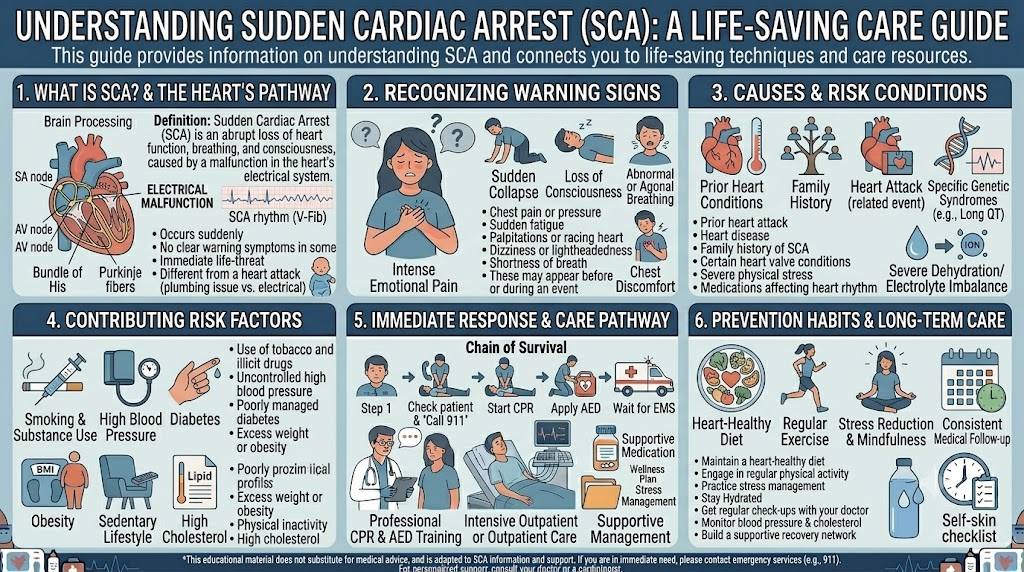
Sudden cardiac arrest (SCA) is an unexpected, life-threatening emergency where the heart suddenly stops beating effectively due to a severe electrical malfunction. This electrical chaos causes the heart to stop pumping blood, leading to immediate cessation of breathing and loss of consciousness. It is crucial to understand that SCA is an electrical problem, distinct from a heart attack, which is a plumbing problem caused by a blocked artery. However, a heart attack can damage the heart's electrical system, potentially triggering SCA. Without immediate emergency treatment, such as cardiopulmonary resuscitation (CPR) and shocks from an Automated External Defibrillator (AED), sudden cardiac arrest is fatal.
Understanding the Condition
Common Symptoms
Sudden Collapse: The person unexpectedly falls or collapses without warning.
No Breathing: The person stops breathing completely.
Loss of Consciousness: The person becomes unresponsive and unconscious.
Warning Signs (Sometimes): Occasionally, prior symptoms might occur, including chest discomfort, shortness of breath, or a sensation of a fast, fluttering, or pounding heartbeat (palpitations). However, SCA often strikes without any warning.
Consultation Guide
Which Specialist to Meet
If you experience any warning symptoms, have known heart conditions, or a family history of sudden cardiac arrest, it is vital to consult a cardiologist (a heart specialist) or an electrophysiologist (a specialist in heart's electrical rhythms).
Preparations Before Your Visit
Before your visit, prepare a detailed list of your symptoms, including when they started and how often they occur. Bring a complete medical history, a list of all current medications (including supplements), and any questions you have for the specialist.
Book a doctor visit near me
Coronary Artery Bypass Surgery: Involves taking a healthy blood vessel from another part of the body and using it to create a new path around a blocked or partially blocked heart artery, restoring blood flow. (Duration: A single surgical procedure, offering long-term relief from symptoms and improved heart function.)
Recognize Warning Signs: Be aware of any new or worsening symptoms, such as chest discomfort or shortness of breath, and seek prompt medical attention.
Consultation Guide
Sudden cardiac arrest (SCA) is an unexpected, life-threatening emergency where the heart suddenly stops beating effectively due to a severe electrical malfunction. This electrical chaos causes the heart to stop pumping blood, leading to immediate cessation of breathing and loss of consciousness. It is crucial to understand that SCA is an electrical problem, distinct from a heart attack, which is a plumbing problem caused by a blocked artery. However, a heart attack can damage the heart's electrical system, potentially triggering SCA. Without immediate emergency treatment, such as cardiopulmonary resuscitation (CPR) and shocks from an Automated External Defibrillator (AED), sudden cardiac arrest is fatal.
Tests to identify inherited genetic conditions that can cause electrical abnormalities in the heart, like Long QT syndrome.
Cardiac Ablation: Uses heat or cold energy delivered through thin tubes (catheters) to create tiny scars in the heart. These scars block faulty electrical signals that cause irregular heartbeats. (Duration: A single procedure, often with long-lasting effects. May require repeat procedures in some cases.)
Implantable Cardioverter-Defibrillator (ICD): A small, battery-powered device surgically placed under the skin near the collarbone. It constantly monitors the heart's rhythm and delivers electric shocks to correct dangerously fast or irregular heartbeats. (Duration: Long-term; the device battery typically lasts for several years and needs replacement through a minor procedure.)
Coronary Angioplasty and Stents: A procedure where a balloon-tipped catheter is used to widen blocked or narrowed heart arteries. A small mesh tube (stent) is often placed to keep the artery open. (Duration: A single procedure, providing long-term improvement in blood flow to the heart.)
Healthy Diet and Exercise: Adopting a heart-healthy diet rich in fruits, vegetables, and lean proteins, combined with regular physical activity, supports overall heart health and helps manage risk factors. (Duration: As advised)
Manage Risk Factors: Control conditions like high blood pressure, high cholesterol, and diabetes through lifestyle changes and prescribed medications.
Regular Medical Checkups: Schedule routine doctor visits and recommended screenings for heart disease to identify and address issues early.
Diagnostic Procedures
Electrocardiogram (ECG or EKG)
A quick test that records the electrical signals of your heart to check its rhythm and rate.
What to Expect
Sticky patches (electrodes) are placed on your chest, arms, and legs and connected to a machine. You'll lie still while your heart's electrical activity is recorded. It is quick and painless.
Uses sound waves to create moving pictures of your heart, showing its structure, how well it's pumping, and blood flow.
What to Expect
You'll lie on a table while a healthcare professional applies gel to your chest and moves a handheld device (transducer) over it. The device sends sound waves to your heart and creates images. It is generally painless.
Produces images of your heart, lungs, blood vessels, and bones of the chest.
What to Expect
You will stand or lie still for a few seconds while an X-ray machine takes images. It is a quick and non-invasive procedure.
An X-ray procedure that uses a special dye to visualize blockages or narrowing in the heart's blood vessels (coronary arteries).
What to Expect
A thin, flexible tube (catheter) is inserted into a blood vessel (usually in the groin or arm) and guided to your heart. Dye is injected, and X-ray images are taken. You may feel some pressure during catheter insertion.
An imaging test that shows how blood flows to your heart muscle both at rest and during exercise or stress.
What to Expect
A small amount of radioactive material is injected into a vein. Images are taken at rest and again after you exercise (on a treadmill or stationary bike) or receive medication to simulate exercise. The test helps identify areas of poor blood flow.
What to Expect
Typically involves providing a blood or saliva sample, which is then sent to a lab for analysis.
Genetic Screening: If there's a family history of sudden cardiac arrest or inherited heart conditions, discuss genetic testing with your healthcare professional.
Treatment Options
Sudden Cardiac Arrest: Understanding, Prevention, and Treatment
Understanding the Condition
Cardiopulmonary Resuscitation (CPR): Manual chest compressions and rescue breaths to keep oxygen-rich blood circulating to the brain and other vital organs. (Duration: Performed continuously until emergency medical services arrive or the person recovers.)
Automated External Defibrillator (AED): A portable device that delivers an electric shock to reset the heart's rhythm when it detects a dangerous, irregular heartbeat. (Duration: Applied immediately during the emergency event; a quick, life-saving intervention.)
Medications
Rhythm-Controlling Medications: Drugs prescribed to stabilize heart rhythm, control heart rate, or manage underlying conditions that contribute to SCA, such as high blood pressure or high cholesterol. (Duration: Ongoing, often lifelong, to manage heart health and prevent future episodes.)
Heart Transplant: A major operation to replace a severely failing heart with a healthy donor heart when other treatments are no longer effective. (Duration: A single, life-saving surgery. Requires lifelong adherence to anti-rejection medications and medical follow-up.)
Adherence to Treatment Plan: Consistently follow your healthcare professional's advice regarding medications, lifestyle changes, and follow-up appointments.
Device Monitoring: If you have an implanted device like an ICD, attend all scheduled check-ups to ensure it's functioning correctly and to monitor battery life.
Prevention & Long-Term Wellbeing
Lifestyle Support
Prevention
Maintain a Healthy Lifestyle: Eat a balanced, heart-healthy diet and engage in regular physical activity to support heart health and manage weight.
Avoid Tobacco Products: Smoking and tobacco use significantly increase the risk of heart disease and sudden cardiac arrest. Quitting is crucial.
Tags & Topics
Notice an error or need an update?
Help us keep medical information accurate. Report incorrect info or suggest an edit.

