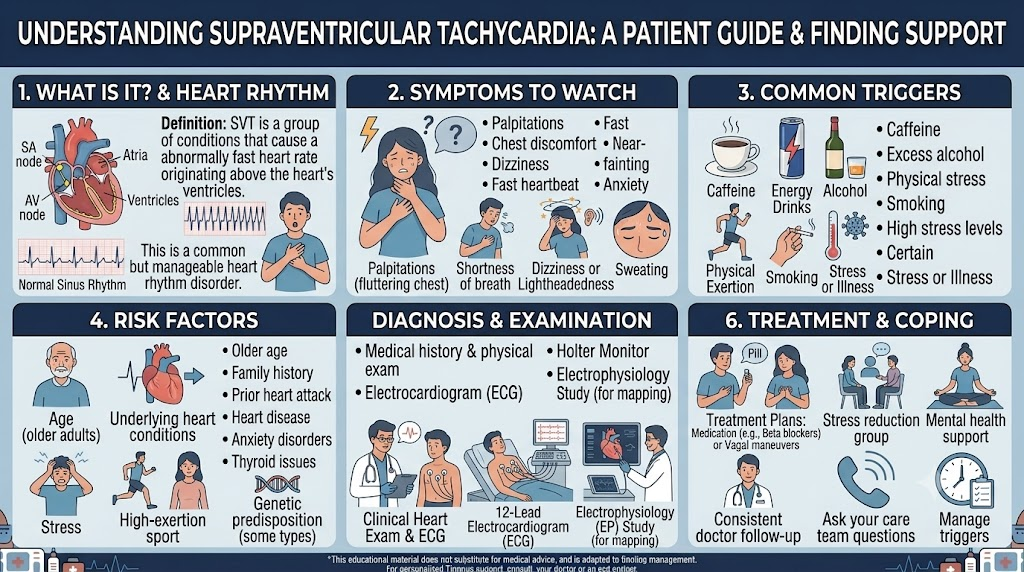
Supraventricular Tachycardia (SVT) is a type of irregular heartbeat, also called an arrhythmia, that originates in the heart's upper chambers. While a typical resting heart beats about 60-100 times per minute, during SVT it can rapidly increase to 150-220 beats per minute, or sometimes even faster or slower. This rapid beating is caused by faulty electrical signals within the heart, which can prevent the heart from filling properly with blood and lead to symptoms like dizziness or shortness of breath. There are several types of SVT, with Atrioventricular Nodal Reentrant Tachycardia (AVNRT) and Atrioventricular Reciprocating Tachycardia (AVRT) being the most common. Atrial tachycardia, another type, is more frequently observed in individuals with existing heart disease. Many people with SVT do not require treatment, but if symptoms are bothersome, frequent, or pose a risk of complications, treatment options may include specific physical maneuvers, medications, heart procedures, or implantable devices to help regulate the heartbeat.
Understanding the Condition
Understanding Supraventricular Tachycardia (SVT)
Understanding the Condition
Supraventricular Tachycardia (SVT) is a type of irregular heartbeat, also called an arrhythmia, that originates in the heart's upper chambers. While a typical resting heart beats about 60-100 times per minute, during SVT it can rapidly increase to 150-220 beats per minute, or sometimes even faster or slower. This rapid beating is caused by faulty electrical signals within the heart, which can prevent the heart from filling properly with blood and lead to symptoms like dizziness or shortness of breath. There are several types of SVT, with Atrioventricular Nodal Reentrant Tachycardia (AVNRT) and Atrioventricular Reciprocating Tachycardia (AVRT) being the most common. Atrial tachycardia, another type, is more frequently observed in individuals with existing heart disease. Many people with SVT do not require treatment, but if symptoms are bothersome, frequent, or pose a risk of complications, treatment options may include specific physical maneuvers, medications, heart procedures, or implantable devices to help regulate the heartbeat.
Common Symptoms
Heart Palpitations: Pounding, fluttering, or racing feelings in the chest.
Neck Pounding: A strong, pulsing sensation felt in the neck.
Chest Pain: Discomfort, pressure, or tightness in the chest area.
Fainting or Near-Fainting: Sudden loss of consciousness or feeling as though you might pass out.
Lightheadedness or Dizziness: Feeling unsteady, faint, or a sense of spinning.
Shortness of Breath: Difficulty breathing or feeling winded even with minimal exertion.
Weakness or Extreme Tiredness: Unusual or profound fatigue.
Consultation Guide
Which Specialist to Meet
You should initially consult a general practitioner, who may then refer you to a cardiologist (a heart specialist). For specific heart rhythm disorders, an electrophysiologist (a cardiologist specializing in the heart's electrical system) is the most appropriate specialist.
Preparations Before Your Visit
Before your appointment, prepare a detailed account of your symptoms, including when they began, how often they occur, their duration, and any activities you were doing at the time. List all medications, supplements, and vitamins you currently take. Be ready to share your complete medical history, including any other health conditions and family history of heart issues. Keeping a diary of your symptoms, noting your heart rate, and potential triggers can be very helpful for your doctor.
Book a doctor visit near me
Symptom Diary: Maintain a detailed record of your SVT symptoms, noting the date, time, duration, your heart rate during episodes, and any activities you were engaged in. This information is invaluable for identifying personal triggers and assisting your healthcare team in tailoring your treatment plan.
Regular Follow-ups: Schedule and attend regular appointments with your cardiologist or electrophysiologist to continuously monitor your condition, adjust medications if necessary, and discuss any new symptoms or concerns that may arise.
Addressing Underlying Conditions: Actively manage any existing health conditions that can increase the risk of SVT, such as coronary artery disease, heart failure, obstructive sleep apnea, thyroid disease, or uncontrolled diabetes, as advised by your healthcare provider.
Consultation Guide
An invasive procedure that creates a detailed map of your heart's electrical activity. It helps identify the exact location and cause of an irregular heartbeat by threading thin, flexible wires with electrodes through blood vessels into the heart to record electrical signals and sometimes induce the arrhythmia.
Supraventricular Tachycardia (SVT) Ablation: A procedure that uses cold (cryoablation) or heat (radiofrequency ablation) energy to create tiny scars in specific areas of the heart. These scars block the faulty electrical signals responsible for SVT, thereby restoring a normal heart rhythm. It is frequently recommended when medications are ineffective or cause side effects. (Duration: A single procedure typically lasting several hours; recovery usually involves a few days to a couple of weeks. The therapeutic effect is generally long-lasting.)
Pacemaker: A small, battery-powered device surgically placed under the skin near the collarbone. It continuously monitors the heart's rhythm and delivers electrical pulses if the heart beats too slowly or erratically, helping to maintain a regular heartbeat. It is less commonly used for SVT unless there are concurrent issues with slow heart rates. (Duration: Requires surgical implantation, with the device's battery typically lasting 5-10 years before replacement is needed.)
Diagnostic Procedures
Electrocardiogram (ECG or EKG)
A quick and common test that records the electrical signals of your heart. It can identify abnormal heart rhythms, show how fast your heart is beating, and detect signs of heart damage.
What to Expect
You will lie down while several small, sticky patches (electrodes) are attached to your chest, arms, and legs. These electrodes are connected by wires to an ECG machine, which records your heart's electrical activity. The test is painless, non-invasive, and typically takes only a few minutes. You simply need to lie still during the recording.
Electrophysiology (EP) Study
What to Expect
Treatment Options
This study is performed in a hospital by an electrophysiologist. You will receive medication to help you relax or sleep (sedation or general anesthesia). After numbing an area, usually in the groin, a doctor will insert thin, flexible tubes (catheters) into a blood vessel. These catheters are then carefully guided to your heart. Electrodes on the catheters send and receive electrical signals, allowing the doctor to map the heart's electrical pathways and sometimes deliberately trigger the arrhythmia to better understand it. The procedure typically takes several hours.
Medications
Anti-Arrhythmic Medications: Various prescription medications can help slow the heart rate during an SVT episode or prevent future episodes by influencing the heart's electrical signals. These are usually taken orally, but can be given intravenously in emergency situations. (Duration: Often prescribed for long-term, daily use, or as a 'pill-in-pocket' approach for managing acute episodes.)
Careful Use of Medications: Exercise caution with certain over-the-counter medications, particularly those for asthma, allergies, and colds, as some contain stimulants that can potentially trigger SVT. Always consult your doctor or pharmacist before taking new medications.
Long-Term Monitoring and Management
Prevention & Long-Term Wellbeing
Lifestyle and Home Remedies
Vagal Maneuvers: Specific physical actions that can help slow a rapid heartbeat by stimulating the vagus nerve. Examples include bearing down (as if having a bowel movement), coughing forcefully, or splashing cold water on your face. These can often be self-administered under medical guidance. (Duration: Performed as needed to attempt to stop an acute SVT episode.)
Prevention and Lifestyle
Heart-Healthy Lifestyle: Adopt a diet rich in fruits, vegetables, and whole grains, avoid smoking, engage in regular physical activity as advised by your doctor, and practice stress management techniques such as meditation or yoga. These habits promote overall cardiovascular health and may reduce SVT triggers.
Moderate Caffeine Intake: While moderate amounts of caffeine may not trigger SVT in all individuals, avoiding excessive consumption can help prevent episodes, especially for those who are sensitive to stimulants.
Tags & Topics
Notice an error or need an update?
Help us keep medical information accurate. Report incorrect info or suggest an edit.

