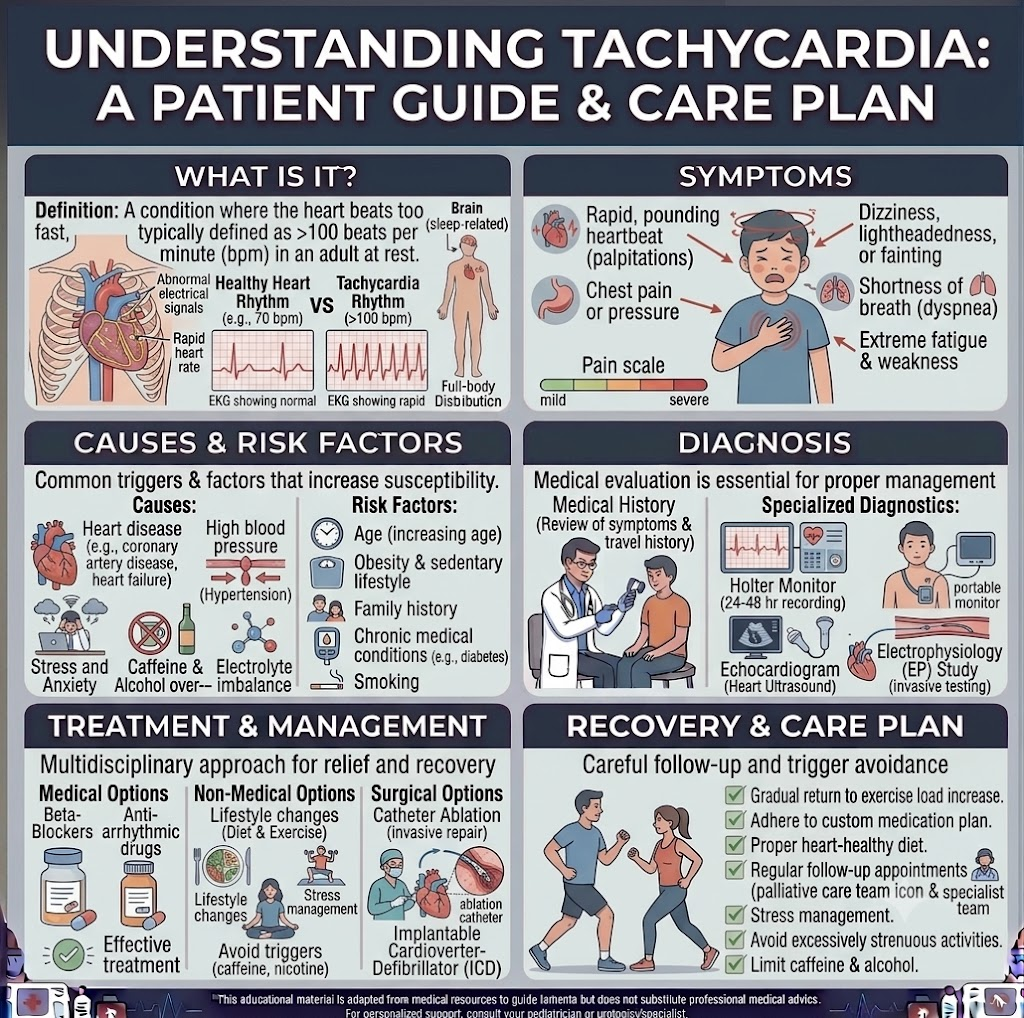
Tachycardia (tak-ih-KAHR-dee-uh) is a medical term for a heart rate exceeding 100 beats per minute. While a fast heart rate can be a normal response to exercise, stress, or excitement, it can also indicate an underlying medical condition. Various types of irregular heart rhythms, called arrhythmias, can cause tachycardia. Some forms may not cause symptoms, but if left untreated, they can lead to serious health problems like heart failure, stroke, or sudden cardiac arrest. Treatments range from simple maneuvers and medications to procedures and surgery.Types include:* **Sinus Tachycardia:** A normal, temporary increase in heart rate due to physical activity, stress, or fever.* **Atrial Fibrillation (AFib):** Chaotic electrical signals in the heart's upper chambers (atria) cause a fast, irregular beat. It is the most common type.* **Atrial Flutter:** Similar to AFib but with more organized electrical activity in the atria.* **Ventricular Tachycardia:** Originates in the lower chambers (ventricles); a prolonged fast rate can prevent adequate blood pumping and be life-threatening.* **Supraventricular Tachycardia (SVT):** Fast rhythms starting above the lower chambers, often causing abrupt onset/offset of pounding heartbeats.* **Ventricular Fibrillation:** A critical condition where lower chambers quiver uselessly, requiring immediate intervention to prevent sudden cardiac death.
Understanding the Condition
Tachycardia: Understanding a Fast Heartbeat
Understanding the Condition
Tachycardia (tak-ih-KAHR-dee-uh) is a medical term for a heart rate exceeding 100 beats per minute. While a fast heart rate can be a normal response to exercise, stress, or excitement, it can also indicate an underlying medical condition. Various types of irregular heart rhythms, called arrhythmias, can cause tachycardia. Some forms may not cause symptoms, but if left untreated, they can lead to serious health problems like heart failure, stroke, or sudden cardiac arrest. Treatments range from simple maneuvers and medications to procedures and surgery.Types include:* **Sinus Tachycardia:** A normal, temporary increase in heart rate due to physical activity, stress, or fever.* **Atrial Fibrillation (AFib):** Chaotic electrical signals in the heart's upper chambers (atria) cause a fast, irregular beat. It is the most common type.* **Atrial Flutter:** Similar to AFib but with more organized electrical activity in the atria.* **Ventricular Tachycardia:** Originates in the lower chambers (ventricles); a prolonged fast rate can prevent adequate blood pumping and be life-threatening.* **Supraventricular Tachycardia (SVT):** Fast rhythms starting above the lower chambers, often causing abrupt onset/offset of pounding heartbeats.* **Ventricular Fibrillation:** A critical condition where lower chambers quiver uselessly, requiring immediate intervention to prevent sudden cardiac death.
Common Symptoms
Palpitations: A sensation of a racing, pounding, or fluttering heart in your chest.
Chest Pain: Discomfort or pain in the chest area.
Lightheadedness: A feeling of dizziness or being about to faint.
Rapid Pulse: A noticeably fast heartbeat felt at pulse points.
Shortness of Breath: Difficulty breathing or feeling like you can't get enough air.
Immediate Medical Attention Required: Seek immediate medical help if you experience: severe chest pain, sudden shortness of breath, severe dizziness or lightheadedness, or fainting.
Consultation Guide
Which Specialist to Meet
Before your appointment, prepare a list of all your symptoms, including when they started and how often they occur. Bring a complete list of all medications, supplements, and vitamins you take, along with any known medical conditions and family history of heart problems. It's also helpful to write down any questions you have for the doctor.
Book a doctor visit near me
Electrodes are attached to your chest and connected to a small recording device that you can wear on your belt or in a pouch. You'll carry on with your usual activities, and you may be asked to keep a diary of your symptoms and activities to correlate with the heart rhythm data.
Cardiac Event Monitor
Similar to a Holter monitor but worn for a longer period (weeks or months). This device records heart activity only when activated by you (when you feel symptoms) or automatically when it detects an irregular rhythm.
Electrodes are attached to your chest or a portable device is placed near your chest. You'll be instructed on how to activate the monitor when you experience symptoms.
Electrophysiology (EP) Study
Consultation Guide
An invasive test that provides a detailed map of your heart's electrical system to pinpoint the exact location and cause of an irregular heart rhythm. It can also help predict the risk of serious rhythm disorders.
Cardiac Ablation: A procedure where thin, flexible tubes (catheters) are guided to the heart to deliver heat or cold energy, creating tiny scars. These scars block faulty electrical signals that cause irregular heartbeats, restoring a normal rhythm. (Duration: A one-time procedure with long-term intended effects, though repeat procedures are sometimes necessary)
Implantable Cardioverter-Defibrillator (ICD): A small, battery-powered device placed under the skin in the chest that continuously monitors the heart rhythm. If it detects a dangerously fast or irregular heartbeat, it delivers an electric shock to restore a normal rhythm. (Duration: A long-term implantable device, typically lasting several years before battery replacement is needed)
Managing Risk Factors & Triggers
Avoid Smoking and Nicotine: Quitting smoking or avoiding nicotine products significantly reduces your risk of heart problems and improves overall health.
Limit Alcohol and Caffeine: Excessive alcohol consumption and high caffeine intake can trigger or worsen tachycardia. Limit or avoid these as advised by your doctor.
Control Chronic Conditions: Work with your healthcare team to effectively manage conditions like high blood pressure, high cholesterol, and diabetes, which are major risk factors for heart disease and arrhythmias.
Discuss Medications: Always inform your doctor about all medications you are taking. Some common cold and cough medicines or other prescriptions contain stimulants that can cause a rapid heartbeat. Avoid illegal stimulants such as cocaine and methamphetamine.
Diagnostic Procedures
You should initially consult with your primary care doctor. Depending on the findings, they may refer you to a heart specialist, known as a cardiologist, or a heart rhythm specialist, called an electrophysiologist, who has expertise in diagnosing and treating electrical problems of the heart.
Preparations Before Your Visit
Electrocardiogram (ECG or EKG)
This quick and painless test records the electrical signals as they travel through your heart, showing how fast or slow it's beating and its rhythm.
What to Expect
You will lie down while several sticky patches, called electrodes, are placed on your chest and sometimes on your arms or legs. These patches are connected by wires to a machine that records your heart's electrical activity. The test usually takes only a few minutes.
A small, portable device worn for 1 to 2 days that continuously records your heart's electrical activity during your normal daily routine. It's useful for catching irregular heartbeats that might not occur during a standard ECG.
What to Expect
What to Expect
What to Expect
This test observes how your heart rate and blood pressure respond to changes in body position, often used to investigate unexplained fainting or dizziness.
What to Expect
You will lie flat on a special table, secured with straps. After a period of resting, the table is slowly tilted upwards to an almost standing position. Your heart rate and blood pressure are continuously monitored. You might experience lightheadedness or even faint during the test, which helps in diagnosis.
Treatment Options
You will receive medication to help you relax or sleep. After numbing the area, thin, flexible tubes called catheters are inserted into a blood vessel, usually in your groin, and gently guided to your heart. Electrodes on the catheter tips record electrical signals and can also safely stimulate your heart to try and trigger the irregular rhythm, allowing specialists to analyze it.
Medications
Anti-arrhythmic or Rate-Controlling Medications: Various prescription medications are used to slow the heart rate, control the heart's rhythm, or prevent future episodes of tachycardia. These medications are selected based on the specific type of irregular heartbeat. (Duration: Typically long-term, daily use)
Cardioversion: This treatment uses quick, low-energy electrical shocks delivered through pads on your chest or back to reset your heart's rhythm to a normal pattern. It can also sometimes be achieved using certain medications given intravenously. (Duration: Acute treatment, usually performed as a single session, but may be repeated if needed)
Heart Surgery (e.g., Maze Procedure): In some complex or medication-resistant cases, surgery may be performed to create scar tissue within the heart to block the abnormal electrical pathways causing the tachycardia. This is often done alongside other heart surgeries. (Duration: A one-time surgical procedure, intended for long-term resolution)
Adhere to Treatment Plans: If you have an existing heart condition, diligently follow your prescribed treatment plan, including taking all medications as directed.
Prevention & Long-Term Wellbeing
Lifestyle Adjustments
Vagal Maneuvers: Simple actions like bearing down (as if having a bowel movement), coughing, or placing an ice pack on your face can sometimes temporarily slow a rapid heartbeat by affecting the vagus nerve, which helps control heart rate. (Duration: Immediate, temporary relief)
Healthy Lifestyle Practices
Regular Medical Check-ups: Schedule routine health check-ups to monitor your overall heart health and address any emerging issues promptly.
Heart-Healthy Diet: Eat a balanced diet low in saturated fats and sodium. Focus on fruits, vegetables, whole grains, and lean proteins.
Regular Exercise: Aim for at least 30 minutes of moderate-intensity exercise on most days of the week to strengthen your heart and improve circulation.
Maintain a Healthy Weight: Achieving and maintaining a healthy body weight reduces strain on your heart and lowers your risk for heart disease.
Stress Management: Incorporate stress-reducing techniques into your daily routine, such as meditation, yoga, deep breathing exercises, or hobbies.
Adequate Sleep: Ensure you get 7 to 9 hours of quality sleep nightly, as insufficient sleep can impact heart health.
Tags & Topics
Notice an error or need an update?
Help us keep medical information accurate. Report incorrect info or suggest an edit.

