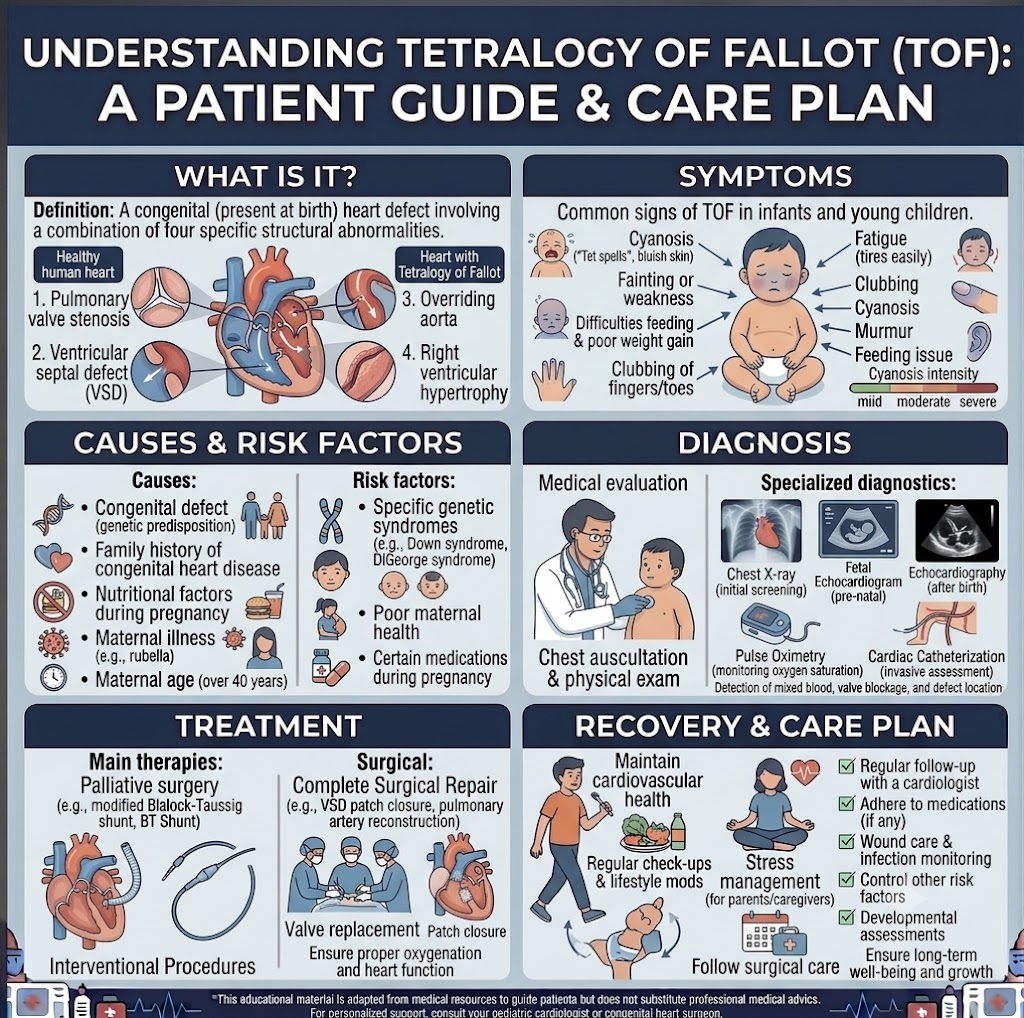
Tetralogy of Fallot (pronounced teh-TRAL-uh-jee of fuh-LOW) is a rare heart condition present at birth, making it a congenital heart defect. It involves four specific structural problems within the heart: a narrowed artery leading to the lungs, a hole between the heart's lower chambers, the body's main artery (aorta) being in an abnormal position, and a thickened right lower heart chamber. These defects disrupt the normal flow of blood, leading to low oxygen levels in the body, often causing symptoms like blue or gray skin. While typically diagnosed during pregnancy or shortly after birth, mild cases might not be identified until adulthood. Surgery is required to correct these heart problems, followed by lifelong medical checkups.
Understanding the Condition
Tetralogy of Fallot: Understanding a Complex Heart Condition
Understanding the Condition
Tetralogy of Fallot (pronounced teh-TRAL-uh-jee of fuh-LOW) is a rare heart condition present at birth, making it a congenital heart defect. It involves four specific structural problems within the heart: a narrowed artery leading to the lungs, a hole between the heart's lower chambers, the body's main artery (aorta) being in an abnormal position, and a thickened right lower heart chamber. These defects disrupt the normal flow of blood, leading to low oxygen levels in the body, often causing symptoms like blue or gray skin. While typically diagnosed during pregnancy or shortly after birth, mild cases might not be identified until adulthood. Surgery is required to correct these heart problems, followed by lifelong medical checkups.
Common Symptoms
Before your visit, gather any available medical records, including prenatal test results or reports from the baby’s birth. Prepare a detailed list of your baby's symptoms, noting when they started, what makes them better or worse, and their frequency. Also, compile a list of questions you have for the specialist. Be ready to discuss your family's medical history.
Book a doctor visit near me
Consultation Guide
Blue or Gray Skin Color (Cyanosis): A bluish or grayish tint to the skin, lips, and nails, caused by low oxygen levels in the blood.
Shortness of Breath and Rapid Breathing: Especially noticeable during activities like feeding in infants or during exercise in older children.
Trouble Gaining Weight: Infants may struggle to grow and gain weight adequately due to increased energy expenditure by the heart.
Easy Tiredness: Children may become fatigued quickly during play or physical activity.
Irritability: Unusual fussiness or agitation.
Prolonged Crying: Unexplained or long periods of crying.
Tet Spells: Sudden, severe episodes where the skin, nails, and lips turn deeply blue or gray. These are caused by a rapid drop in blood oxygen and are most common in young infants (2-4 months old), often triggered by crying, eating, or being upset. Older children may instinctively squat during these spells, which helps improve blood flow to the lungs.
Consultation Guide
Which Specialist to Meet
Medication Review with Healthcare Team: Always consult your doctor before taking any medications, including over-the-counter drugs, herbal supplements, or prescription drugs, during pregnancy, as some can cause birth defects.
Long-Term Monitoring and Management
Diagnostic Procedures
This common, painless test uses sound waves to create live pictures of the heart. It shows the heart's structure, how its chambers and valves are working, and how blood flows through it.
What to Expect
You or your child will lie on an examination table. A clear gel will be applied to the chest, and a handheld device (transducer) will be gently moved over the chest area. This device sends out sound waves that bounce off the heart and create images on a monitor. The test typically takes 30 to 60 minutes.
Electrocardiogram (ECG or EKG)
An ECG records the electrical activity of the heart. It provides information about the heart's rate and rhythm, helping to detect any abnormalities.
What to Expect
Small, sticky patches called electrodes are placed on the chest, and sometimes on the arms and legs. These patches are connected by wires to a machine that records the heart's electrical signals. The test is quick, painless, and usually takes about 5 to 10 minutes.
Chest X-rays use a small amount of radiation to create images of the heart, lungs, blood vessels, airways, and the bones of the chest. It can help assess heart size and lung condition.
What to Expect
You or your child will stand or sit in front of an X-ray plate. You'll be asked to hold still and take a deep breath, holding it briefly while the image is taken. The procedure is very quick, usually just a few minutes.
Complete Blood Count (CBC)
A CBC is a standard blood test that measures various components of your blood, including red blood cells, white blood cells, and platelets. It provides an overall health picture and can help identify conditions like anemia or infection.
What to Expect
A healthcare professional will draw a small sample of blood, typically from a vein in the arm. The process usually takes less than 5 minutes.
Cardiac Catheterization
What to Expect
You or your child will typically receive a mild sedative to help you relax. The area where the catheter will be inserted (often the groin) will be numbed. The catheter is then carefully inserted into a blood vessel and guided to the heart using X-ray imaging. You might feel some pressure at the insertion site, but usually no pain. The procedure can last from one to three hours.
Treatment Options
If Tetralogy of Fallot is suspected, a consultation with a pediatric cardiologist (a heart specialist for children) is crucial. They may also refer to a cardiac surgeon if surgery is needed, and a genetic counselor to discuss potential hereditary factors.
Preparations Before Your Visit
This is a more invasive procedure used for detailed assessment or treatment. A thin, flexible tube (catheter) is guided through a blood vessel to the heart to measure pressures, visualize structures with dye, or perform interventions.
Surgical Procedures
Corrective Heart Surgery: This is the primary treatment for Tetralogy of Fallot. The surgery aims to fix all four heart defects by closing the hole between the heart's lower chambers, widening the narrowed pathway from the heart to the lungs, and, if necessary, repositioning the aorta. In some cases, a temporary procedure might be performed in very young or unstable infants to improve blood flow to the lungs before definitive repair. (Duration: A single major surgical procedure, followed by a hospital stay for recovery. Lifelong follow-up care with a heart specialist is essential.)
Lifelong Cardiology Follow-Up: Even after successful surgery, individuals with Tetralogy of Fallot require regular checkups with a cardiologist to monitor heart function, detect any potential late complications, and ensure overall heart health.
Awareness of Potential Post-Surgical Complications: While most people do well after surgery, complications can include irregular heartbeats, leaky heart valves, or changes in heart chamber size. Regular monitoring helps detect and manage these.
Prevention & Long-Term Wellbeing
Prevention
Comprehensive Prenatal Care: Regular medical checkups throughout pregnancy are vital for the health of both the mother and the developing baby.
Folic Acid Supplementation: Taking a multivitamin with 400 micrograms of folic acid daily before and during early pregnancy can help reduce the risk of certain birth defects, potentially including heart defects.
Avoid Harmful Substances: Refrain from drinking alcohol, smoking (including exposure to secondhand smoke), and using illicit drugs during pregnancy. Also, limit exposure to strong chemicals or paint fumes.
Rubella (German Measles) Vaccination: Ensure you are vaccinated against rubella before becoming pregnant, as infection during pregnancy can severely impact fetal heart development.
Blood Sugar Management: If you have diabetes, strict control of your blood sugar levels before and during pregnancy significantly reduces the risk of congenital heart defects.
Management of Chronic Health Conditions: Discuss any existing health conditions, such as phenylketonuria, with your healthcare provider to ensure optimal management before and during pregnancy.
Infective Endocarditis Prevention: In some cases, your healthcare provider may recommend antibiotics before certain medical or dental procedures to prevent a serious heart infection (infective endocarditis). Always discuss this with your healthcare team.
Tags & Topics
Notice an error or need an update?
Help us keep medical information accurate. Report incorrect info or suggest an edit.

