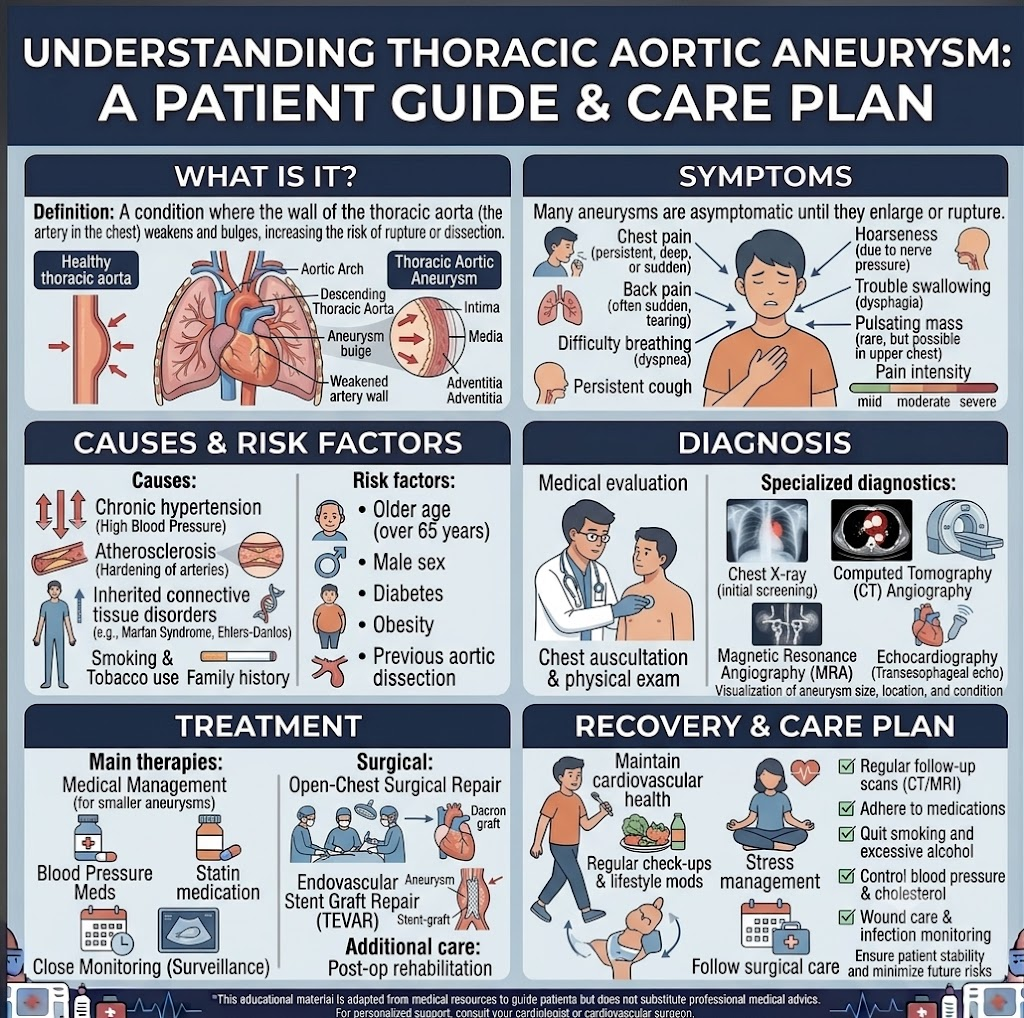
A thoracic aortic aneurysm occurs when a section of the aorta, the body's main artery in the chest, becomes weakened and bulges or widens. This vital artery carries oxygen-rich blood from the heart to the rest of the body. When the aortic wall weakens, it can expand, forming an aneurysm. These aneurysms can develop anywhere in the chest portion of the aorta, including near the heart. While less common than those in the lower abdomen, a thoracic aortic aneurysm requires careful management, as a rupture or tear (dissection) is a life-threatening medical emergency.
Understanding the Condition
Thoracic Aortic Aneurysm: Understanding and Managing a Weakened Aorta
Understanding the Condition
A thoracic aortic aneurysm occurs when a section of the aorta, the body's main artery in the chest, becomes weakened and bulges or widens. This vital artery carries oxygen-rich blood from the heart to the rest of the body. When the aortic wall weakens, it can expand, forming an aneurysm. These aneurysms can develop anywhere in the chest portion of the aorta, including near the heart. While less common than those in the lower abdomen, a thoracic aortic aneurysm requires careful management, as a rupture or tear (dissection) is a life-threatening medical emergency.
Common Symptoms
Slow Growth, Often No Early Symptoms: Thoracic aortic aneurysms typically grow slowly and often cause no noticeable symptoms in their early stages, making them difficult to detect. Many remain small, but some enlarge over time.
Symptoms as the Aneurysm Grows: If the aneurysm grows large enough, it may press on nearby structures, leading to symptoms such as a weak or scratchy voice, shortness of breath, or tenderness and pain in the chest.
Emergency Symptoms (Rupture or Dissection): A sudden tear (aortic dissection) or rupture of the aneurysm is a medical emergency with severe symptoms including: sharp, sudden pain in the upper back that may spread down the body; severe pain in the chest, jaw, neck, or arms; trouble breathing or swallowing; dangerously low blood pressure; and loss of consciousness. These symptoms require immediate medical attention.
Consultation Guide
Which Specialist to Meet
You should consult with a general practitioner for an initial assessment, who may then refer you to specialists such as a cardiologist (heart specialist), a vascular surgeon (blood vessel specialist), or a cardiothoracic surgeon (heart and chest surgeon). If there's a suspected genetic link, a genetic counselor may also be recommended.
Preparations Before Your Visit
Before your visit, gather your full medical history, including any existing conditions, medications, and a detailed family history of heart or vascular diseases, especially aneurysms. List all your symptoms, even mild ones, and be prepared to discuss your lifestyle habits, such as smoking or diet. Write down any questions you have for the doctor.
Book a doctor visit near me
Watchful Waiting (Regular Monitoring): For small, stable aneurysms with no symptoms, your doctor may recommend regular check-ups and imaging tests (like echocardiograms or CT scans) to monitor the aneurysm's size and growth. Lifestyle changes to control risk factors are also crucial. (Duration: Ongoing, often lifelong, with imaging typically every 6-12 months initially, then possibly less frequently if stable.)
Consultation Guide
Prevention and Risk Factor Management
Diagnostic Procedures
A chest X-ray uses a small amount of radiation to create images of your heart, lungs, blood vessels, airways, and bones in the chest and spine. It can help detect fluid around the lungs or a noticeably enlarged aorta, though it may not show smaller aneurysms clearly.
What to Expect
You will be asked to stand or sit against a flat surface, often with your chest pressed against a plate. You'll need to hold your breath briefly while the X-ray is taken. The procedure is quick, generally lasting only a few minutes, and is painless.
CT Scan (Computerized Tomography)
A CT scan uses specialized X-ray equipment and a computer to create detailed cross-sectional images (slices) of bones, blood vessels, and soft tissues inside the body. It provides much more detail than a standard X-ray and is excellent for visualizing the aorta.
What to Expect
You will lie on a motorized table that slides into a large, doughnut-shaped machine. You may receive a contrast dye, injected into a vein, to help blood vessels show up more clearly. You'll need to remain still and may be asked to hold your breath for short periods. The scan typically takes 10 to 30 minutes.
An echocardiogram uses high-frequency sound waves to create moving pictures of your heart. It shows the heart's chambers, valves, and how blood flows through them, allowing doctors to detect an enlarged aorta, especially near the heart.
What to Expect
You will lie on an examination table. A gel will be applied to your chest, and a transducer (a small, wand-like device) will be moved across your skin. The transducer sends and receives sound waves. You might feel a slight pressure as the transducer moves. The test usually takes 30 to 60 minutes and is painless.
Targeted Screening for At-Risk Individuals: If you have a strong family history of aortic aneurysms or a genetic condition linked to them, your doctor may recommend regular imaging tests, such as echocardiograms or CT scans, to screen for an aneurysm or monitor an existing one.
Treatment Options
Medications to Manage Blood Pressure and Cholesterol: Medicines are prescribed to lower high blood pressure and cholesterol levels, which reduces stress on artery walls and slows the progression of atherosclerosis, helping to prevent aneurysm growth and complications. (Duration: Long-term, ongoing treatment.)
Surgical Procedures
Open-Chest Surgery: This traditional surgery involves making an incision in the chest to directly access the aorta. The damaged, weakened section of the aorta is removed and replaced with a synthetic tube (graft) that is sewn into place. (Duration: A single procedure, followed by a recovery period of several weeks to a few months.)
Endovascular Aortic Repair (EVAR/TEVAR): A less invasive procedure where a small incision is made, usually in the groin. A catheter is guided through blood vessels to the aneurysm, and a stent-graft (a fabric tube supported by a metal mesh) is deployed inside the aorta to reinforce the weakened area. (Duration: A single procedure, with a typically shorter recovery period of several days to a few weeks compared to open surgery.)
Aortic Root Surgery: Specifically for aneurysms located at the aortic root (where the aorta connects to the heart), this surgery may involve replacing the damaged aortic section and, if necessary, repairing or replacing the aortic valve. (Duration: A single procedure, followed by a recovery period of several weeks to a few months.)
Emergency Surgery for Rupture or Dissection: If an aneurysm ruptures or dissects, immediate surgery is required to repair the damage and prevent life-threatening blood loss. This is a critical intervention. (Duration: A single, immediate procedure; recovery varies significantly based on the severity of the emergency.)
Control Blood Pressure and Cholesterol: Work with your doctor to manage high blood pressure and high cholesterol, either through lifestyle changes or medication. These conditions contribute to atherosclerosis, which weakens artery walls.
Manage Underlying Conditions: If you have conditions like atherosclerosis, specific blood vessel inflammations (e.g., Takayasu arteritis), or a bicuspid aortic valve, ensure they are properly managed to minimize risk to the aorta. Address any untreated infections promptly.
Prevention & Long-Term Wellbeing
Monitoring and Lifestyle Management
Adopt a Heart-Healthy Lifestyle: Avoid all forms of smoking and tobacco use, as they significantly damage blood vessels. Maintain a healthy weight through a balanced diet rich in fruits, vegetables, and whole grains, and engage in regular physical activity.
Understand Genetic and Family Risk: If you have a family history of aortic aneurysms or a known genetic condition like Marfan syndrome, Loeys-Dietz syndrome, or vascular Ehlers-Danlos syndrome, be vigilant about your health and discuss screening options with your doctor. Genetic counseling may be beneficial, especially if planning a family.
Long-Term Monitoring and Screening
Regular Health Check-ups: Consistent visits to your healthcare professional allow for ongoing monitoring of your overall health and early detection of potential issues related to cardiovascular health.
Tags & Topics
Notice an error or need an update?
Help us keep medical information accurate. Report incorrect info or suggest an edit.

