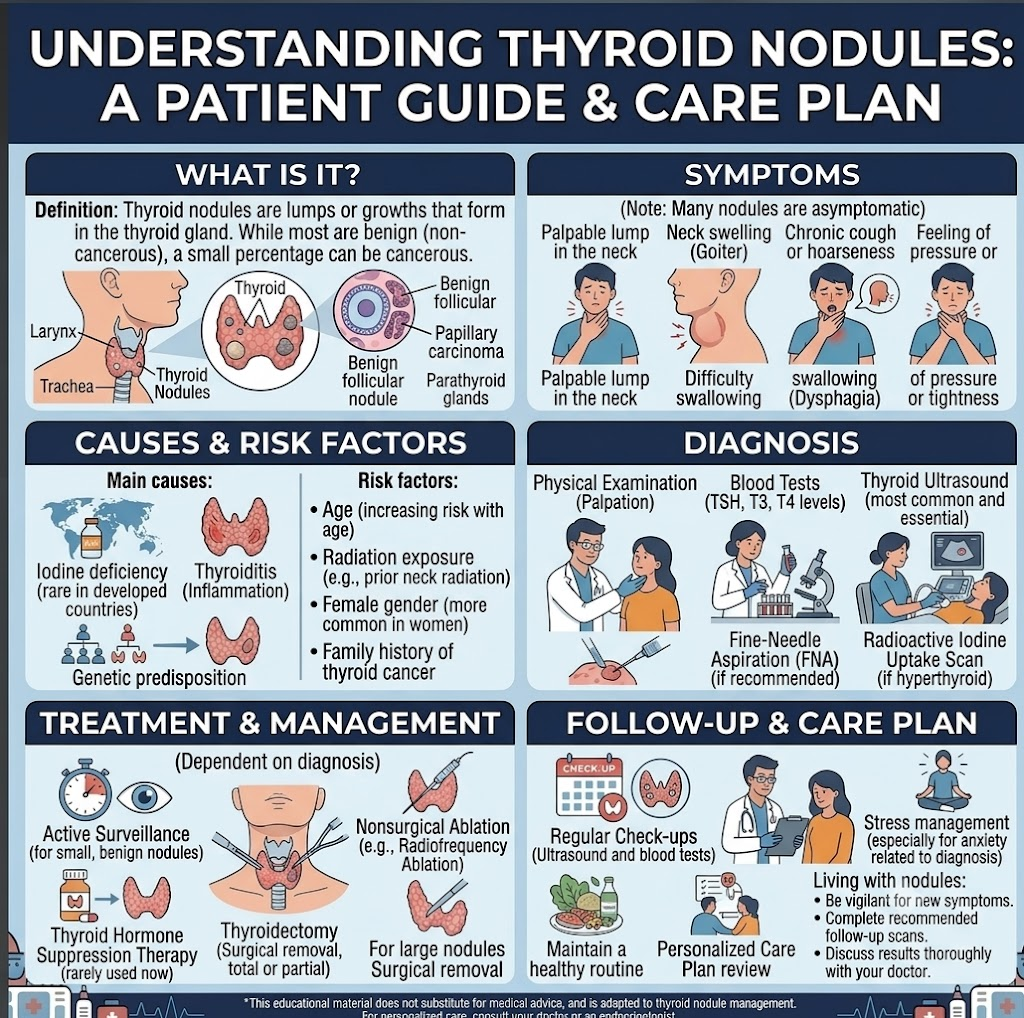
Thyroid nodules are solid or fluid-filled lumps that can form within the thyroid gland. The thyroid is a small, butterfly-shaped gland located at the base of your neck, just below your Adam's apple and above your breastbone. Most thyroid nodules are not serious, do not cause symptoms, and are not cancerous. Often, people don't realize they have a nodule until a doctor finds it during a routine check-up or another medical scan. However, some nodules can grow large enough to be noticeable or cause symptoms.
Understanding the Condition
Thyroid Nodules: Understanding Lumps in Your Neck
Understanding the Condition
Thyroid nodules are solid or fluid-filled lumps that can form within the thyroid gland. The thyroid is a small, butterfly-shaped gland located at the base of your neck, just below your Adam's apple and above your breastbone. Most thyroid nodules are not serious, do not cause symptoms, and are not cancerous. Often, people don't realize they have a nodule until a doctor finds it during a routine check-up or another medical scan. However, some nodules can grow large enough to be noticeable or cause symptoms.
Common Symptoms
No Symptoms (Most Common): Most thyroid nodules do not cause any noticeable symptoms and are discovered incidentally during other medical examinations or imaging.
Symptoms of a Large Nodule: If a thyroid nodule grows large, it may become visible or cause pressure on nearby structures in the neck, leading to:- A lump that can be seen or felt in the neck- Difficulty swallowing- Difficulty breathing- Changes to your voice, such as hoarseness
Symptoms of Overactive Thyroid (Hyperthyroidism): In some cases, a thyroid nodule can produce too much thyroid hormone, leading to a condition called hyperthyroidism. Symptoms of hyperthyroidism include:- Unexplained weight loss- Increased appetite- Feelings of nervousness or anxiety- A rapid or irregular heartbeat- Trouble sleeping (insomnia)- Trembling or shaking (tremor)- Increased sweating- More frequent bowel movements- Muscle weakness- Thinning hair
Consultation Guide
Which Specialist to Meet
You should start by consulting your primary care doctor (general practitioner). Depending on the findings, they may refer you to an endocrinologist (a doctor specializing in hormones and glands) for further evaluation, or a surgeon if removal of the nodule is considered.
Preparations Before Your Visit
When preparing for your doctor's visit, make a list of any symptoms you are experiencing, including when they started and how they affect your daily life. Be ready to discuss your medical history, including any family history of thyroid conditions. Prepare a list of questions you want to ask your doctor. If you have had any previous neck scans or blood tests, bring those records with you.
Book a doctor visit near me
Your doctor will examine your neck, feeling for any lumps or swelling in the thyroid area. They will also ask about your symptoms and medical history.
Watchful Waiting: For small, non-cancerous nodules that aren't causing symptoms, your doctor may recommend regular check-ups, including follow-up ultrasounds and blood tests, to monitor for any changes in size or characteristics. (Duration: Ongoing, typically with annual or semi-annual appointments.)
Beta-blockers: These medications help manage the uncomfortable symptoms of hyperthyroidism, such as a rapid heart rate, tremors, and anxiety. They do not treat the underlying thyroid problem but provide symptom relief. (Duration: Short-term or as needed to control symptoms.)
Radioactive Iodine Therapy: For nodules causing hyperthyroidism, a small dose of radioactive iodine is taken by mouth. The thyroid gland absorbs the iodine, which then destroys the overactive thyroid cells, reducing the production of excess hormones. (Duration: Typically a single dose, with effects developing over several weeks to months. May require ongoing monitoring.)
Thyroidectomy (Surgical Removal): Surgery to remove all or part of the thyroid gland may be recommended for cancerous nodules, very large nodules causing symptoms (like difficulty breathing or swallowing), or nodules causing severe hyperthyroidism that haven't responded to other treatments. If the entire gland is removed (total thyroidectomy), lifelong thyroid hormone replacement medication will be necessary. (Duration: A single surgical procedure. Recovery typically takes a few weeks. If a total thyroidectomy is performed, lifelong daily hormone replacement medication is required.)
Regular Check-ups: Routine physical examinations can help your doctor detect thyroid nodules early, even before they cause any noticeable symptoms.
Monitor Your Neck: Periodically observe and gently feel your neck for any new lumps, swelling, or discomfort. Report any changes to your doctor promptly.
Be Aware of Symptoms: Familiarize yourself with the potential symptoms of thyroid nodules and hyperthyroidism. Early recognition can lead to timely diagnosis and treatment.
Long-Term Monitoring and Management
Report New or Changing Symptoms: Stay vigilant for any new or worsening symptoms, particularly those related to thyroid function (e.g., significant changes in weight, energy levels, heart rate, or mood), and communicate them to your healthcare provider.
Diagnostic Procedures
What to Expect
The doctor will gently feel your neck around the thyroid gland, which is located in the lower front part of your neck. You might be asked to swallow during this part of the exam. This is a quick and painless procedure that helps identify any visible or palpable nodules.
Blood Test (Thyroid Hormone Levels)
A simple blood test measures the levels of thyroid-stimulating hormone (TSH) and other thyroid hormones in your blood. This helps determine if your thyroid gland is producing too much or too little hormone, which can indicate if a nodule is overactive.
What to Expect
A healthcare professional will draw a small sample of blood, typically from a vein in your arm. You might feel a brief pinch or sting. Generally, no special preparation is required for this test, though your doctor might provide specific instructions if needed.
What to Expect
You will lie on your back, often with your neck slightly extended. A special gel will be applied to your neck to help the sound waves transmit effectively. A handheld device, called a transducer, will be gently moved over your neck. You may feel slight pressure. The images are displayed on a screen. The procedure is painless, takes about 15-30 minutes, and typically requires no special preparation like fasting.
Needle Biopsy (Fine-Needle Aspiration)
If an ultrasound identifies a suspicious nodule, your doctor may recommend a fine-needle aspiration biopsy. During this procedure, a long, very thin needle is inserted into the nodule, usually guided by ultrasound, to collect a small sample of cells or fluid. This sample is then sent to a laboratory to be examined under a microscope for signs of cancer.
What to Expect
You will lie on your back with your neck extended. The skin over your thyroid will be cleaned, and your doctor may use a local anesthetic to numb the area, though this is not always necessary as the needle is very thin. Using ultrasound guidance, the doctor inserts the fine needle into the nodule, often multiple times, to gather sufficient cells. You may feel some pressure or a brief sting. After the sample is collected, pressure will be applied to the site to prevent bruising. The procedure usually takes 15-30 minutes, and you might experience mild soreness or bruising afterward.
Thyroid Hormone Suppression Therapy: If a non-cancerous nodule is producing too much thyroid hormone, or if there's a concern about nodule growth, a medication containing synthetic thyroid hormone may be prescribed. The goal is to lower the level of thyroid-stimulating hormone (TSH), which can sometimes shrink the nodule or prevent further growth. (Duration: Often long-term, requiring regular blood tests to adjust dosage.)
Adhere to Follow-up Care: If you have diagnosed thyroid nodules, attend all scheduled follow-up appointments, including recommended ultrasounds and blood tests, to monitor their size, characteristics, and thyroid function.
Treatment Options
Monitoring and Observation
Medications
Anti-thyroid Medications: For nodules causing hyperthyroidism (overactive thyroid), medications can be used to reduce the amount of thyroid hormone your gland produces. (Duration: Varies from several months to years, depending on the individual's response and condition.)
Consistent Medication Use: If you are prescribed thyroid hormone replacement or anti-thyroid medications, take them exactly as directed by your doctor. Do not adjust your dosage without medical guidance.
Prevention & Long-Term Wellbeing
Prevention and Early Detection
Healthy Lifestyle: Maintaining a balanced diet, regular exercise, and managing stress contribute to overall well-being, which can support your body's health, including endocrine function.
Tags & Topics
Notice an error or need an update?
Help us keep medical information accurate. Report incorrect info or suggest an edit.


