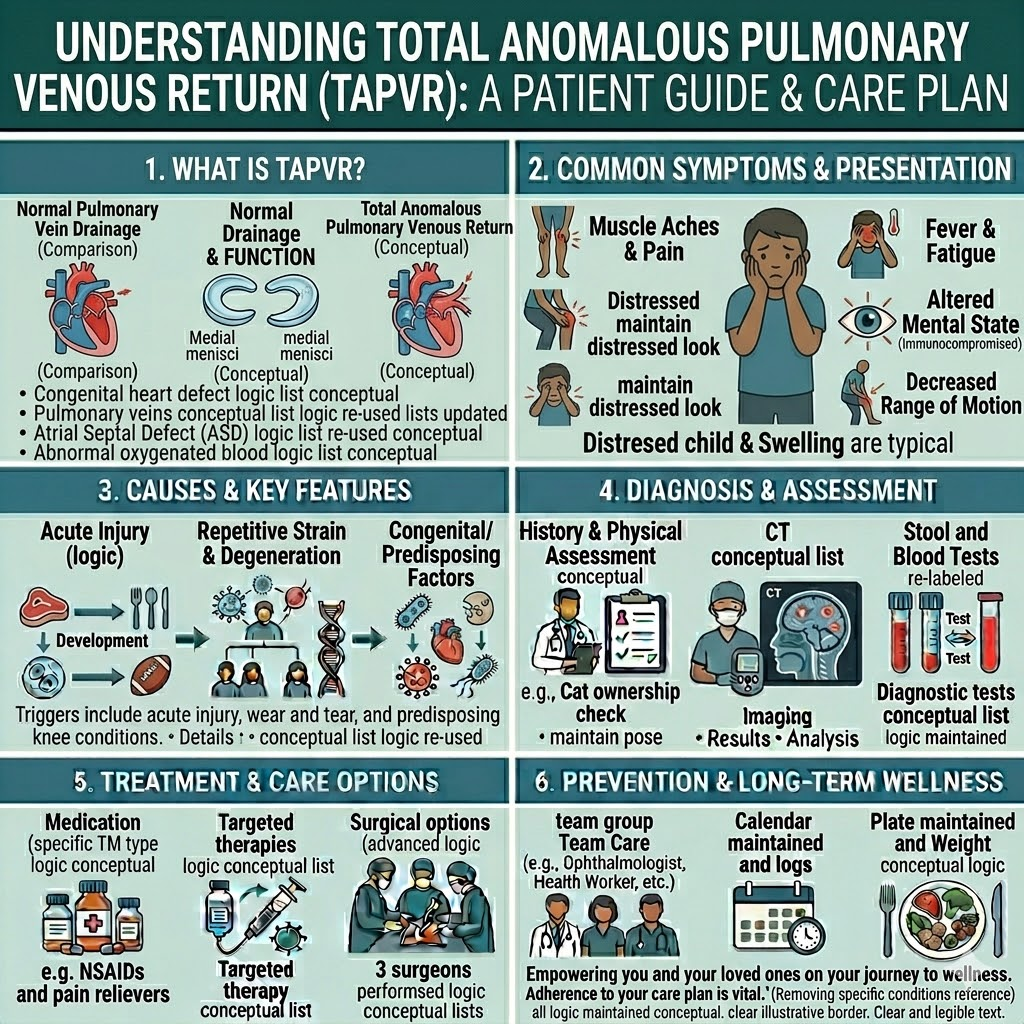
Total Anomalous Pulmonary Venous Return (TAPVR) is a rare heart condition present at birth, meaning it's a congenital heart defect. In a typical heart, oxygen-rich blood returns from the lungs to the heart's upper left chamber (left atrium) before being pumped to the body. With TAPVR, the pulmonary veins — the blood vessels carrying oxygen-rich blood from the lungs — connect to the wrong part of the heart, usually the upper right chamber (right atrium). This causes oxygen-rich blood to mix with oxygen-poor blood, leading to less oxygen being delivered to the body. The specific type of TAPVR depends on where the veins incorrectly connect.
Understanding the Condition
Total Anomalous Pulmonary Venous Return (TAPVR)
Understanding the Condition
Common Symptoms
Trouble Breathing: Rapid or labored breathing.
Poor Feeding: Difficulty or reluctance to feed, leading to slow weight gain.
Weak Pulse: A noticeably faint or rapid pulse.
Bluish or Grayish Skin (Cyanosis): Skin, lips, or nail beds may appear discolored due to low oxygen levels. These changes can be subtle and vary depending on skin tone. Symptoms can appear shortly after birth or, in some cases, later in life.
Consultation Guide
Which Specialist to Meet
Before your visit, list all observed symptoms, including onset and severity. Gather your full medical history, including other health conditions and medications. Prepare questions for the doctor.
Book a doctor visit near me
Consultation Guide
Total Anomalous Pulmonary Venous Return (TAPVR) is a rare heart condition present at birth, meaning it's a congenital heart defect. In a typical heart, oxygen-rich blood returns from the lungs to the heart's upper left chamber (left atrium) before being pumped to the body. With TAPVR, the pulmonary veins — the blood vessels carrying oxygen-rich blood from the lungs — connect to the wrong part of the heart, usually the upper right chamber (right atrium). This causes oxygen-rich blood to mix with oxygen-poor blood, leading to less oxygen being delivered to the body. The specific type of TAPVR depends on where the veins incorrectly connect.
Diagnostic Procedures
For infants and children, a pediatric cardiologist (a heart specialist for children) is essential. Adults diagnosed later in life should see an adult cardiologist specializing in congenital heart disease.
Preparations Before Your Visit
Cardiac Catheterization
This procedure inserts a thin tube (catheter) into a blood vessel, guided by X-rays to the heart. It can measure heart pressures, take tissue samples, and identify structural issues or blockages. Contrast dye makes blood vessels visible. It can be diagnostic and sometimes therapeutic (e.g., opening narrowed vessels).
What to Expect
A quick, non-invasive imaging test using a small amount of radiation to create pictures of your heart, lungs, and surrounding structures. It helps identify issues like an enlarged heart, fluid in lungs, or other abnormalities suggesting heart or lung disease.
What to Expect
You'll remove metal objects and be positioned by a technician. You'll hold your breath briefly while the X-ray is taken. The process is very quick and painless, taking only a few minutes.
A non-invasive test using sound waves to create moving pictures of the heart. It shows heart size, shape, and how chambers and valves work, as well as blood flow. This helps diagnose conditions like TAPVR by visualizing abnormal pulmonary vein connections.
What to Expect
You will lie on a table. Gel is applied to your chest, and a handheld device (transducer) is moved across your skin, sending sound waves to create images. You might hear blood flow sounds. The test takes 30-60 minutes and is painless.
Electrocardiogram (ECG or EKG)
A simple, quick test that records the heart's electrical activity. It measures the timing and strength of electrical signals, helping detect irregular heartbeats, heart strain, or other electrical problems associated with congenital heart defects.
What to Expect
Small, sticky electrode patches are placed on your chest and limbs. Wires connect them to an ECG machine which records the signals. You lie still for a few minutes. The test is painless, takes 5-10 minutes, and requires no special preparation.
Imaging Tests: Periodic echocardiograms and other scans will be performed to assess the heart's structure and ensure the repaired connections remain healthy.
Growth & Development Checks: For children, regular pediatrician visits are crucial to track developmental milestones, as heart conditions can sometimes impact overall development.
Treatment Options
You or your child will typically receive medication to relax or sleep. The insertion site (often groin) is numbed. You may feel pressure. The procedure usually takes 1-3 hours, followed by a recovery period requiring stillness to prevent bleeding.
Surgical Procedures
Surgical Repair of TAPVR: The main treatment involves surgery to re-connect the pulmonary veins directly to the left atrium, ensuring oxygen-rich blood flows correctly to the body. Any abnormal connections are closed off. (Duration: Surgery takes several hours, followed by a 1-2 week hospital stay and several months of home recovery. Lifelong cardiology follow-up is necessary.)
Heart Transplant: In rare, severe cases where TAPVR or its complications (like severe heart failure) are uncorrectable, a heart transplant may replace the failing heart with a healthy donor heart. (Duration: Major surgery with a long recovery and lifelong anti-rejection medication and monitoring.)
Medications
Diuretics: Medications that help the body remove excess fluid, reducing swelling and easing the heart's workload. (Duration: May be used temporarily before surgery or long-term if fluid retention persists.)
Inotropes: Medications that strengthen the heart's pumping action, often used for critical stabilization before surgery. (Duration: Typically used for short periods in a hospital setting.)
Oxygen Therapy: Providing supplemental oxygen to individuals struggling with low oxygen levels, often used to stabilize them prior to surgery. (Duration: Temporary, as needed to maintain adequate oxygen saturation.)
Prevention & Long-Term Wellbeing
Nutritional Support: Ensuring adequate caloric intake, especially for infants with poor feeding, to support growth and recovery. This may involve specialized formulas or feeding tubes. (Duration: As long as necessary to support growth and development, potentially for several months.)
Long-Term Monitoring
Regular Cardiology Follow-ups: Essential after repair to monitor heart function, detect any residual issues, and ensure proper growth and development.
Lifestyle & Prevention
Healthy Habits: Maintain a balanced diet, engage in regular physical activity (as advised by a cardiologist), and avoid smoking for long-term heart health.
Infection Control: Practice good hygiene, including dental care. Discuss antibiotic prophylaxis with your doctor if indicated for specific procedures.
Emotional Support: Utilize support groups or mental health professionals to cope with the emotional aspects of a chronic heart condition.
Tags & Topics
Notice an error or need an update?
Help us keep medical information accurate. Report incorrect info or suggest an edit.


