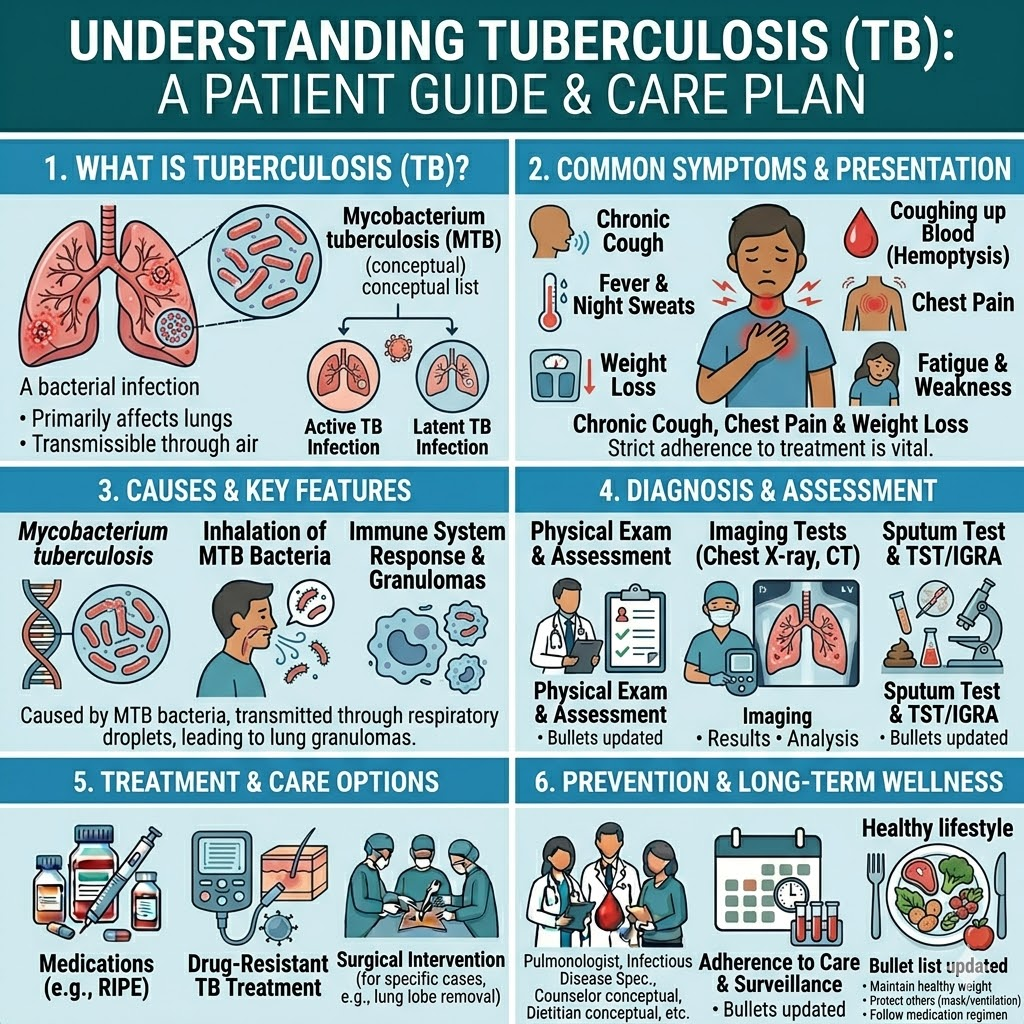
Tuberculosis (TB) is a severe bacterial infection primarily affecting the lungs, though it can spread to other parts of the body. It spreads through airborne droplets when an infected person coughs, sneezes, or sings. TB spreads more easily in crowded environments and poses a higher risk to individuals with weakened immune systems, such as those with HIV/AIDS. While treatable with specific medications, some bacterial strains are drug-resistant. TB typically progresses through three stages: Primary Infection (initial exposure, often symptomless or with mild flu-like symptoms), Latent TB (bacteria are contained by the immune system, causing no symptoms and not spreading), and Active TB Disease (bacteria multiply, causing illness and making the person contagious).
Understanding the Condition
Tuberculosis (TB) is a severe bacterial infection primarily affecting the lungs, though it can spread to other parts of the body. It spreads through airborne droplets when an infected person coughs, sneezes, or sings. TB spreads more easily in crowded environments and poses a higher risk to individuals with weakened immune systems, such as those with HIV/AIDS. While treatable with specific medications, some bacterial strains are drug-resistant. TB typically progresses through three stages: Primary Infection (initial exposure, often symptomless or with mild flu-like symptoms), Latent TB (bacteria are contained by the immune system, causing no symptoms and not spreading), and Active TB Disease (bacteria multiply, causing illness and making the person contagious).
Common Symptoms
Primary TB Infection (often none, or mild flu-like): Low-grade fever, unusual fatigue, mild cough, nausea or vomiting, loss of appetite, unintended weight loss, and sweating heavily at night.
Latent TB Infection: No symptoms at all. The person feels completely healthy and is not contagious.
Active TB Disease (symptoms usually worsen gradually over weeks): A persistent cough lasting three weeks or longer (possibly with blood or thick mucus), chest pain (especially when breathing or coughing), fever, chills, drenching night sweats, loss of appetite, unintended weight loss, and constant fatigue or weakness.
Consultation Guide
Which Specialist to Meet
You should initially consult your primary care doctor (family physician or internal medicine specialist) if you suspect TB or have been exposed. They may then refer you to an infectious disease specialist, a pulmonologist (lung specialist), or a public health clinic for further evaluation and management.
Preparations Before Your Visit
Before your visit, be prepared to discuss any symptoms you're experiencing, when they started, and their severity. Inform your doctor about any recent travel, potential exposure to someone with TB, and your full medical history, including any conditions that might weaken your immune system. List all medications, vitamins, and supplements you are currently taking.
Book a doctor visit near me
Standard Multi-Drug Therapy for Active TB: A combination of several different antibiotics is prescribed to kill the TB bacteria. Taking multiple drugs is crucial to prevent the bacteria from becoming resistant to treatment. (Duration: Typically 6 to 9 months, but can be longer depending on the severity, location of the infection, and drug resistance. It is critical to take all medications exactly as prescribed for the entire duration, even after symptoms improve.)
Treatment for Latent TB Infection: Even without active symptoms, treatment is important to prevent latent TB from developing into active disease, especially for those at higher risk. This usually involves one or two antibiotics. (Duration: Can vary from 3 to 9 months, depending on the specific medication regimen chosen.)
Diagnostic Procedures
Tuberculosis (TB): Understanding the Disease, Diagnosis, and Treatment
Understanding the Condition
Tuberculin Skin Test (TST) or Mantoux Test
This test checks for exposure to TB bacteria. A small amount of a substance called tuberculin is injected just under the skin of your forearm.
What to Expect
You will feel a slight prick during the injection. After 2-3 days, you must return to the clinic so a healthcare professional can examine the injection site for a reaction (a raised, firm bump). The size of this bump determines if the test is positive.
TB Blood Test (Interferon-Gamma Release Assays or IGRAs)
This blood test also checks for exposure to TB bacteria by measuring your immune system's reaction to specific TB proteins. It's often used when the skin test might be less reliable.
What to Expect
A healthcare professional will draw a small sample of blood from a vein, typically in your arm, using a needle. You might feel a brief sting or pressure. The blood sample is then sent to a lab for analysis.
A chest X-ray uses a small amount of radiation to create pictures of the inside of your chest, including your heart, lungs, blood vessels, airways, and bones. For TB, it helps detect changes in the lungs that might indicate an active infection, past exposure, or damage.
What to Expect
You will be asked to remove any jewelry or clothing with metal and wear a hospital gown. You'll stand or sit against an X-ray plate, and the technician will ask you to hold your breath for a few seconds while the images are taken. This is painless and usually takes only a few minutes.
Sputum Smear and Culture
If active lung TB is suspected, a sample of sputum (phlegm or mucus coughed up from the lungs) is collected. The sample is examined under a microscope for TB bacteria (smear) and also grown in a lab to identify the specific type of bacteria and test which medications will be most effective (culture and drug sensitivity testing).
What to Expect
You will be asked to cough deeply and spit into a sterile container. This might be done several times over a few days. Sometimes, if you cannot produce sputum, other methods might be used to collect a sample.
Regular Follow-Up Appointments: Attend all scheduled doctor appointments and follow-up tests to monitor your progress, check for side effects, and ensure the treatment is working effectively. This is crucial for successful outcomes for both active and latent TB.
Inform Close Contacts: If you are diagnosed with active TB, healthcare providers may need to screen people who have been in close contact with you to identify and treat any potential infections early, preventing further spread.
Treatment Options
Medications
Treatment for Drug-Resistant TB: If the TB bacteria are resistant to common antibiotics, a more complex regimen with different, often stronger medications is required. (Duration: Can range from 9 to 24 months or even longer, often involving injectable medications and more frequent monitoring.)
Complete Your Full Course of Medication: This is the most critical step for both active and latent TB. Stopping treatment early, even if you feel better, allows the bacteria to survive, multiply, and potentially become resistant to medication, making future treatment much harder.
Practice Good Hygiene: If you have active TB, cover your mouth and nose when you cough, sneeze, or laugh. Avoid close contact with others, especially during the initial contagious phase of treatment, to prevent spreading the bacteria.
Isolate When Contagious: For active TB, your doctor will advise you on how long you need to stay home and avoid close contact with others, usually until you are no longer considered contagious after starting treatment. Ensure your living spaces are well-ventilated.
Prevention & Long-Term Wellbeing
Prevention and Long-Term Monitoring
Support Your Immune System: Maintain a healthy lifestyle with balanced nutrition, regular exercise, and adequate sleep. Avoid smoking and excessive alcohol consumption, as these can weaken your immune system and make you more vulnerable to infection.
Get Vaccinated (if applicable): In some parts of the world, a vaccine (BCG) is used to prevent severe forms of TB, especially in children. Discuss with your doctor if this is recommended for you or your family based on travel or exposure risk.
Tags & Topics
Notice an error or need an update?
Help us keep medical information accurate. Report incorrect info or suggest an edit.


