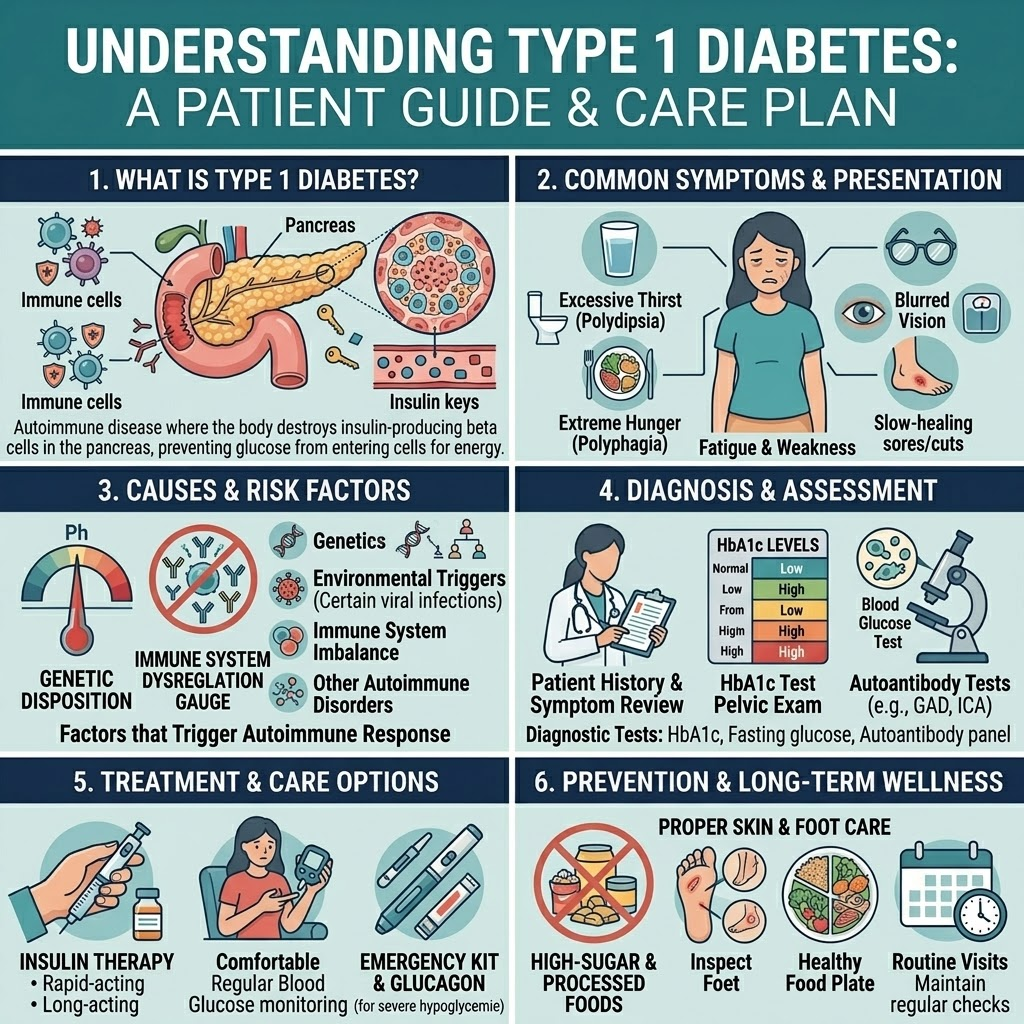
Type 1 diabetes is a long-lasting condition where the body's immune system mistakenly attacks and destroys the cells in the pancreas that produce insulin. Insulin is a vital hormone that acts like a key, allowing sugar (glucose) from food to enter your body's cells to be used for energy. Without insulin, sugar builds up in the bloodstream. Factors like genetics and certain viral infections are thought to play a role in its development. While often diagnosed in children or teenagers, it can develop at any age. There is currently no cure, but treatment focuses on managing blood sugar levels with insulin, diet, and lifestyle to prevent health problems.
Understanding the Condition
Type 1 Diabetes: Understanding and Managing a Lifelong Condition
Understanding the Condition
Common Symptoms
Increased Thirst: Feeling much thirstier than usual, leading to drinking more fluids.
Frequent Urination: Needing to use the restroom more often, including waking up at night.
Bed-wetting: In children who previously did not wet the bed at night.
Extreme Hunger: Feeling very hungry even after eating.
Unexplained Weight Loss: Losing weight without trying to, despite eating.
Mood Changes: Feeling irritable, restless, or experiencing other unexplained shifts in mood.
Fatigue and Weakness: Feeling unusually tired and lacking energy.
Blurred Vision: Experiencing vision that is hazy or unclear.
Consultation Guide
Which Specialist to Meet
Before your visit, make a list of all your symptoms, including when they started. Bring a record of your medical history, any current medications, and details of your family's health history. Prepare a list of questions you have for your doctor to ensure all your concerns are addressed.
Book a doctor visit near me
This test measures your blood sugar level at any random time, regardless of when you last ate. A blood sugar level of 200 mg/dL (11.1 mmol/L) or higher, along with symptoms of diabetes, suggests a diagnosis.
Consultation Guide
A healthcare professional will draw a small sample of blood, usually from a vein in your arm, using a needle. The process is quick and generally causes only a brief pinch.
This test checks for ketones in your urine. Ketones are produced when your body breaks down fat for energy because it can't use glucose, which can happen when there isn't enough insulin. High levels can indicate a serious condition called diabetic ketoacidosis.
Diagnostic Procedures
Type 1 diabetes is a long-lasting condition where the body's immune system mistakenly attacks and destroys the cells in the pancreas that produce insulin. Insulin is a vital hormone that acts like a key, allowing sugar (glucose) from food to enter your body's cells to be used for energy. Without insulin, sugar builds up in the bloodstream. Factors like genetics and certain viral infections are thought to play a role in its development. While often diagnosed in children or teenagers, it can develop at any age. There is currently no cure, but treatment focuses on managing blood sugar levels with insulin, diet, and lifestyle to prevent health problems.
Random Plasma Glucose Test
What to Expect
Fasting Plasma Glucose Test
This test measures your blood sugar after an overnight fast (typically 8-12 hours). A fasting blood sugar level of 126 mg/dL (7.0 mmol/L) or higher on two separate tests indicates diabetes.
What to Expect
You will be asked not to eat or drink anything except water for 8-12 hours before the test. A blood sample will then be taken from your arm.
Oral Glucose Tolerance Test (OGTT)
This test checks how your body processes sugar. After an overnight fast, your fasting blood sugar is measured. You then drink a sugary liquid, and your blood sugar levels are measured again at regular intervals (e.g., 1 and 2 hours later). A blood sugar level of 200 mg/dL (11.1 mmol/L) or higher after two hours suggests diabetes.
What to Expect
You will fast, have an initial blood draw, then drink a special glucose drink, and have additional blood samples taken at specific times. This test takes a few hours to complete.
Glycated Hemoglobin (A1C) Test
This blood test indicates your average blood sugar level for the past two to three months. It measures the percentage of blood sugar attached to hemoglobin, the oxygen-carrying protein in red blood cells. An A1C level of 6.5% or higher on two separate tests indicates diabetes.
What to Expect
A blood sample will be drawn from your arm. No fasting is required for this test.
These tests look for specific antibodies in your blood that indicate an autoimmune attack on the pancreas. Their presence helps confirm Type 1 diabetes and distinguish it from other types of diabetes.
What to Expect
A blood sample will be taken from your arm.
What to Expect
You will be asked to provide a urine sample. This can be done by urinating into a clean cup.
No Known Prevention for Type 1: Currently, there is no known way to prevent Type 1 diabetes itself. Researchers are actively working on ways to stop the autoimmune process or protect insulin-producing cells in newly diagnosed individuals.
Kidney Function Monitoring: Regular urine and blood tests help detect early signs of kidney damage, allowing for interventions to slow its progression. Good blood sugar and blood pressure control are vital for kidney health.
Treatment Options
Medications
Insulin Therapy: Since the body doesn't produce insulin, it must be replaced. This involves injecting insulin multiple times a day using syringes, insulin pens, or an insulin pump. There are different types of insulin (e.g., rapid-acting, long-acting) designed to match meal times and provide background insulin throughout the day. (Duration: Lifelong, daily)
Pancreas Transplant: A surgical procedure to replace a diseased pancreas with a healthy one from a deceased donor. This can eliminate the need for insulin injections but requires lifelong immunosuppressant medications. Usually considered for people with kidney failure needing a kidney transplant, or severe, difficult-to-manage diabetes. (Duration: One-time surgical procedure, followed by lifelong medication)
Islet Cell Transplantation: A procedure where insulin-producing islet cells from a deceased donor pancreas are injected into the liver. These cells can then begin producing insulin. This is an experimental or limited treatment option and also requires immunosuppressants. (Duration: One-time or repeated infusions, followed by lifelong medication)
Clinical Trial Participation: If eligible, discussing participation in clinical trials with your healthcare provider could contribute to research and potentially offer new treatments.
Heart Health Maintenance: Manage blood pressure and cholesterol levels with lifestyle changes and medication if needed. Diabetes increases the risk of heart disease and stroke, so maintaining a heart-healthy lifestyle is paramount.
Prevention & Long-Term Wellbeing
Start by consulting your primary care doctor, who may then refer you to an endocrinologist (a doctor specializing in hormones and diabetes). You may also work with a Certified Diabetes Educator (CDE), a registered dietitian, and potentially a mental health professional for support.
Preparations Before Your Visit
Therapies and Lifestyle Management
Blood Sugar Monitoring: Regularly checking blood sugar levels is crucial. This can be done with a portable blood glucose meter (glucometer) or a Continuous Glucose Monitor (CGM), which provides real-time readings and alerts. (Duration: Lifelong, multiple times daily or continuously)
Carbohydrate Counting and Nutrition Management: Working with a registered dietitian to learn how to count carbohydrates in meals helps match insulin doses to food intake. A balanced diet focusing on whole foods, lean proteins, and healthy fats is recommended. (Duration: Lifelong, daily dietary planning)
Regular Physical Activity: Exercise helps lower blood sugar and improve insulin sensitivity (though insulin is still needed). It's important to monitor blood sugar before, during, and after exercise to prevent lows. (Duration: Lifelong, regular engagement (e.g., 30 minutes most days))
Advanced Procedures (for select severe cases)
Prevention
Long-Term Management and Complication Prevention
Regular Medical Check-ups: Consistent visits with your endocrinologist, ophthalmologist (eye doctor), nephrologist (kidney doctor), and podiatrist (foot doctor) are essential for monitoring overall health and detecting potential complications early.
Strict Blood Sugar Control: Keeping your blood sugar levels as close to your target range as possible, through careful insulin management, diet, and exercise, is the most important step to prevent long-term damage to organs like the heart, kidneys, eyes, and nerves.
Comprehensive Foot Care: Regularly inspect your feet for cuts, blisters, or sores. Wash your feet daily, keep them dry, and wear comfortable, protective shoes. Nerve damage and poor circulation can make foot injuries serious if left untreated.
Regular Eye Exams: Annual dilated eye exams are crucial to check for diabetic retinopathy (damage to blood vessels in the retina) and other eye conditions like cataracts and glaucoma, which can lead to vision loss if not managed.
Healthy Lifestyle Choices: Beyond blood sugar, a balanced diet, regular physical activity, maintaining a healthy weight, and avoiding smoking are crucial for overall wellbeing and reducing the risk of complications.
Stress Management: Stress can affect blood sugar levels. Incorporate stress-reducing activities like meditation, yoga, or hobbies into your routine.
Dental Hygiene: Diabetes can increase the risk of gum disease and other oral health issues. Regular brushing, flossing, and dental check-ups are important.
Vaccinations: Stay up-to-date with vaccinations (e.g., flu shot, pneumonia vaccine) as people with diabetes may be more prone to infections.
Support Systems: Connecting with support groups, other individuals with Type 1 diabetes, or mental health professionals can provide emotional support and practical advice for living with the condition.
Tags & Topics
Notice an error or need an update?
Help us keep medical information accurate. Report incorrect info or suggest an edit.


