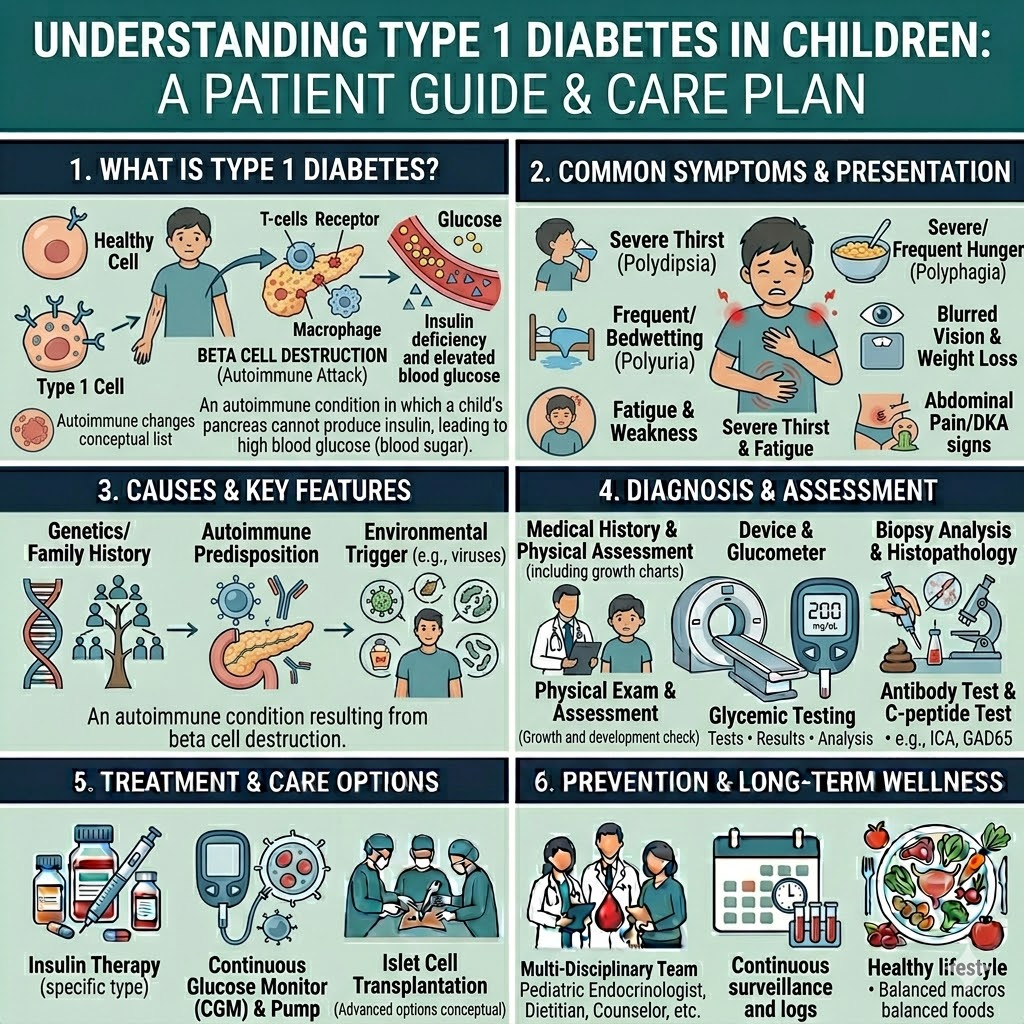
Type 1 diabetes in children is a long-lasting condition where a child's body stops making a crucial hormone called insulin. Insulin is essential for life, as it helps sugar from food get into the body's cells for energy. Without enough insulin, sugar builds up in the blood, which can be very harmful. This condition, once known as juvenile diabetes, has no cure, but it can be effectively managed with modern tools and treatments, significantly improving a child's quality of life.
Understanding the Condition
Understanding Type 1 Diabetes in Children
Understanding the Condition
Common Symptoms
Increased Thirst: Your child may feel unusually thirsty and drink more often than usual.
Frequent Urination: This includes needing to go to the bathroom much more often, or a toilet-trained child starting to wet the bed again.
Extreme Hunger: Despite eating, your child might feel very hungry all the time.
Unintentional Weight Loss: Your child might lose weight even if they are eating well.
Irritability or Behavior Changes: Noticeable shifts in mood, such as being more irritable, can occur.
Fruity-Smelling Breath: A sweet, fruity smell on your child's breath, similar to nail polish remover, can be a serious sign.
Fatigue: Unexplained tiredness or lack of energy.
Consultation Guide
Which Specialist to Meet
If you notice any symptoms, your child should see their primary care doctor immediately. For ongoing management, your child will likely need to see a pediatric endocrinologist (a doctor specializing in children's hormone conditions), a certified diabetes educator, and a registered dietitian.
Preparations Before Your Visit
Before the visit, make a list of all the symptoms you've observed, when they started, and any changes in your child's behavior or habits. Be ready to share your child's full medical history and any family history of diabetes. Write down any questions you have for the doctor.
Book a doctor visit near me
Diagnostic Procedures
A1C Test (Glycated Hemoglobin Test)
This common blood test measures the average amount of sugar attached to hemoglobin (a protein in red blood cells) over the past two to three months. It helps diagnose diabetes and shows how well blood sugar levels are being managed for those already diagnosed. A higher A1C level indicates higher average blood sugar.
What to Expect
During the procedure, a healthcare professional will draw a small sample of blood, typically from a vein in your child's arm. This is a quick process, and while your child might feel a brief pinch or sting, it is generally well-tolerated. No special preparation, like fasting, is usually required for this test.
Ongoing Research: Currently, there's no guaranteed way to prevent type 1 diabetes. Researchers are actively studying ways to prevent or delay its onset in high-risk individuals and to protect insulin-producing cells in newly diagnosed patients. This includes identifying early signs like specific antibodies.
Long-Term Management and Wellbeing
Maintain Good Blood Sugar Control: Working closely with your child to keep their blood sugar levels as close to target as possible is the most critical step to prevent long-term complications and ensure their well-being.
Treatment Options
Type 1 diabetes in children is a long-lasting condition where a child's body stops making a crucial hormone called insulin. Insulin is essential for life, as it helps sugar from food get into the body's cells for energy. Without enough insulin, sugar builds up in the blood, which can be very harmful. This condition, once known as juvenile diabetes, has no cure, but it can be effectively managed with modern tools and treatments, significantly improving a child's quality of life.
Insulin Therapy: Since the body no longer produces insulin, it must be replaced. This involves regular insulin injections, either using a syringe, an insulin pen, or an insulin pump. Doses are carefully calculated based on blood sugar levels, food intake, and activity. (Duration: Lifelong)
Medical Devices and Monitoring
Insulin Pump: A small device worn on the body that delivers insulin continuously through a tiny tube placed under the skin. It can be programmed to deliver different doses at different times and boluses (extra doses) for meals. (Duration: Ongoing/Lifelong)
Continuous Glucose Monitor (CGM): A small sensor inserted under the skin that measures blood sugar levels every few minutes, sending data wirelessly to a receiver or smartphone. This provides real-time information to help manage blood sugar. (Duration: Ongoing/Lifelong (sensors replaced periodically))
Blood Sugar Monitoring: Regularly checking blood sugar levels using a finger-prick device or a continuous glucose monitor is crucial for making treatment decisions and preventing complications. (Duration: Lifelong, multiple times daily)
Carbohydrate Counting: Learning to count the carbohydrates in foods is essential for matching insulin doses to meals and snacks, helping to keep blood sugar levels stable. (Duration: Lifelong)
Pancreas Transplant: This surgery replaces a non-functioning pancreas with a healthy one from a deceased donor. It can potentially cure type 1 diabetes, but it's typically reserved for individuals with severe diabetes complications, often done alongside a kidney transplant, due to the significant risks and lifelong need for anti-rejection medications. (Duration: One-time surgery, followed by lifelong medication and monitoring)
Regular Healthcare Visits: Schedule and attend all recommended appointments with your child's diabetes care team. These visits are vital for monitoring their condition, adjusting treatment plans, and addressing any concerns.
Educate and Empower Your Child: As your child grows, gradually teach them self-management skills. This includes understanding their condition, checking blood sugar, administering insulin, and making healthy choices, fostering independence and confidence.
Prevention & Long-Term Wellbeing
Lifestyle and Management Therapies
Healthy Diet and Physical Activity: Eating a balanced diet and engaging in regular exercise are fundamental to managing blood sugar, maintaining a healthy weight, and overall well-being. These habits must be integrated into daily life. (Duration: Lifelong)
Prevention
Promote Healthy Lifestyle Choices: Encourage and teach your child about the importance of a healthy, balanced diet and regular physical activity as part of their daily routine for optimal health.
Tags & Topics
Notice an error or need an update?
Help us keep medical information accurate. Report incorrect info or suggest an edit.


