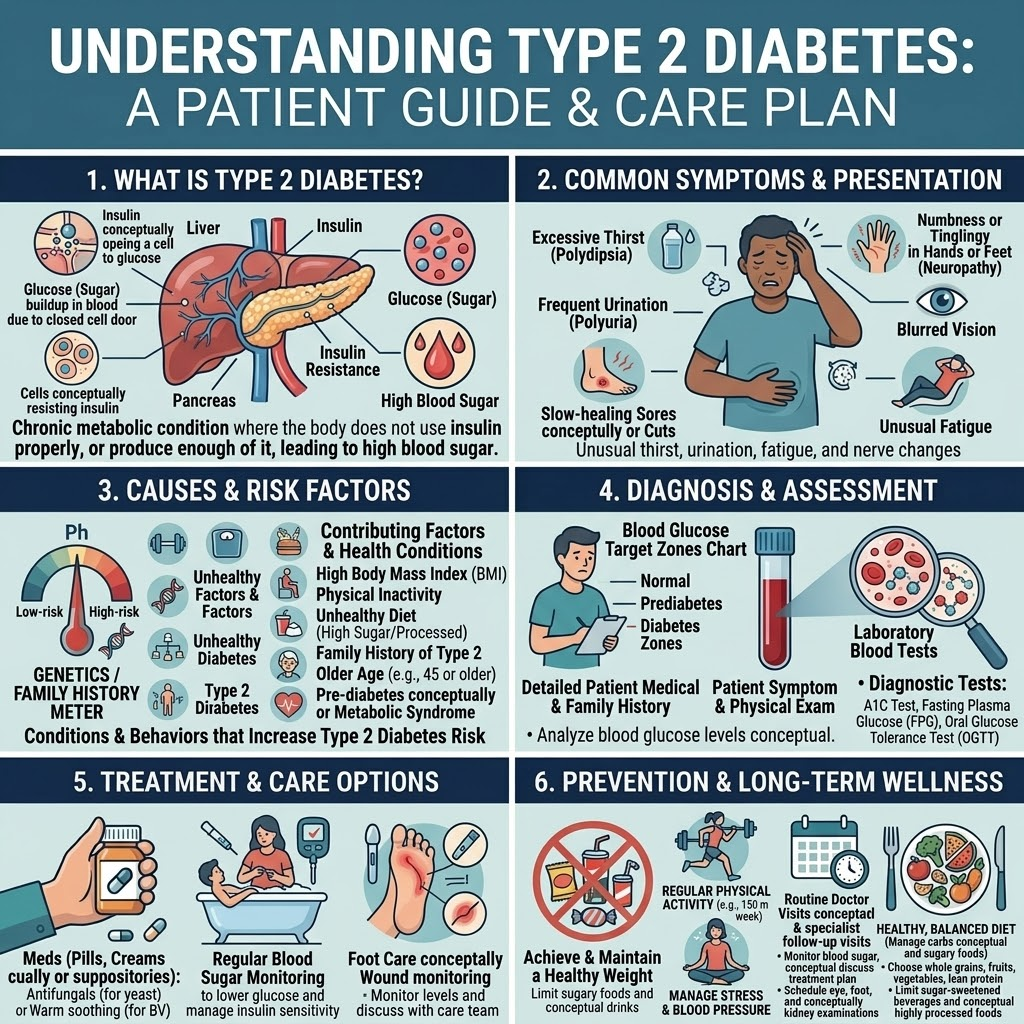
Type 2 diabetes is a chronic health condition where your body either doesn't effectively use insulin (a hormone that helps sugar enter cells for energy) or doesn't produce enough of it. This leads to high levels of sugar in the bloodstream. Over time, persistently high blood sugar can damage various organs, including the eyes, kidneys, nerves, and heart. While once primarily associated with adults, increasing rates of obesity have led to more young people developing type 2 diabetes. There is no cure, but it can be effectively managed through lifestyle adjustments, medication, and sometimes other medical therapies.
Understanding the Condition
Understanding Type 2 Diabetes: A Comprehensive Guide
Understanding the Condition
Common Symptoms
Increased Thirst: Feeling unusually thirsty, even after drinking fluids.
Frequent Urination: Needing to urinate more often than usual, especially during the night.
Increased Hunger: Feeling constantly hungry, even after eating meals.
Before your visit, gather your medical history, including any existing conditions and a list of all current medications and supplements you take. Note down all your symptoms, how long you've had them, and any factors that seem to make them better or worse. Be prepared to discuss your diet, physical activity levels, and family history of diabetes. Write down any questions you have for your doctor.
Book a doctor visit near me
Diagnostic Procedures
A1C Test (Glycated Hemoglobin Test)
This common blood test is used to diagnose diabetes and to monitor how well blood sugar levels are being managed over time. It measures the average percentage of hemoglobin (a protein in red blood cells) that is coated with sugar (glycated) over the past two to three months. A higher A1C level indicates higher average blood sugar.
What to Expect
A healthcare professional will draw a small blood sample, usually from a vein in your arm. Fasting is generally not required for this test, meaning you can eat and drink normally before it. The procedure is quick, typically taking only a few minutes.
Glucose Tolerance Test (Oral Glucose Tolerance Test - OGTT)
This test measures how your body processes sugar after consuming a sugary drink. It helps diagnose type 2 diabetes, prediabetes, and gestational diabetes (diabetes that develops during pregnancy). It identifies problems with how your body handles sugar after a meal.
What to Expect
You will typically need to fast overnight before the test. First, a blood sample will be taken to measure your fasting blood sugar level. You will then drink a specific amount of a sugary liquid. Afterward, additional blood samples will be taken at timed intervals (e.g., one and two hours after drinking the solution) to see how your body processes the sugar. The entire test can take several hours.
Regular Medical Check-ups: Adhere to your doctor's schedule for monitoring blood sugar (A1C tests), blood pressure, and cholesterol levels to prevent complications.
Eye Exams: Undergo annual comprehensive eye exams by an ophthalmologist to detect and manage diabetic eye conditions early.
Foot Care: Inspect your feet daily for cuts, blisters, or sores. Schedule regular visits with a podiatrist to address any foot health concerns and prevent serious complications.
Kidney Health Monitoring: Regularly check kidney function to detect and manage early signs of diabetic kidney disease.
Heart Health Management: Actively manage blood pressure and cholesterol to reduce the risk of heart disease and stroke, which are common complications of diabetes.
Caffeine Intake Awareness: Monitor how caffeine affects your individual blood sugar levels, as responses vary. Discuss any concerns with your healthcare provider.
Treatment Options
Type 2 diabetes is a chronic health condition where your body either doesn't effectively use insulin (a hormone that helps sugar enter cells for energy) or doesn't produce enough of it. This leads to high levels of sugar in the bloodstream. Over time, persistently high blood sugar can damage various organs, including the eyes, kidneys, nerves, and heart. While once primarily associated with adults, increasing rates of obesity have led to more young people developing type 2 diabetes. There is no cure, but it can be effectively managed through lifestyle adjustments, medication, and sometimes other medical therapies.
Medications
Oral Medications: Various types of pills work in different ways to lower blood sugar, such as improving the body's response to insulin, reducing sugar production by the liver, or slowing sugar absorption from the gut. Some also help the kidneys remove sugar from the body. (Duration: Typically long-term, ongoing)
Injectable Medications (Non-Insulin): These non-insulin medications, administered via injection, can help increase insulin release, slow digestion, and reduce appetite, leading to improved blood sugar control and often weight loss. (Duration: Typically long-term, ongoing)
Insulin Therapy: If the pancreas does not produce enough insulin, synthetic insulin can be injected to help cells absorb sugar from the bloodstream. (Duration: Long-term, ongoing, potentially lifelong)
Surgical Procedures
Bariatric Surgery (Weight-Loss Surgery): Procedures like gastric bypass, biliopancreatic diversion with duodenal switch, or endoscopic sleeve gastroplasty modify the digestive system to help individuals lose significant weight and often achieve remission or significant improvement in type 2 diabetes. (Duration: Single procedure, with permanent lifestyle changes and medical follow-up required for long-term success.)
Prevention & Long-Term Wellbeing
Unexplained Weight Loss: Losing weight without making changes to diet or exercise.
Blurred Vision: Vision becoming less clear or blurry.
Slow-Healing Sores: Cuts, scrapes, or other wounds that take a long time to heal.
Frequent Infections: Recurring infections, such as skin, gum, or vaginal yeast infections.
Numbness or Tingling: Sensations of numbness or tingling in the hands or feet, often a sign of nerve damage.
Darkened Skin Areas: Patches of darkened skin, most commonly found in the armpits and neck.
- Consultation Guide
Which Specialist to Meet
For type 2 diabetes, you should consult your primary care doctor, who may refer you to an endocrinologist (a specialist in hormones and metabolism). You might also see a registered dietitian for nutrition advice, an exercise physiologist for physical activity guidance, an ophthalmologist (eye doctor), a podiatrist (foot specialist), a cardiologist (heart doctor), or a nephrologist (kidney doctor) depending on your health needs.
Preparations Before Your Visit
Lifestyle Management
Healthy Eating Plan: Adopting a balanced diet focused on whole foods, lean proteins, fruits, vegetables, and whole grains, while limiting processed foods, sugary drinks, and unhealthy fats. (Duration: Long-term, ongoing)
Regular Physical Activity: Engaging in consistent moderate-intensity aerobic exercise, such as brisk walking, cycling, or swimming, combined with strength training. (Duration: Long-term, ongoing (aim for 150+ minutes per week))
Weight Loss: Achieving and maintaining a healthy body weight through diet and exercise. Even modest weight loss can significantly improve blood sugar control. (Duration: Long-term, ongoing)
Prevention of Type 2 Diabetes
Balanced Diet: Focus on consuming whole, unprocessed foods, ample fruits, vegetables, and lean proteins. Limit sugary drinks, refined carbohydrates, and unhealthy fats to manage blood sugar.
Regular Exercise: Engage in at least 150 minutes of moderate-intensity aerobic activity each week, combined with muscle-strengthening exercises. Physical activity improves insulin sensitivity and helps manage weight.
Maintain a Healthy Weight: If you are overweight, losing even 5-7% of your body weight can significantly lower your risk of developing type 2 diabetes or progressing from prediabetes.
Limit Sedentary Time: Avoid long periods of sitting. Take short breaks to move around every 30 minutes to help regulate blood sugar levels.
Long-Term Monitoring and Management
Tags & Topics
Notice an error or need an update?
Help us keep medical information accurate. Report incorrect info or suggest an edit.


