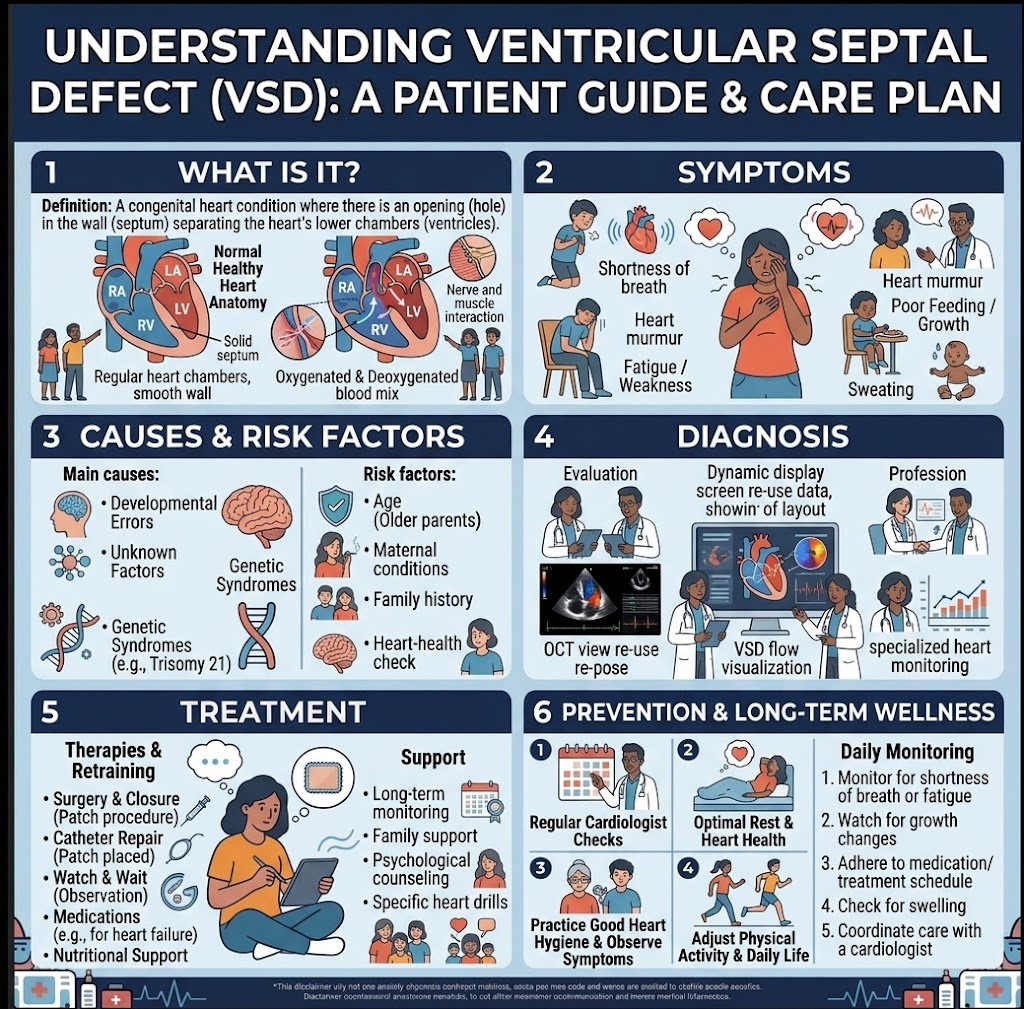
A Ventricular Septal Defect (VSD), a common 'hole in the heart,' is a congenital heart condition. It's an opening in the wall separating the heart's lower pumping chambers. This allows oxygen-rich blood to leak to the lungs instead of flowing to the body, making the heart work harder and potentially increasing lung pressure. Small VSDs often close naturally and may cause no issues; larger defects might require early medical intervention.
Understanding the Condition
Ventricular Septal Defect (VSD): Understanding a Hole in the Heart
Understanding the Condition
Common Symptoms
In Babies and Children: Symptoms vary with VSD size and often appear early. Small VSDs may be asymptomatic. Infant signs can include: difficulty feeding, easy tiring during feeds, poor weight gain, rapid breathing, and sweating (especially during feeds).
List symptoms, other conditions, medications. Discuss family history. Prepare questions.
Book a doctor visit near me
Watchful Waiting: For small, asymptomatic VSDs, regular medical check-ups are recommended as many close spontaneously, often in the first year. (Duration: Until VSD closes naturally or symptoms require intervention.)
Nutritional Support for Infants: Infants with poor weight gain due to VSD may need higher-calorie formulas or more frequent feedings for adequate growth. (Duration: As long as necessary for growth and development.)
Diuretics: Help remove excess fluid, reducing lung fluid buildup and easing breathing. (Duration: As prescribed; may be short-term or ongoing for symptom management.)
Heart Strengthening Medications: Improve the heart's pumping efficiency, helping it cope with increased workload. (Duration: As prescribed; may be short-term or ongoing for symptom management.)
Blood Pressure Reducing Medications: Lower blood pressure in the lungs, reducing heart strain and improving blood flow. (Duration: As prescribed; may be short-term or ongoing for symptom management.)
Consultation Guide
A Ventricular Septal Defect (VSD), a common 'hole in the heart,' is a congenital heart condition. It's an opening in the wall separating the heart's lower pumping chambers. This allows oxygen-rich blood to leak to the lungs instead of flowing to the body, making the heart work harder and potentially increasing lung pressure. Small VSDs often close naturally and may cause no issues; larger defects might require early medical intervention.
Diagnostic Procedures
In Adults: Adults with undiagnosed VSDs may experience: shortness of breath, easy fatigue, heart palpitations, and swelling in legs, ankles, or feet.
When to Seek Medical Advice: Seek medical advice if your baby shows feeding issues, poor weight gain, rapid breathing, or adults experience unexplained shortness of breath, fatigue, or palpitations.
Consultation Guide
Which Specialist to Meet
Electrocardiogram (ECG or EKG)
Records heart's electrical signals to show rate, rhythm, and strain.
What to Expect
Lie down; sticky patches on chest/limbs connect to a machine. Painless, few minutes. No special preparation needed.
Images heart, lungs, and chest structures. Assesses heart size, fluid in lungs, and lung conditions, indicating VSD impact.
What to Expect
Stand or sit against an X-ray plate, briefly hold breath. Quick, painless, minimal radiation.
Uses sound waves to create moving images of the heart. Visualizes VSD size, location, and its effect on heart function and blood flow.
What to Expect
Lie on table; gel applied to chest, then a transducer moves over skin. Images created in real-time. Painless, typically 30-60 minutes.
Cardiac Catheterization
A thin tube (catheter) guided through a blood vessel to the heart. Measures heart pressures, blood flow, accurately characterizes VSD. Can also be used for VSD closure.
What to Expect
Local anesthesia at groin/wrist. Catheter threaded via X-ray guidance. Contrast dye may be injected. Pressure taken. Device placed if needed. Rest for hours post-procedure.
Treatment Options
Infants/children see a Pediatric Cardiologist; adults, an Adult Cardiologist. A Cardiovascular Surgeon might be involved for treatment.
Preparations Before Your Visit
Monitoring & Supportive Care
Medications
Procedures & Surgeries
Transcatheter Device Closure: For specific VSDs, a device is delivered via catheter (through a blood vessel) to seal the hole, avoiding open-heart surgery. (Duration: One-time procedure; recovery typically spans several weeks to a few months.)
Prevention & Long-Term Wellbeing
Open-Heart Surgical Repair: Surgeon opens chest to directly sew a patch over the VSD, permanently closing the hole and restoring normal blood flow. (Duration: One-time procedure; hospital stay is usually a few days to a week, with full recovery taking several months.)
Pulmonary Artery Banding: Temporary band around the pulmonary artery for fragile infants with severe VSD. Reduces lung blood flow until full VSD repair can be safely performed later. (Duration: Temporary measure (months), followed by definitive VSD repair.)
Prevention & Risk Management
Prenatal Health: Pregnant individuals should prioritize excellent prenatal care, take folic acid, avoid harmful substances, and manage chronic conditions (e.g., diabetes) to potentially reduce the risk of certain congenital heart defects.
Genetic Counseling: Families with a history of congenital heart defects may benefit from genetic counseling to understand recurrence risks for future pregnancies.
Infection Prevention: Individuals with unrepaired VSDs or prosthetic repair material might need prophylactic antibiotics before certain procedures (like dental work) to prevent serious heart infections. Consult your cardiologist.
Long-Term Monitoring & Lifestyle
Regular Cardiology Follow-ups: Lifelong follow-up with a cardiologist is essential, even after VSD closure (spontaneous or surgical), to monitor heart function and detect potential complications.
Heart-Healthy Lifestyle: Maintain a balanced diet, regular physical activity (as advised), and avoid smoking for overall cardiovascular well-being.
Activity Guidelines: Your cardiologist will provide specific recommendations regarding safe physical activity and exercise levels, tailored to your VSD status.
Tags & Topics
Notice an error or need an update?
Help us keep medical information accurate. Report incorrect info or suggest an edit.

