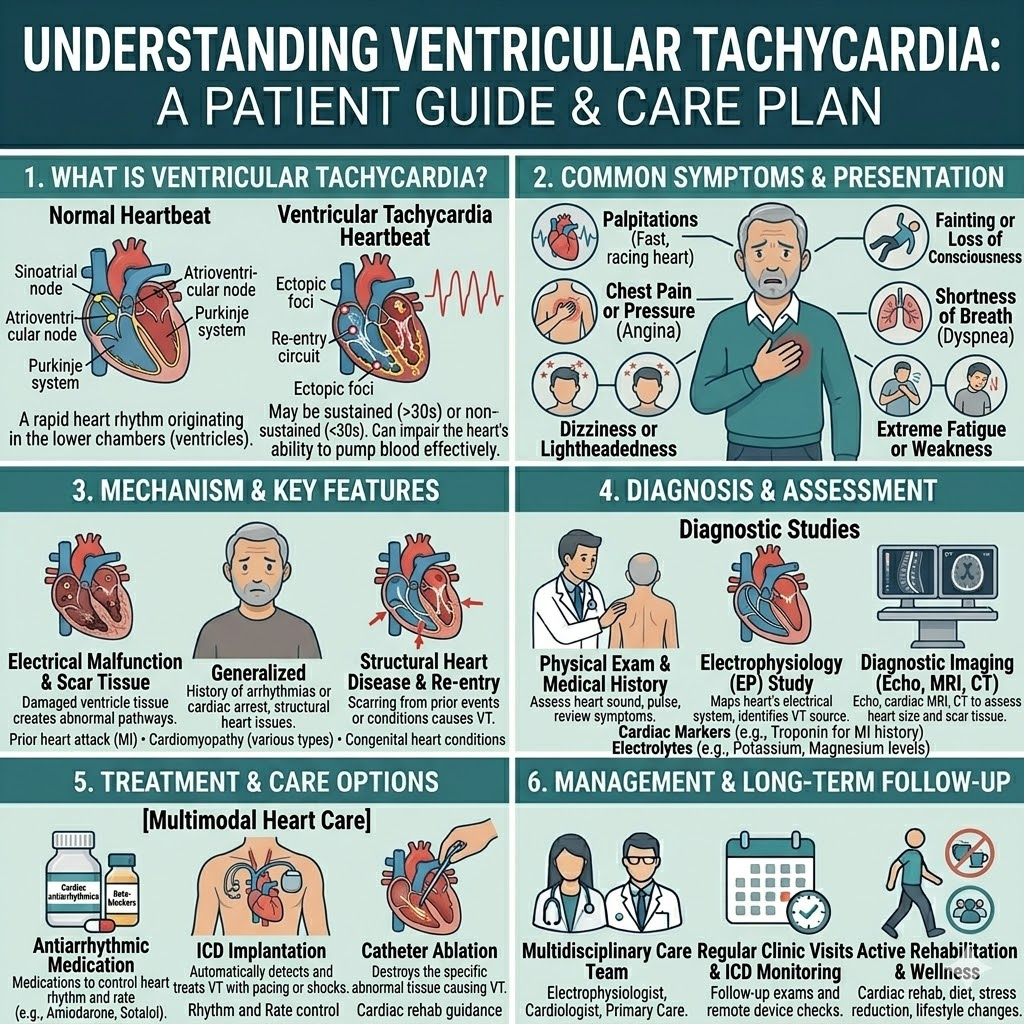
Ventricular tachycardia (VT or V-tach) is an irregular heart rhythm where the lower chambers of the heart, called the ventricles, beat unusually fast. While a healthy resting heart typically beats 60 to 100 times per minute, in VT, this rate usually exceeds 100 beats per minute. This rapid beating can prevent the heart from filling properly with blood and pumping enough oxygenated blood to the body, leading to symptoms like shortness of breath or lightheadedness. Brief episodes of VT may cause no harm, but those lasting longer than a few seconds (sustained V-tach) can be life-threatening and may even lead to sudden cardiac arrest, where all heart activity stops. Treatments involve various approaches including medications, electrical therapy, implanted devices, or procedures.
Understanding the Condition
Ventricular Tachycardia: Understanding a Rapid Heartbeat
Understanding the Condition
Ventricular tachycardia (VT or V-tach) is an irregular heart rhythm where the lower chambers of the heart, called the ventricles, beat unusually fast. While a healthy resting heart typically beats 60 to 100 times per minute, in VT, this rate usually exceeds 100 beats per minute. This rapid beating can prevent the heart from filling properly with blood and pumping enough oxygenated blood to the body, leading to symptoms like shortness of breath or lightheadedness. Brief episodes of VT may cause no harm, but those lasting longer than a few seconds (sustained V-tach) can be life-threatening and may even lead to sudden cardiac arrest, where all heart activity stops. Treatments involve various approaches including medications, electrical therapy, implanted devices, or procedures.
Common Symptoms
Chest Pain (Angina): A feeling of discomfort, pressure, or tightness in the chest due to the heart not getting enough oxygen.
Pounding Heartbeat (Palpitations): A sensation that your heart is racing, fluttering, or skipping beats.
Lightheadedness: Feeling dizzy or faint, often due to reduced blood flow to the brain.
Shortness of Breath: Difficulty breathing or a feeling of not getting enough air.
Loss of Consciousness: Fainting, occurring if the brain does not receive enough blood.
Consultation Guide
Which Specialist to Meet
You should consult with a heart specialist, known as a cardiologist. If your condition involves complex heart rhythm issues, you may be referred to an electrophysiologist, a cardiologist specializing in the heart's electrical system.
Preparations Before Your Visit
Before your appointment, prepare a list of your symptoms, including when they started and how often they occur. Bring a complete list of all medications, vitamins, and supplements you are taking. Be ready to discuss your medical history, any family history of heart conditions, and ask any questions you have. It can also be helpful to write down your key questions in advance.
Book a doctor visit near me
Electrodes will be placed on your chest and connected to a small recording device you wear on a belt or strap. You'll carry on with your daily activities, and the monitor will record your heart's electrical signals. You may be asked to keep a diary of your activities and any symptoms experienced.
Electrophysiology (EP) Study
Diagnostic Procedures
Electrocardiogram (ECG or EKG)
A quick, non-invasive test that records the electrical signals of your heart, showing how fast or slow it's beating and its rhythm.
What to Expect
Small, sticky patches called electrodes will be placed on your chest, and sometimes on your arms or legs. Wires connect these patches to a machine that records your heart's electrical activity. The test is painless and takes only a few minutes, during which you'll lie still.
A small, portable device that continuously records your heart's rhythm for 24 to 48 hours, or sometimes longer, to catch irregular beats that might not occur during a standard ECG.
What to Expect
An invasive test that precisely maps the heart's electrical pathways to pinpoint the source of irregular heart rhythms.
What to Expect
What to Expect
You'll lie on an examination table. A gel will be applied to your chest, and a handheld device called a transducer will be moved over the area. This device sends and receives sound waves, creating images displayed on a screen. The test is painless and takes about 30-60 minutes.
An X-ray test that uses a special dye to visualize the blood vessels of your heart (coronary arteries) and detect any blockages or narrowings.
What to Expect
You will be given a local anesthetic to numb the area where a thin, flexible tube (catheter) will be inserted, usually in your groin or arm. The catheter is guided to your heart, and a dye is injected, making your arteries visible on X-ray images. This procedure is done in a hospital setting.
Evaluates how your heart performs under physical exertion or stress, often to detect problems with blood flow to the heart.
What to Expect
Treatment Options
Performed in a hospital, you'll receive medication to help you relax or sleep. Thin, flexible wires (catheters) are inserted into a blood vessel, usually in the groin, and guided to your heart using X-ray imaging. These catheters record the heart's electrical signals and can even stimulate your heart to induce the irregular rhythm, allowing the doctor to observe it.
Uses sound waves to create moving pictures of your heart, showing its structure, how well it pumps blood, and how blood flows through its chambers and valves.
Electrodes will be placed on your chest, and a blood pressure cuff will be on your arm. You'll walk on a treadmill or ride a stationary bike, with the intensity gradually increasing, while your heart rate, blood pressure, and ECG are monitored. If you cannot exercise, medication will be given to mimic the effects of exercise on your heart.
Medications
Anti-arrhythmic Medications: Oral medications designed to slow a rapid heart rate and restore a normal heart rhythm. They work by affecting the electrical signals in the heart. (Duration: Typically taken long-term, potentially for life, depending on the individual's condition and response.)
Cardioversion: A medical procedure that delivers quick, low-energy electrical shocks to the chest to reset the heart's rhythm back to normal. (Duration: Immediate effect; typically a one-time procedure for an acute episode, but may be repeated if irregular rhythms recur.)
Cardiac Ablation (including Ventricular Tachycardia Ablation): Uses heat (radiofrequency) or extreme cold (cryoablation) energy delivered through thin tubes (catheters) to create tiny scars in the heart. These scars block the faulty electrical signals causing the rapid heartbeat. (Duration: The procedure typically takes several hours. If successful, the effects are long-term, potentially curing the arrhythmia.)
Implantable Cardioverter-Defibrillator (ICD): A small, battery-powered device surgically placed under the skin near the collarbone that constantly monitors heart rhythm. If it detects a dangerous fast rhythm, it delivers an electrical shock to restore a normal heartbeat. (Duration: A lifelong device; battery typically lasts 5-10 years and requires replacement through a minor procedure.)
Subcutaneous Implantable Cardioverter-Defibrillator (S-ICD): A less invasive ICD where the device is placed under the skin at the side of the chest, and a sensor runs along the breastbone, without wires entering the heart itself. (Duration: A lifelong device; battery typically lasts 5-10 years and requires replacement through a minor procedure.)
Therapies
Control Blood Pressure and Cholesterol: High blood pressure and cholesterol contribute to heart disease. Manage these through lifestyle changes and prescribed medications.
Manage Stress: Chronic stress can affect heart rhythm. Incorporate stress-reducing activities like mindfulness, exercise, or connecting with support groups.
Limit Alcohol Intake: If you drink alcohol, do so in moderation (up to one drink per day for women, up to two for men) to protect heart health.
Stop Smoking: Smoking significantly harms the heart. Seek professional help and strategies to quit if you smoke.
Practice Good Sleep Habits: Aim for 7-9 hours of quality sleep nightly. Establish a consistent sleep schedule to reduce the risk of heart conditions.
Regular Health Check-ups: Schedule and attend regular doctor visits to monitor your heart condition, medication effectiveness, and overall health.
Adherence to Treatment Plan: Consistently follow your healthcare team's treatment recommendations, including taking all prescribed medications as directed.
Prevention & Long-Term Wellbeing
Cardiac Rehabilitation: A personalized, supervised program of exercise, education, and emotional support to improve heart health following a heart event or procedure. (Duration: Typically lasts several weeks to months, with ongoing recommendations for maintaining a heart-healthy lifestyle.)
Prevention
Balanced, Nutritious Diet: Eat a diet rich in fruits, vegetables, and whole grains, low in salt and unhealthy fats, to support overall heart health.
Regular Exercise: Aim for at least 30 minutes of moderate exercise on most days to strengthen your heart. Consult your healthcare team for safe exercise recommendations.
Maintain a Healthy Weight: Being overweight increases the risk of heart disease. Work with your doctor to set realistic goals for weight management.
Tags & Topics
Notice an error or need an update?
Help us keep medical information accurate. Report incorrect info or suggest an edit.

