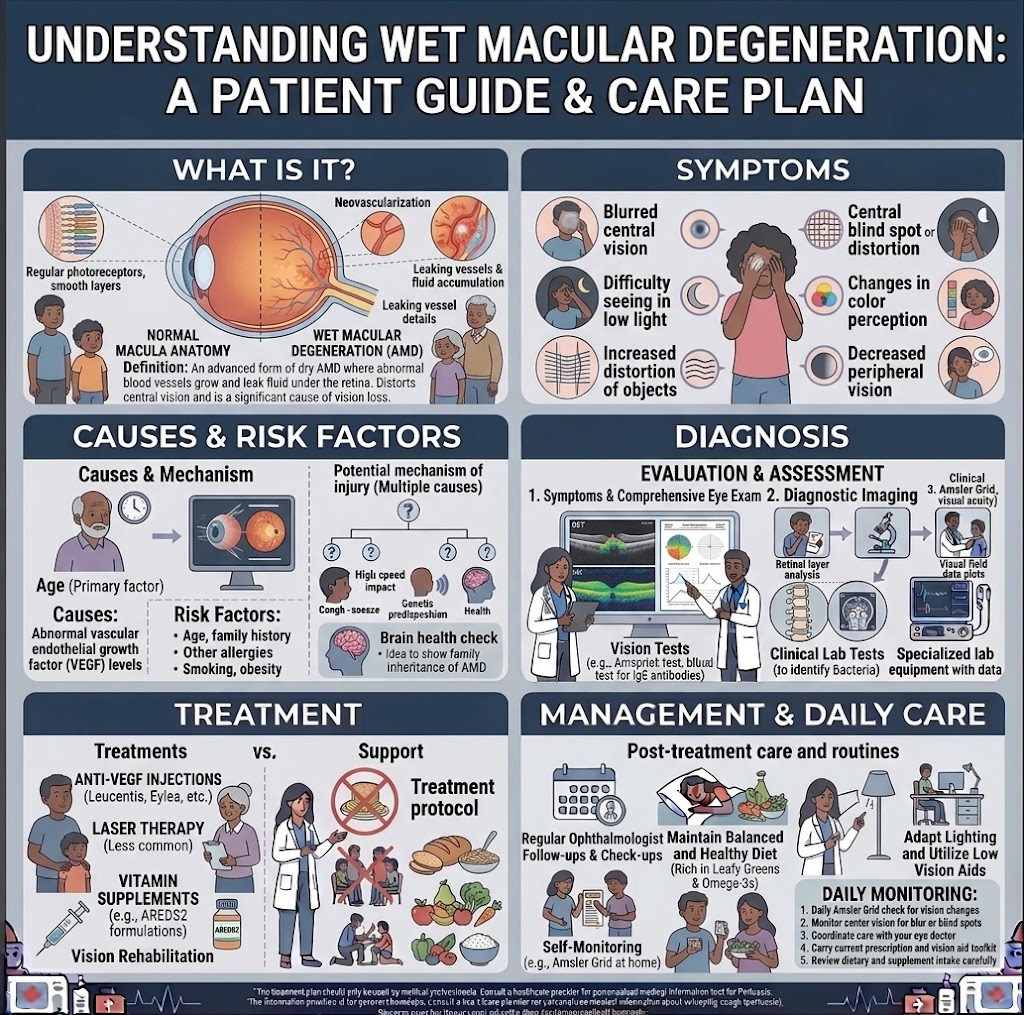
Wet macular degeneration is a serious eye condition that causes blurred or reduced central vision. It's an advanced form of age-related macular degeneration (AMD), where abnormal, fragile blood vessels grow underneath the macula—the part of the retina responsible for sharp, detailed central vision. These new blood vessels leak fluid and blood, damaging the macula and leading to sudden and rapid changes in your ability to see clearly straight ahead. While it always starts as the milder 'dry' type, wet AMD affects about 20% of people with AMD and can lead to significant vision loss if not treated early. Early detection and treatment are crucial to help preserve vision and, in some cases, recover some lost sight.
Understanding the Condition
Wet Macular Degeneration: Understanding Central Vision Loss
Understanding the Condition
Common Symptoms
Visual Distortions: Straight lines appear bent, wavy, or broken.
Reduced Central Vision: Blurriness or a blind spot directly in your line of sight, affecting one or both eyes.
Need for Brighter Light: Requiring more light for reading or close-up tasks.
Difficulty Adjusting to Low Light: Trouble seeing when moving from bright to dim environments, like entering a dark room or theater.
Increased Blurriness of Printed Words: Text appears fuzzy or distorted.
Difficulty Recognizing Faces: Trouble distinguishing facial features, even at close range.
Blurry or Blind Spot: A distinct dark or blurry area appearing in your central field of vision.
Before your visit, make a list of all current medications, including supplements. Be prepared to describe any changes in your vision, including when symptoms started, how they've progressed, and if they affect one or both eyes. Bring any questions you have for the doctor.
Book a doctor visit near me
Consultation Guide
Wet macular degeneration is a serious eye condition that causes blurred or reduced central vision. It's an advanced form of age-related macular degeneration (AMD), where abnormal, fragile blood vessels grow underneath the macula—the part of the retina responsible for sharp, detailed central vision. These new blood vessels leak fluid and blood, damaging the macula and leading to sudden and rapid changes in your ability to see clearly straight ahead. While it always starts as the milder 'dry' type, wet AMD affects about 20% of people with AMD and can lead to significant vision loss if not treated early. Early detection and treatment are crucial to help preserve vision and, in some cases, recover some lost sight.
Important Note: Wet macular degeneration does not affect side vision, so it does not cause total blindness.
Consultation Guide
Which Specialist to Meet
You should see an ophthalmologist, an eye doctor specializing in medical and surgical eye care. For wet macular degeneration, you might be referred to a retina specialist, an ophthalmologist with advanced training in diseases of the retina.
Preparations Before Your Visit
Diagnostic Procedures
Comprehensive Eye Exam
Your eye doctor will conduct a thorough examination of your eyes, including checking your vision and eye pressure, and looking closely at the back of your eye.
What to Expect
The doctor will use specialized drops to widen (dilate) your pupils to get a better view of your retina. You may experience temporary light sensitivity and blurred vision after dilation, so bring sunglasses and arrange for someone to drive you home.
This simple test helps detect changes in your central vision by having you look at a grid of straight lines with a dot in the center.
What to Expect
You'll cover one eye and focus on the central dot. You'll be asked if any lines appear wavy, broken, blurry, or if any areas of the grid are missing. This test can also be done at home for self-monitoring.
Optical Coherence Tomography (OCT)
OCT is a non-invasive imaging test that uses light waves to create cross-sectional pictures of your retina. It can detect fluid, swelling, or new blood vessel growth under the retina that are characteristic of wet AMD.
What to Expect
You will sit in front of a machine and rest your chin on a support. The device scans your eye without touching it, similar to an ultrasound but using light instead of sound waves. It is quick and painless.
Fluorescein Angiography
This test uses a special dye to highlight blood vessels in your retina, allowing the doctor to see if they are leaking fluid or growing abnormally, which are hallmarks of wet AMD.
What to Expect
A colored dye is injected into a vein in your arm. As the dye travels to your eyes, a special camera takes a rapid series of photographs of your retina. Your skin and urine may temporarily appear slightly discolored for a day or two after the test.
Treatment Options
Medications (Eye Injections)
Anti-Growth Factor Injections: These medications are injected directly into the affected eye. They work by blocking chemical signals in the body that encourage the growth of abnormal, leaky blood vessels under the macula. By stopping this growth, they can reduce fluid leakage and help preserve vision. In some cases, early treatment may lead to partial vision recovery as fluid is absorbed and damaged cells recover. (Duration: These injections are typically administered every few weeks, often on a long-term basis, to maintain their beneficial effects and prevent further vision loss. The exact frequency is determined by your doctor based on your response.)
Photodynamic Therapy: This two-stage treatment involves injecting a special light-sensitive medicine into a vein. Once the medicine reaches the eye, a cold laser light is shined onto the abnormal blood vessels in the macula. This activates the medicine, causing it to seal off the leaking vessels without damaging surrounding healthy tissue. It's used less frequently now than anti-growth factor injections. (Duration: Treatments are typically performed periodically, as determined by your eye care professional, often every few months.)
Manage Other Medical Conditions: If you have conditions like high blood pressure or cardiovascular disease, follow your doctor's advice and take prescribed medications to keep them well-controlled.
Avoid Smoking: Smoking significantly increases the risk of developing and worsening macular degeneration. Seek help from a healthcare professional to quit smoking.
Prevention & Long-Term Wellbeing
Prevention
Regular Eye Exams: Schedule routine comprehensive eye exams, especially if you are over 50 or have a family history of macular degeneration. Early detection is crucial for managing the condition.
Maintain a Healthy Weight and Exercise: Being overweight or obese can increase the risk of dry AMD progressing to the more severe wet form. Regular physical activity and a balanced diet can help maintain a healthy weight.
Adopt a Nutrient-Rich Diet: Eat plenty of fruits, colorful vegetables, and fish. These foods are rich in antioxidants and omega-3 fatty acids (also found in nuts like walnuts), which may help reduce your risk of macular degeneration.
Living with Vision Loss
Self-Monitoring for Vision Changes: Regularly use an Amsler grid at home to check for new or worsening distortions in your central vision. Promptly report any changes to your eye doctor.
Seek Support and Manage Emotional Health: Dealing with central vision loss can lead to feelings of depression and social isolation. Connect with support groups, family, and friends. Discuss any emotional challenges with your healthcare team. In some cases of profound vision loss, visual hallucinations (Charles Bonnet syndrome) can occur, and understanding this can help manage the experience.
Utilize Low Vision Aids: Work with low vision specialists to explore tools and strategies, such as magnifiers, special lighting, and adaptive technologies, to help you make the most of your remaining vision and maintain independence.
Tags & Topics
Notice an error or need an update?
Help us keep medical information accurate. Report incorrect info or suggest an edit.


