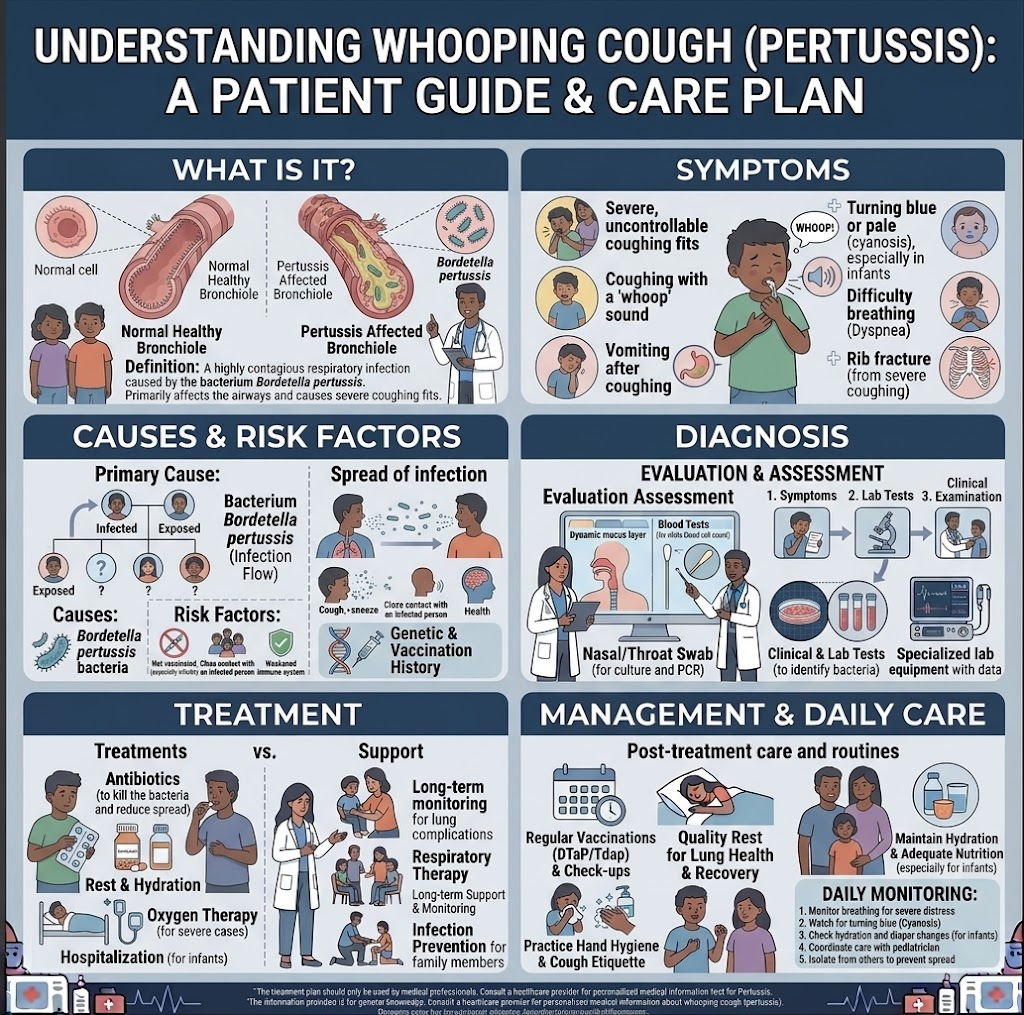
Whooping cough, or pertussis, is a highly contagious bacterial infection causing severe, uncontrollable coughing. This often leads to a distinctive 'whooping' sound when breathing in. It primarily affects infants too young for full vaccination and adults whose immunity has faded. While rare, deaths mostly occur in infants, making vaccination critical for pregnant individuals and those in close contact with babies.
Understanding the Condition
Whooping Cough (Pertussis): A Guide for Non-Medical Persons
Understanding the Condition
Whooping cough, or pertussis, is a highly contagious bacterial infection causing severe, uncontrollable coughing. This often leads to a distinctive 'whooping' sound when breathing in. It primarily affects infants too young for full vaccination and adults whose immunity has faded. While rare, deaths mostly occur in infants, making vaccination critical for pregnant individuals and those in close contact with babies.
Common Symptoms
Initial Symptoms (1-3 weeks after exposure): Starting 5-10 days post-exposure (up to 3 weeks), early symptoms mimic a common cold: runny/stuffy nose, red/watery eyes, mild fever, and a slight cough.
Severe Symptoms (after 1-2 weeks): After 1-2 weeks, thick mucus builds, causing intense, rapid, uncontrollable coughing fits, often worse at night, lasting weeks to months. These can lead to: vomiting, temporary face discoloration (red/blue), extreme fatigue, breathing difficulties, and the classic 'whooping' sound on inhalation.
Variations in Symptoms: The 'whooping' sound isn't always present; teens and adults might only have a persistent hacking cough. Many infants, especially under 6 months, may not cough but experience life-threatening breathing pauses or struggles.
Consultation Guide
Which Specialist to Meet
Initially, see a general practitioner or pediatrician. For severe cases or complications, referrals may include a pulmonologist (a lung specialist) or an infectious disease specialist. Seek emergency care for urgent concerns.
Preparations Before Your Visit
Track symptom onset, severity, and any exposures. Note vaccination history and recent travel. List all current medications and supplements. Be ready to discuss medical history.
Book a doctor visit near me
Blood tests can check for infection signs like an elevated white blood cell count. Specific antibody tests may also help confirm the infection, especially if symptoms have been present for several weeks.
Intensive Monitoring and Support: Infants, especially those under 6 months, and individuals with severe symptoms or complications (like pneumonia, breathing difficulties, or dehydration) may require hospitalization. This allows for close monitoring, oxygen therapy, intravenous fluids, and respiratory support if needed. (Duration: Varies from a few days to several weeks, depending on severity and complications)
Follow-Up Care: Even after the initial infection subsides, a lingering cough can persist for weeks or months. Follow up with your doctor to monitor recovery, especially for infants, and address any prolonged respiratory symptoms or complications.
Monitoring for Complications: Be aware of potential complications such as pneumonia, ear infections, or dehydration, and seek medical attention if new or worsening symptoms appear.
Consultation Guide
This is the most common and accurate test. A sterile swab collects mucus and cells from the back of the nose or throat to detect the specific bacteria that cause whooping cough.
Diagnostic Procedures
Nasal or Throat Swab (PCR Test)
What to Expect
You'll tilt your head back as a healthcare professional gently inserts a flexible swab into a nostril, rotating it briefly. Expect a brief tickling or uncomfortable sensation, possibly a cough or sneeze. The sample is sent for lab analysis.
What to Expect
A small blood sample is drawn from a vein, typically in your arm. This involves a brief needle pinch. The sample is collected for lab analysis.
While a chest X-ray does not directly diagnose whooping cough, it is often performed to check for complications, such as pneumonia, which can be a serious result of the infection. It creates images of your heart, lungs, blood vessels, airways, and bones of the chest and spine.
What to Expect
You will be asked to remove any metal objects or jewelry and potentially change into a gown. You'll stand or sit in front of an X-ray plate, and the technician will position your body to capture different views. You'll be asked to hold your breath for a few seconds during each X-ray image. The procedure is quick, painless, and involves minimal radiation exposure.
Treatment Options
Medications
Antibiotics: Specific antibiotics are prescribed to kill the bacteria causing whooping cough. These are most effective when started early in the illness, ideally before severe coughing begins, to reduce severity, duration, and prevent spread. (Duration: Typically 7-14 days)
Supportive Care & Home Remedies
Prevention & Long-Term Wellbeing
Rest: Adequate rest is crucial for recovery, especially during periods of intense coughing. (Duration: Throughout the illness, typically several weeks to months)
Hydration: Drinking plenty of fluids (water, juice, broth) helps thin mucus and prevents dehydration, which can be a risk due to vomiting from coughing. (Duration: Throughout the illness)
Small, Frequent Meals: To reduce the risk of vomiting after coughing, eat smaller meals more often. (Duration: Throughout the illness)
Clean Air Environment: Avoid lung irritants such as smoke and dust. Using a cool-mist humidifier can help soothe irritated airways and loosen mucus. (Duration: Throughout the illness)
Prevention
Vaccination (DTaP Vaccine): Vaccination is the most effective way to prevent whooping cough. Infants and young children receive the DTaP vaccine as part of their routine immunization schedule, typically at 2, 4, 6, and 15-18 months of age, with a booster at 4-6 years.
Booster Vaccination for Adolescents and Adults (Tdap Vaccine): Protection from childhood vaccines fades over time. Adolescents (11-12 years) and adults should receive a Tdap booster shot to maintain immunity, especially those in close contact with infants.
Vaccination During Pregnancy: Pregnant individuals are strongly advised to receive a Tdap booster shot during their third trimester (between 27 and 36 weeks of pregnancy). This provides antibodies to the newborn, offering crucial early protection against whooping cough before they are old enough for their own vaccinations.
Preventing Spread: If you are sick, stay home from work or school. Cover your mouth and nose when coughing or sneezing, and wash your hands frequently with soap and water to prevent transmitting the bacteria to others.
Long-Term Wellbeing
Tags & Topics
Notice an error or need an update?
Help us keep medical information accurate. Report incorrect info or suggest an edit.


