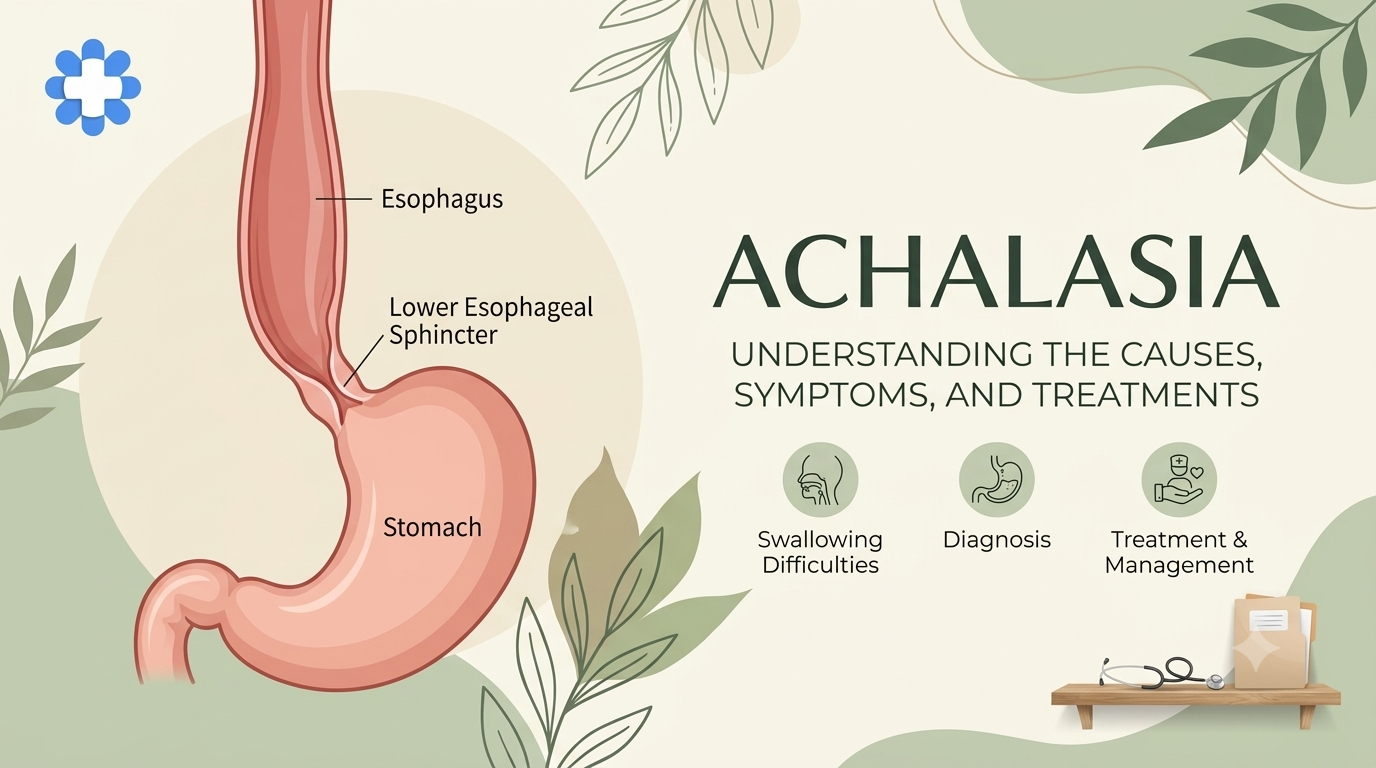
Achalasia is a relatively rare condition that affects the esophagus, which is the long tube connecting your mouth to your stomach. It is primarily a swallowing disorder where nerves in the esophagus become damaged. This damage makes it difficult for the esophageal muscles to properly squeeze food and liquid down into the stomach.
Understanding the Condition
Achalasia: Understanding Your Swallowing Condition
Achalasia is a relatively rare condition that affects the esophagus, which is the long tube connecting your mouth to your stomach. It is primarily a swallowing disorder where nerves in the esophagus become damaged. This damage makes it difficult for the esophageal muscles to properly squeeze food and liquid down into the stomach.
As a result, food can gather in the esophagus. Sometimes this collected food may ferment and flow back up into the mouth, which can result in a bitter taste.
It is important to know that Achalasia is sometimes confused with Gastroesophageal Reflux Disease (GERD). The key difference is the source of the material flowing back: in Achalasia, the material comes from the esophagus, while in GERD, the material comes from the stomach.
Currently, there is no known cure for achalasia because once the esophagus nerves and muscles are damaged, they cannot return to normal function. However, the symptoms are manageable through various treatments.
Symptoms of Achalasia usually begin gradually and slowly worsen over time. These may include:
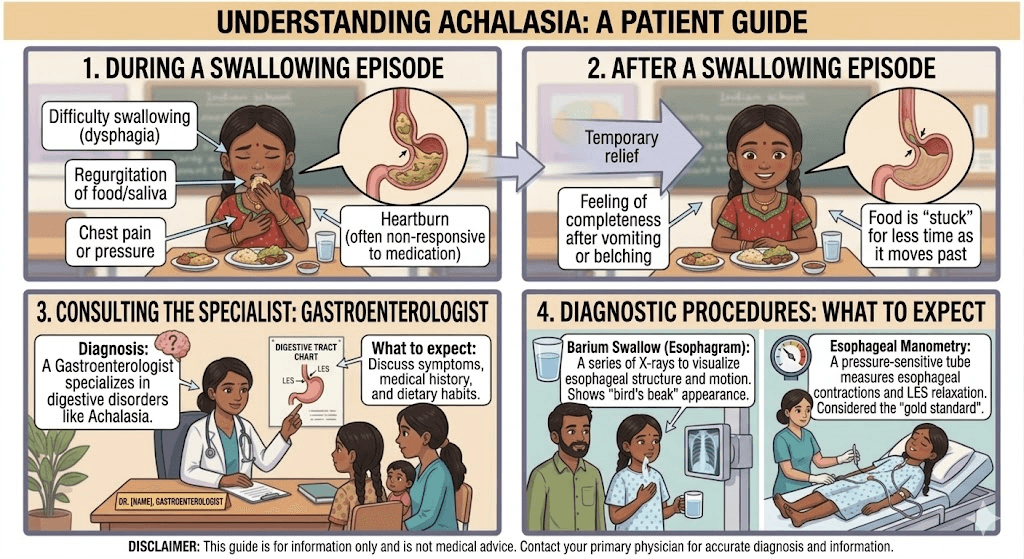
Difficulty swallowing (Dysphagia): This is a main symptom, where you might feel like food or liquids are getting stuck in your throat.
Swallowed food or saliva flowing back into the throat or mouth.
Chest discomfort or pain that occurs occasionally.
Coughing, especially at night.
Developing pneumonia, which can happen if food or liquid is inhaled into the lungs.
Unexplained weight loss.
List all your symptoms, even if they seem unrelated to swallowing, and note when they started.
Write down key personal information, including any major stresses or recent life changes.
A long, flexible tube called an endoscope is gently inserted down your throat. A tiny camera on the end of the endoscope transmits detailed images of your upper digestive tract to a screen. This allows the doctor to inspect the lining of your organs. The procedure may be used to look for specific symptoms, help confirm a diagnosis, or sometimes be combined with other techniques, such as an ultrasound, to get deeper images of the esophageal wall or nearby organs like the pancreas. Newer endoscopes provide clearer, high-definition video.
Although achalasia cannot be cured, several management options are available to help relieve symptoms and improve swallowing.
Long-term well-being focuses on consistent management to keep symptoms relieved and maintain swallowing function. This involves:
Ongoing Medical Care: Maintaining regular follow-up appointments with your specialist to monitor your condition and adjust treatments, such as injections, non-surgical procedures, or surgery, for lasting symptom control.
Consultation Guide
The exact reason achalasia develops is not completely understood. Researchers believe it may be related to the loss of nerve cells in the esophagus. While the exact trigger is unknown, theories suggest that viral infections or an autoimmune response (where the body attacks its own healthy cells) might be involved. In very rare cases, the condition may be linked to an inherited genetic disorder or a specific infection.
Risk Factors
Certain factors can increase the risk of developing achalasia:
Age: While anyone can be affected, it is most common in people between the ages of 25 and 60.
Specific Health Conditions: The risk is higher for individuals who have allergic disorders, adrenal insufficiency, or Allgrove syndrome (a very rare genetic condition).
Getting Ready for Your Visit
To discuss your swallowing difficulties, you should plan to meet with a specialist like a Gastroenterologist or, for surgical options, a Thoracic Surgeon.
Preparations before the visit:
Achalasia is a chronic condition, and since the exact cause is not fully understood and there is no known cure, the prevention of achalasia is not currently possible.
Diagnostic Procedures
To properly diagnose achalasia, your doctor may recommend one or more specialized procedures to look at how your esophagus is functioning.
Esophageal manometry is a test designed to measure the muscle function of your esophagus. It assesses the strength and pattern of muscle contractions as you swallow water, and how effectively these movements push food down toward the stomach. This test also checks how well the sphincter muscles—the muscles at the top and bottom of the esophagus—open and close. This measurement is key for diagnosing conditions like achalasia.
What to Expect
A thin, flexible tube, called a catheter, is gently passed through your nose, down your esophagus, and into your stomach. This tube contains pressure sensors. During the test, you will be asked to swallow small amounts of water. The pressure sensors in the tube will record the pressure, speed, and wave pattern of the muscle contractions when you swallow. The entire process helps your care team understand the movement patterns as water travels from the esophagus to the stomach.
An upper endoscopy, also called an upper gastrointestinal endoscopy, is a procedure used to visually examine the upper part of your digestive system. This includes your esophagus, stomach, and the beginning of your small intestine (duodenum). It is performed by a specialist in digestive diseases (a gastroenterologist).
What to Expect
Disclaimer: This article provides general health information and is not intended to be a substitute for professional medical advice, diagnosis, or treatment. Always consult your treating physician or another qualified healthcare provider with any questions you may have regarding a medical condition.
To report an error in the article, please send an email to errors@medicalwriter.com.
Treatment Options
Make a list of all medications, vitamins, or supplements you are currently taking.
Write down questions to ask your doctor.
Book a doctor visit near me
Surgical Procedures: Minimally invasive or open surgery to cut the muscle fibers at the lower end of the esophagus, intended to provide a long-lasting solution by permanently relaxing the muscle.
Prevention & Long-Term Wellbeing
Self-Care and Lifestyle Adjustments: Adjusting eating habits, such as chewing food thoroughly and eating slowly, can help manage swallowing difficulty.
Injections: A procedure involving injections that use a purified toxin to temporarily relax the tight muscle at the bottom of the esophagus. This is not a cure, and its effects typically last for several months, often requiring repeat procedures over time.
Non-Surgical Procedures (Endoscopy/Therapies): Techniques performed during an endoscopy, such as stretching the esophageal muscle. This type of therapy aims to widen the opening to the stomach. The duration of relief can vary, and repeated procedures may be necessary.
Prevention and Long-Term Well-being
Lifestyle Adjustments: Consistently applying self-care practices like chewing food thoroughly and eating slowly to minimize swallowing difficulty.
Tags & Topics
Notice an error or need an update?
Help us keep medical information accurate. Report incorrect info or suggest an edit.


