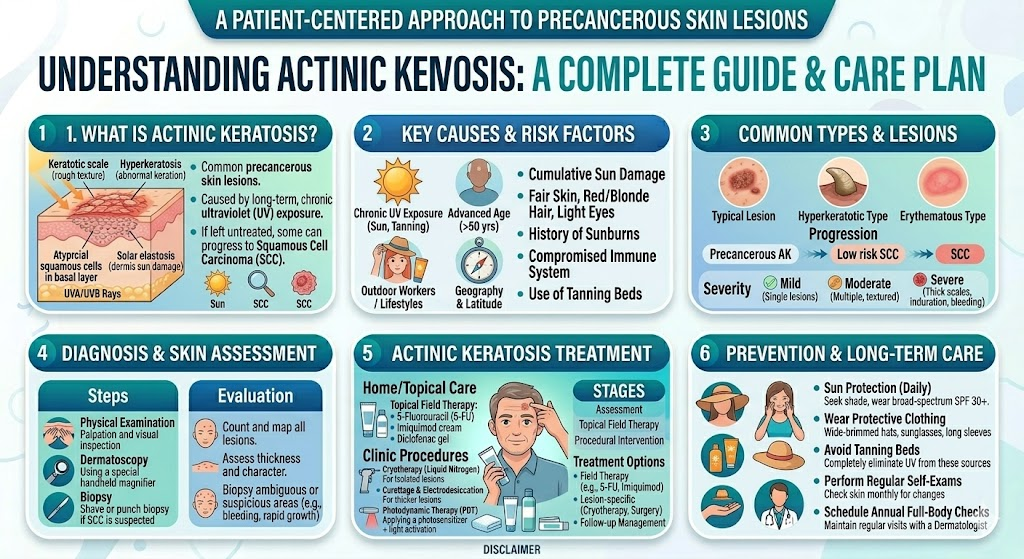
Actinic keratosis (AK), pronounced ak-TIN-ik ker-uh-TOE-sis, is a common skin condition characterized by a rough, scaly patch on the skin. It is also known as a solar keratosis because it develops from years of frequent or intense exposure to ultraviolet (UV) rays from the sun or tanning beds.
Understanding the Condition
Diagnosis is often confirmed through a Skin Biopsy, a procedure to remove cells or skin samples from your body so they can be tested in a laboratory. A skin biopsy is used to diagnose or rule out certain skin conditions and diseases. The type of skin biopsy used depends on your symptoms and where on your body the procedure is to be done.
Shave Biopsy: A scalpel or a razor blade is used to gently scrape off the surface layer of the skin, with the goal of removing irregular tissue to send to the lab. Stitches usually aren't needed after this procedure.
Consultation Guide
Actinic keratosis (AK), pronounced ak-TIN-ik ker-uh-TOE-sis, is a common skin condition characterized by a rough, scaly patch on the skin. It is also known as a solar keratosis because it develops from years of frequent or intense exposure to ultraviolet (UV) rays from the sun or tanning beds.
AK often appears as scaly spots or patches on the top layer of skin and is usually found on sun-exposed areas like the face, lips, ears, forearms, scalp, neck, or back of the hands. These spots grow slowly and typically first appear in people over 40. With time, they may become hard with a wartlike surface.
Because it can be difficult to tell the difference between noncancerous spots and cancerous ones, any new skin changes should be evaluated by a health care provider.
Specialist to Meet: A dermatologist or a dermatologic surgeon.
Preparation: Note any new skin changes, especially if a scaly spot or patch persists, grows, or bleeds.
Book a doctor visit near me
The primary measure for preventing Actinic Keratosis (AK) and its progression is strict sun protection. Given that AK is caused by UV damage, minimizing exposure is key to long-term skin health.
Sun Protection: Consistently protect your skin from ultraviolet (UV) rays. This measure is ongoing and indefinite. Use broad-spectrum sunscreen with an SPF of 30 or higher daily, even on cloudy days. Wear protective clothing, including wide-brimmed hats and sunglasses.
Avoid Peak Sun Hours: Limit time spent in the sun, especially between 10 a.m. and 4 p.m. when UV rays are strongest.
Skin Self-Exams: Regularly examine your skin for new growths or changes to existing spots. Early detection is crucial, as 5% to 10% of untreated AK cases might progress into squamous cell carcinoma.
Annual Dermatologist Visits: Schedule regular check-ups with a dermatologist or dermatologic surgeon for professional skin evaluations.
Diagnostic Procedures
Diagnostics: Detailed Description of Procedures
Punch Biopsy: A round-tipped cutting tool removes deeper layers of skin for testing. Depending on the size of the sample taken, stitches may be needed to close the wound.
Excisional Biopsy: A scalpel is used to cut out a lump or an area of irregular skin and some surrounding healthy skin. As a rule, stitches are needed to close the wound.
Disclaimer: This article provides general health information and is not intended to be a substitute for professional medical advice, diagnosis, or treatment. Always consult your treating physician or another qualified healthcare provider with any questions you may have regarding a medical condition.
To report an error in the article, please send an email to errors@medicalwriter.com.
Treatment Options
While Actinic Keratosis is often noncancerous, it is important to seek treatment. An estimated 5% to 10% of untreated cases might progress into a type of skin cancer called squamous cell carcinoma. This is a type of cancer that is usually not life-threatening if detected and treated early.
Consultation and Preparation
If treated early, actinic keratosis can be cleared up or removed. The available treatments include:
Photodynamic Therapy: A light-based treatment method.
Duration: The duration is not specified in the current context.
Prevention & Long-Term Wellbeing
Home Remedies and Prevention (Long-term)
Minimize sun exposure and consistently protect your skin from ultraviolet (UV) rays. This measure is ongoing and indefinite.
Excisional Removal: The affected spot is cut out along with a small amount of surrounding healthy skin.
Duration: Stitches are typically required to close the wound and allow it to heal.
Procedural Therapies (Skin Resurfacing)
Chemical Peel: A chemical solution is applied to the skin to remove the top layers. The skin that grows back is smoother.
Duration: With a light or medium peel, you may need to undergo the procedure more than once to get the desired results. Deeper peels offer more-dramatic results but also take longer to recover from.
Dermabrasion: A fast-spinning tool gently scrapes off the top layer of skin. The new skin that grows back usually looks smoother.
Duration: Your skin will be discolored and very sensitive for a few weeks after the procedure. It usually returns to its typical color in about three months.
Prevention and Long-term Wellbeing
Tags & Topics
Notice an error or need an update?
Help us keep medical information accurate. Report incorrect info or suggest an edit.


