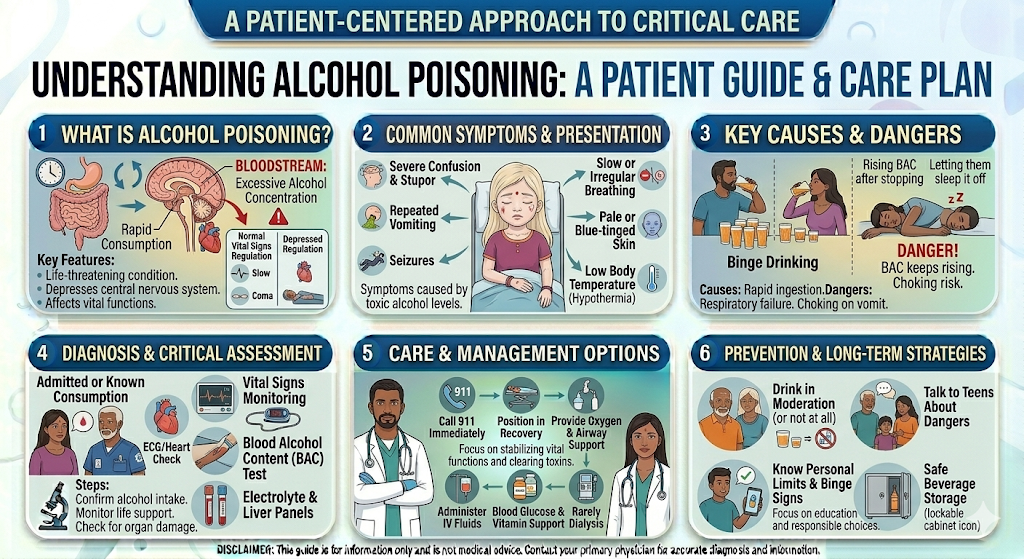
Alcohol poisoning is an extremely dangerous condition, sometimes resulting in death, caused by drinking a large amount of alcohol too quickly. When excessive alcohol enters the body rapidly, it severely impacts vital functions like breathing, heart rate, body temperature, and the body's natural protective gag reflex. This can rapidly lead to unconsciousness, a coma, and potentially death.
Understanding the Condition
Alcohol poisoning symptoms include:
Slow or Irregular Breathing: Fewer than eight breaths per minute, or a gap of more than 10 seconds between breaths.
Skin Changes: Skin that appears pale, blue, or gray.
Low Body Temperature (Hypothermia): The body temperature drops dangerously low.
Unconsciousness: The person has trouble staying conscious or cannot be woken up.
It is critical to seek medical help even if not all of these signs are present. An unconscious person with alcohol poisoning is at risk of death and cannot simply "sleep it off".
What to Do in an Emergency:
Call your local emergency number right away.
Do not leave the person alone.
If the person is vomiting, try to keep them sitting up, or if they must lie down, turn their head to the side to prevent choking. Do not try to make them vomit.
Be ready to provide information to emergency staff, such as the type and amount of alcohol consumed, and the time it was consumed.
A list of all symptoms and when they began.
Consultation Guide
Alcohol poisoning is an extremely dangerous condition, sometimes resulting in death, caused by drinking a large amount of alcohol too quickly. When excessive alcohol enters the body rapidly, it severely impacts vital functions like breathing, heart rate, body temperature, and the body's natural protective gag reflex. This can rapidly lead to unconsciousness, a coma, and potentially death.
This type of poisoning can also happen if adults or children swallow household products containing alcohol, either by accident or intentionally.
If there is any suspicion that someone has alcohol poisoning, immediate emergency medical attention is required.
The alcohol found in beverages is called ethanol (or ethyl alcohol). This substance is quickly absorbed by the body, much faster than other nutrients, and the liver takes a significant amount of time to process it. A major cause of poisoning is binge drinking, defined as rapidly consuming five or more standard drinks for males or four or more for females within about two hours.
Poisoning can also be caused by swallowing other toxic forms of alcohol found in household products, such as:
Isopropyl alcohol: Found in rubbing alcohol, lotions, and certain cleaning supplies.
Methanol or ethylene glycol: Found in antifreeze, solvents, and paints.
Several factors can increase your risk of alcohol poisoning, including:
Body size and weight.
Underlying health conditions that change how your body processes alcohol.
Having an empty stomach (though food does not prevent poisoning from binge drinking).
Cardiac Issues: Severe hypothermia (low body temperature) can cause the heart to stop, and alcohol poisoning itself can cause an irregular heartbeat.
Irreversible Brain Damage or Death: Heavy drinking can result in permanent brain damage, and any of the complications listed above can lead to death.
Which Specialist to Meet
Alcohol poisoning is a medical emergency that requires immediate care in an emergency room.
For long-term follow-up care and to prevent future incidents, you should consult a Deaddiction Specialist or a Psychiatrist specialising in addiction medicine.
Preparations Needed Before the Follow-up Visit
If you are seeking follow-up care, it is helpful to prepare the following information:
Description: Imaging tests, such as a CT scan (Computerised Tomography) or Ultrasound (Sonography), may be used if a head injury is suspected or to check for internal complications caused by the poisoning, such as swelling in the brain or internal organ damage. A CT scan uses X-rays to create detailed cross-sectional images of the body's internal structures. An Ultrasound uses sound waves to create live images of internal organs.
Specific medicines may be given if the poisoning was caused by non-ethanol alcohols (like methanol or ethylene glycol) to counteract the toxic effects and prevent further organ damage.
In cases where complications arise, like infection, antibiotics may be used.
Procedure (Duration: Short-term)
In severe cases of non-ethanol alcohol poisoning or if supportive care fails, blood filtration procedures might be necessary to remove toxins from the bloodstream.
While not a direct treatment for acute alcohol poisoning, severe and irreversible damage to organs like the liver (acute liver failure) caused by heavy alcohol use or other substances may eventually require a major procedure like a Liver Transplant. Recovery is a multi-month process.
Prevention is primarily focused on responsible drinking habits and eliminating the risk factors associated with acute alcohol poisoning.
Diagnostic Procedures
Even if a person stops drinking or loses consciousness, the alcohol already consumed continues to enter the bloodstream from the stomach and intestines, causing the alcohol level in the body to keep rising.
Blood Tests (e.g., Blood Alcohol Concentration and Organ Function)
Description: These tests measure the level of alcohol in the blood (Blood Alcohol Concentration or BAC), and also check the function of organs like the liver and kidneys, as well as blood sugar and electrolyte levels. Irregular results are essential for guiding supportive care.
What to Expect
Imaging (e.g., CT Scan or Ultrasound)
What to Expect
Ultrasound: A technician applies a gel to the skin over the area to be examined (e.g., the abdomen) and moves a handheld device (transducer) over it. The procedure is generally safe.
CT Scan: You will lie on a table that slides into a large, doughnut-shaped machine. You must remain still during the scan. The procedure is non-invasive and painless.
Disclaimer: This article provides general health information and is not intended to be a substitute for professional medical advice, diagnosis, or treatment. Always consult your treating physician or another qualified healthcare provider with any questions you may have regarding a medical condition.
To report an error in the article, please send an email to errors@medicalwriter.com.
Treatment Options
Combining alcohol with other drugs or prescription medications.
The concentration (percentage) of alcohol in the beverages consumed.
How quickly and how much alcohol is consumed.
Individual differences in how the body processes alcohol.
Severe alcohol poisoning can lead to life-threatening complications, including:
Choking: Alcohol suppresses the gag reflex, which means a person who passes out is at high risk of choking if they vomit.
Breathing Interruption (Asphyxiation): Accidentally breathing vomit into the lungs can stop breathing.
Severe Dehydration: Excessive vomiting can lead to a dangerous loss of body fluids, causing very low blood pressure and a rapid heart rate.
Seizures: Blood sugar levels can drop low enough to trigger seizures.
A list of every medication, vitamin, and supplement currently being taken.
Details about your known medical history.
Book a doctor visit near me
Treatment Overview (Bulleted List)
Treatment for alcohol poisoning requires intensive, supportive care in a hospital setting to prevent breathing and heart problems until the body can process the alcohol.
Supportive Care and Therapies (Duration: Ongoing, throughout hospitalisation)
Monitoring vital signs: Constant checks on breathing, heart rate, and body temperature.
Keeping the airway clear: Medical staff will ensure the patient does not choke on vomit.
Intravenous (IV) fluids: Used to address severe dehydration and maintain blood sugar levels.
Warming therapies: Used to raise a dangerously low body temperature (hypothermia).
Medication (Duration: Days to Weeks)
Do Not Combine Substances: Never mix alcohol with prescription medications, over-the-counter drugs, or other substances, as this significantly increases the risk of poisoning.
Secure Household Products: Ensure that all household products containing toxic forms of alcohol (like rubbing alcohol or antifreeze) are safely stored away from both adults and children.
For individuals who have experienced alcohol poisoning, focusing on long-term well-being is critical to prevent recurrence:
Professional Follow-up: Seeking follow-up care with a Deaddiction Specialist or a Psychiatrist specializing in addiction medicine is highly recommended to address underlying issues and prevent future binge drinking episodes.
Prevention & Long-Term Wellbeing
Home Remedies/Prevention (Duration: Long-term)
The only long-term "remedy" or preventative measure is to consume alcohol in strict moderation, or not at all.
Follow-up care with a counsellor helps prevent future binge drinking episodes.
Ensure alcohol-containing household products are safely stored away from children.
Prevention and Long-Term Well-being
Prevention Strategies
Consume in Strict Moderation: The safest strategy is to consume alcohol in strict moderation, or to abstain entirely.
Avoid Binge Drinking: Be aware of the definition of binge drinking (five or more standard drinks for males, four or more for females, in about two hours) and avoid exceeding these limits.
Support and Counseling: Participation in support groups or professional counseling can provide tools and strategies for managing alcohol consumption and promoting a healthier lifestyle.
Health Monitoring: Regular check-ups are important, as heavy alcohol use can lead to long-term health damage, including liver and cardiac issues.
Tags & Topics
Notice an error or need an update?
Help us keep medical information accurate. Report incorrect info or suggest an edit.


