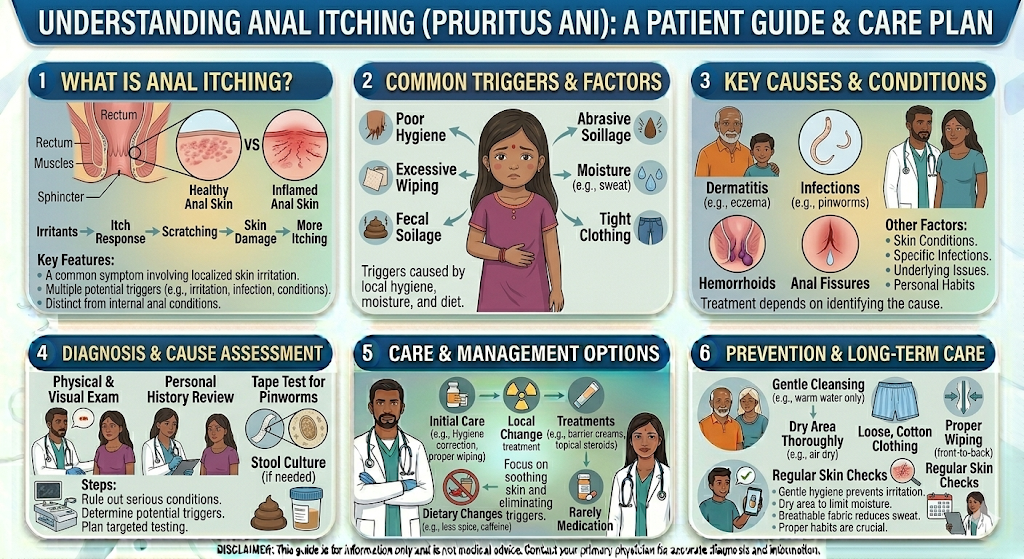
Anal itching, medically known as pruritus ani (proo-RIE-tus A-nie), is a very common condition. It involves an intense, uncomfortable, and sometimes embarrassing itch in or around the anus.
Understanding the Condition
Anal Itching (Pruritus Ani): An Overview
Anal itching, medically known as pruritus ani (proo-RIE-tus A-nie), is a very common condition. It involves an intense, uncomfortable, and sometimes embarrassing itch in or around the anus.
This symptom has various potential causes, including skin inflammation (dermatitis), chronic diarrhea, infections (such as yeast or pinworms), and conditions like hemorrhoids.
The symptoms can include intense itching, burning, soreness, and visible inflammation of the skin. The irritation may be temporary or long-lasting, depending on the underlying cause. Many people find the itching gets worse at night or when the weather is hot and humid.
While self-care is often sufficient, you should seek medical attention if:
The itching is severe or constant.
You notice anal bleeding or stool leakage.
The anal area appears to be infected.
Skin Conditions: Sometimes the itch is a symptom of a specific skin disorder, such as dry skin, psoriasis, or contact dermatitis.
A healthcare provider will typically begin by reviewing your symptoms and medical history. The following diagnostic procedures may be used to determine the cause of your anal itching:
Surgery is typically reserved for cases where other, less invasive treatments have failed, especially for severe hemorrhoids or other identified structural abnormalities that are causing the symptoms.
Consultation Guide
You cannot identify a clear cause for the persistent itch.
The possible reasons for anal itching fall into several categories:
Irritants: Long-term diarrhea or difficulty controlling bowel movements (fecal incontinence) can irritate the skin. Daily hygiene habits, such as using harsh soaps or repeatedly wiping too forcefully, can also cause irritation.
Infections: Specific infections like sexually transmitted infections, pinworm infections, or common yeast infections can lead to itching.
Other Medical Conditions: Underlying health problems like diabetes, thyroid disorders, or the presence of hemorrhoids can cause or contribute to anal itching.
In many instances, a definitive cause for the itching cannot be immediately identified.
Consultation and Preparation
Which Specialist to Meet:
For an initial consultation, you may start with your primary care physician. If the condition is persistent or complex, you may be referred to a dermatologist (a skin specialist) or a colorectal surgeon (a specialist in the colon, rectum, and anus, sometimes called a proctologist).
Preparations Before Your Visit:
Treatment for anal itching depends entirely on the underlying cause. A healthcare provider will recommend a course of action that may include the following:
Targeted treatments for hemorrhoids: Procedures like rubber band ligation (placing a small band around a hemorrhoid to cut off blood supply) or sclerotherapy (injecting a solution into the hemorrhoid to shrink it) may be used if hemorrhoids are the cause.
Behavioral therapy: If persistent scratching has become a habit leading to a "scratch-itch cycle," therapy may be recommended to break the cycle.
Maintaining soft, easy-to-pass stools is crucial to prevent irritation caused by chronic diarrhea or straining.
Diagnostic Procedures
To help your doctor make an accurate diagnosis, consider doing the following:
Keep a brief log of when the itching occurs and what activities or foods seem to make it worse.
Bring a list of any over-the-counter creams, ointments, or hygiene products you have been using.
Avoid scratching or applying excessive heat or moisture to the area in the 24 hours before your appointment.
Book a doctor visit near me
Physical Examination and Swab Test
Procedure Description: The doctor will visually inspect the skin around the anus for signs of redness, inflammation, or any skin tags, which can indicate conditions like hemorrhoids. They may also take a small sample by lightly rubbing the area with a swab to check for underlying infections such as yeast or pinworms.
What to Expect
Anoscopy
Procedure Description: If the initial exam suggests an internal issue, the doctor may perform an anoscopy. This involves inserting a short, rigid, lighted tube (an anoscope) a few inches into the anal canal to allow the doctor to examine the lower rectum for issues like internal hemorrhoids or small polyps.
What to Expect
Colonoscopy
Procedure Description: A colonoscopy (koe-lun-OS-kuh-pee) is an exam used to check the entire large intestine (colon) and rectum for changes like irritated tissues, polyps, or signs of cancer. The healthcare professional inserts a long, flexible tube (colonoscope) with a tiny video camera at the tip into the rectum. This allows the doctor to view the entire inner lining of the colon. If needed, tissue samples (biopsies) or abnormal growths (polyps) can be removed through the scope during the exam.
What to Expect
Oral treatments: If an infection is diagnosed, a short course of oral anti-fungal medication (for yeast) or antiparasitic medication (for pinworms) will be prescribed. These usually clear the infection within days to weeks.
Procedures and Therapies (Duration: Varies)
Disclaimer: This article provides general health information and is not intended to be a substitute for professional medical advice, diagnosis, or treatment. Always consult your treating physician or another qualified healthcare provider with any questions you may have regarding a medical condition.
To report an error in the article, please send an email to errors@medicalwriter.com.
Treatment Options
Most cases clear up with simple self-care. If the irritation persists, consulting a healthcare professional is important, as effective treatment can lead to complete relief.
Medication (Duration: Typically 1 to 2 weeks)
Topical applications: Your doctor may prescribe creams or ointments containing low-dose corticosteroids to reduce inflammation and itching, or protective ointments like zinc oxide.
Prevention & Long-Term Wellbeing
Home Remedies and Lifestyle Changes (Duration: Ongoing)
Maintain meticulous but gentle hygiene: Clean the anal area with plain water or a mild, non-fragranced cleanser after bowel movements, and pat the area dry instead of wiping aggressively.
Avoid known irritants: Stop using fragranced soaps, colored toilet paper, and bubble baths. Wear loose-fitting, non-synthetic underwear (such as cotton).
Protect the skin: Apply moisture barriers, such as a simple petroleum jelly, to protect irritated skin from moisture and friction.
Surgical Procedures (Duration: Single Procedure, Recovery Varies)
Prevention and Long-Term Well-being
Preventing anal itching and maintaining long-term well-being often involves consistent habits that reduce irritation and promote healthy bowel function.
Practice Gentle and Meticulous Hygiene: After a bowel movement, clean the anal area with plain water or a mild, non-fragranced cleanser. Always pat the area dry instead of wiping forcefully or aggressively.
Avoid Irritants: Stop using fragranced soaps, colored toilet paper, and bubble baths. Wear loose-fitting, non-synthetic underwear, such as cotton, which allows the skin to breathe.
Use Skin Barriers: Apply moisture barriers, like simple petroleum jelly, to protect irritated skin from moisture and friction.
Break the Scratch-Itch Cycle: If persistent scratching has become a habit, behavioral therapy may be recommended to break this cycle.
Long-Term Bowel Health
Dietary Adjustments: Eat foods high in fiber, including whole grains, vegetables, and fruits. Ingest plenty of fluids (6 to 8 glasses daily) to help soften stools and prevent constipation.
Stay Active: Regular exercise helps prevent constipation and reduces pressure on the anal veins. Avoid sitting for prolonged periods, especially on the toilet.
Tags & Topics
Notice an error or need an update?
Help us keep medical information accurate. Report incorrect info or suggest an edit.


