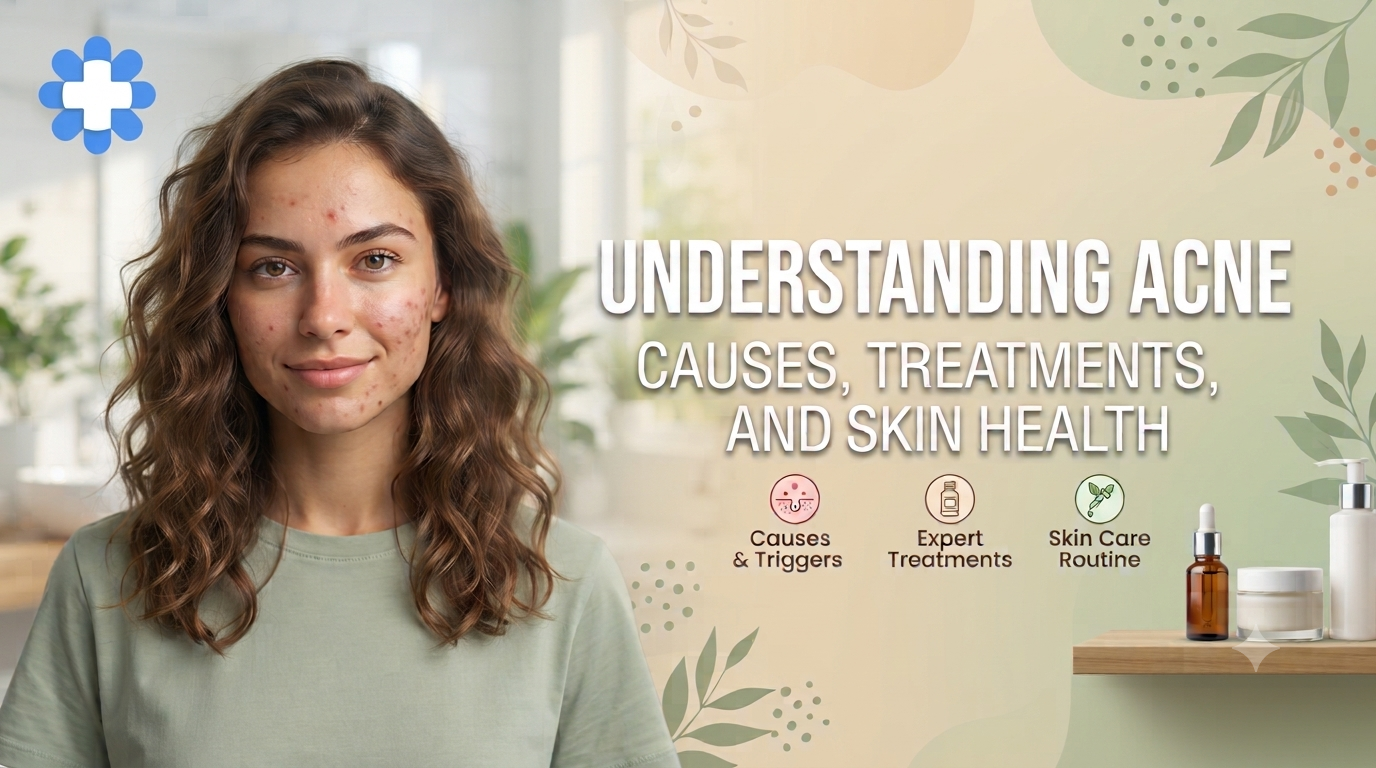
Acne is a common skin condition that happens when your hair follicles become blocked by excess oil and dead skin cells. This blockage leads to the formation of blemishes such as whiteheads, blackheads, or pimples. While most often seen in teenagers, acne can affect people at any age. Effective treatments exist, but acne can be persistent, with new bumps appearing as older ones begin to heal. Depending on how severe it is, acne can cause emotional distress and permanent skin scars. Starting treatment early can lower your risk of these problems.
Understanding the Condition
Acne: A Medical Guide for the General Reader
The signs of acne vary based on the condition's severity:
Whiteheads: Pores that are closed and plugged.
Blackheads: Pores that are open to the skin's surface and appear dark.
Papules: Small, red, and tender bumps.
Pimples (Pustules): Papules that have pus at their tips.
Nodules: Large, solid, painful lumps that develop under the skin.
Cystic Lesions: Painful, pus-filled lumps that form deep beneath the skin.
Acne is typically found on the face, forehead, chest, upper back, and shoulders.
Consultation Guide
Acne is a common skin condition that happens when your hair follicles become blocked by excess oil and dead skin cells. This blockage leads to the formation of blemishes such as whiteheads, blackheads, or pimples. While most often seen in teenagers, acne can affect people at any age. Effective treatments exist, but acne can be persistent, with new bumps appearing as older ones begin to heal. Depending on how severe it is, acne can cause emotional distress and permanent skin scars. Starting treatment early can lower your risk of these problems.
Acne is caused by four main factors:
Overproduction of oil, known as sebum.
Hair follicles becoming blocked by a mix of oil and dead skin cells.
The areas of the body with the most oil (sebaceous) glands—the face, forehead, chest, upper back, and shoulders—are where acne usually appears. Hair follicles are connected to these oil glands. If the wall of the follicle bulges, it forms a whitehead. If the plug opens to the surface, the mix of bacteria and oil darkens when exposed to air, creating a blackhead. Pimples develop when blocked follicles become inflamed or infected with bacteria. When blockages and inflammation occur deep inside the follicles, they can form cyst-like lumps beneath the skin.
Cystic acne is the most severe form of acne. It occurs when oil and dead skin cells build up deep within hair follicles, which can lead to a rupture within the skin that may form boil-like inflammation.
Factors that may trigger or worsen acne:
Hormonal Changes: Hormones that increase during puberty (androgens) cause oil glands to enlarge and produce more oil. Hormone shifts in midlife, especially in women, can also cause breakouts.
Stress: While stress does not directly cause acne, it can make an existing condition worse.
After acne has healed, the skin may be left with complications. People with darker skin are more likely to experience these:
Scars: This can include pitted skin or thick, raised scars (keloids) that can remain long-term.
Skin Color Changes: The affected skin may become darker (hyperpigmented) or lighter (hypopigmented) than the surrounding skin.
Common nonprescription ingredients include Benzoyl peroxide, which kills bacteria, removes excess oil, and sheds dead skin cells (available in 2.5% to 10% strengths; lower strengths are often as effective, and it can cause irritation and bleach clothing), and Salicylic acid, which helps unclog pores and prevent new breakouts.
Diagnostic Procedures
Certain Medications: Examples include drugs containing corticosteroids, testosterone, or lithium.
Diagnostics: Detailed Description of Procedures
Acne is typically diagnosed through a physical examination of the skin. For other skin-related concerns, such as a potential infection or to rule out other diseases, a skin biopsy may be performed.
A skin biopsy is a procedure that removes cells or a small piece of skin tissue for testing in a laboratory. This is commonly done to help diagnose or rule out certain skin conditions.
What to Expect
The procedure used depends on the size of the area being tested and where it is located on your body. Your healthcare professional will numb the area before the procedure.
Shave Biopsy: A scalpel or a razor blade is used to gently scrape off the surface layer of the skin. Stitches are usually not necessary after this procedure.
Punch Biopsy: A round-tipped cutting tool is used to remove deeper layers of skin tissue. Depending on the size of the sample taken, stitches may be needed to close the wound.
Excisional Biopsy: A scalpel is used to cut out the irregular area of skin along with a small margin of surrounding healthy skin. Stitches are generally required to close the wound.
Disclaimer: This article provides general health information and is not intended to be a substitute for professional medical advice, diagnosis, or treatment. Always consult your treating physician or another qualified healthcare provider with any questions you may have regarding a medical condition.
To report an error in the article, please send an email to errors@medicalwriter.com.
Treatment Options
If routine self-care remedies do not clear your acne, you should first consult your primary care physician. They can prescribe stronger medications. If the acne is severe or persists, you may need to see a specialist who focuses on skin conditions, such as a dermatologist or a pediatric dermatologist.
Preparations Before the Visit
There is no specific preparation information provided in the available material.
Book a doctor visit near me
Home Remedies/Self-Care: Consistently following gentle skin care habits. Duration: Ongoing.
Medication: Prescription and non-prescription topical products are available. These medicines work by killing acne-causing bacteria, removing excess oil, and promoting the shedding of dead skin cells. Duration: Ongoing, often requiring consistent, long-term use.
Additionally, for women, acne flares common before menstruation may clear up without treatment when using contraceptives.
Procedures/Therapies (Addressing Scarring): These methods are often used to improve the appearance of scars and skin changes left after acne has cleared.
Chemical Peel: A chemical solution is applied to the skin to remove the top layers for a smoother appearance. It is used to treat wrinkles, discolored skin, and scars, typically on the face. It can be done at different depths (light to deep), but cannot remove deep scars or tighten sagging skin. Duration: May require more than one session for optimal results.
Dermabrasion: A fast-spinning tool is used to gently scrape away the top layer of skin, making fine lines, acne scars, age spots, and wrinkles less noticeable. The skin is numbed before the procedure. After treatment, the skin will be discolored and sensitive for a few weeks, and color typically returns to normal in about three months. Duration: Skin sensitivity lasts a few weeks, and skin color typically returns to normal in about three months.
Laser Resurfacing: Uses an energy-based device to improve skin texture and color, and reduce scars, fine lines, age spots, and uneven skin color. Both ablative and nonablative methods can be used, often with a fractional laser to shorten recovery and reduce side effects. Duration: Likely requires more than one treatment session.
Soft tissue fillers (e.g., collagen or fat): These gel-like or biodegradable substances are injected into depressed (pitted) scars to raise the skin surface and smooth the appearance. A numbing medicine is given before injection. Results are temporary, requiring maintenance treatments. Duration: Results are temporary and maintenance treatments are necessary.
Surgical Procedures: Specific surgical treatments for active acne are not detailed in the context; however, some advanced skin-resurfacing techniques are considered procedures.
Early Intervention: Starting treatment early is critical to lower the risk of emotional distress and permanent complications such as skin scars.
Consistent Self-Care: Adhering to gentle and consistent skin care habits is an ongoing part of long-term management.
Long-Term Adherence to Treatment: Many prescription and non-prescription treatments, including topical products, require consistent and long-term use for sustained efficacy.
Prevention & Long-Term Wellbeing
Diet: Studies indicate that consuming carbohydrate-rich foods, such as bread, bagels and chips, may worsen acne. Further study is needed to examine specific dietary restrictions.
Prevention and Long-Term Wellbeing
Effective management of acne focuses on preventing new breakouts and maintaining skin health over time.
Tags & Topics
Notice an error or need an update?
Help us keep medical information accurate. Report incorrect info or suggest an edit.


