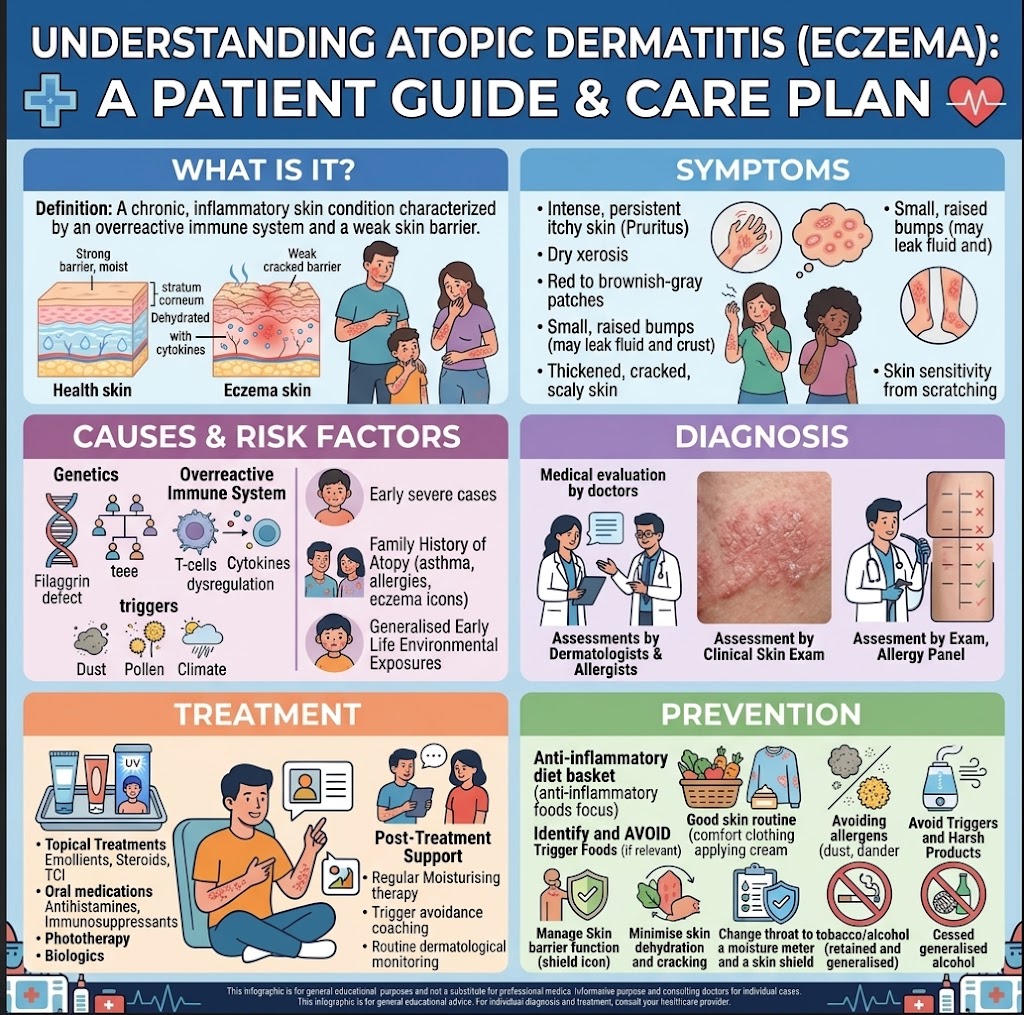
Atopic dermatitis, commonly known as eczema, is a persistent skin condition causing dryness, intense itchiness, and inflammation. It frequently appears in early childhood but can affect individuals of any age. Eczema is a long-term (chronic) condition that often flares up periodically, bringing discomfort. While irritating, it is not contagious. People living with atopic dermatitis may have a higher chance of developing other allergic conditions like food allergies, hay fever, and asthma. Regular moisturizing and careful skin care habits are crucial for easing itchiness and preventing new outbreaks. Medical treatments, including specialized creams or ointments, may also be prescribed.
Understanding the Condition
Atopic Dermatitis (Eczema): Understanding and Managing Dry, Itchy Skin
Understanding the Condition
Common Symptoms
Dry, Cracked Skin: The skin feels rough, tight, and can develop small cracks.
Intense Itchiness (Pruritus): A primary and often debilitating symptom, leading to a strong urge to scratch.
Rash on Inflamed Skin: Appears as red, swollen patches on lighter skin tones, and brownish, purplish, or grayish patches on darker skin tones.
Small, Raised Bumps: May appear as tiny, firm bumps, especially noticeable on brown or Black skin.
Oozing and Crusting: When eczema flares severely, the skin may weep clear fluid and then form crusts.
Raw, Sensitive Skin: Areas become raw, tender, or painful from persistent scratching. Eczema often starts before age 5 and can continue through teenage years and adulthood. For some, symptoms may clear up for extended periods before flaring again.
Consultation Guide
Which Specialist to Meet
You should primarily see a dermatologist, a doctor specializing in skin conditions. For children, a pediatrician can provide initial care and refer to a dermatologist. If allergies are suspected as a trigger, an allergist might also be involved.
Preparations Before Your Visit
Before your visit, prepare a detailed list of your symptoms, including when they started, what makes them better or worse, and how they affect your daily life and sleep. Note down your personal and family medical history of eczema, allergies, hay fever, or asthma. Bring a list of all current medications, supplements, and skin care products you use. Be ready to discuss your daily routines, diet, and any potential triggers you've noticed. Keeping a symptom diary can be very helpful.
Book a doctor visit near me
A healthcare professional will examine your skin for the characteristic signs of eczema, such as dry patches, rashes, and signs of scratching. They will also ask detailed questions about your personal and family medical history, your symptoms, their duration, and any known triggers.
The doctor will carefully look at your skin, paying close attention to affected areas and typical eczema locations. You will discuss your health background, specific symptoms, and lifestyle habits. This process is generally quick, non-invasive, and does not involve any painful procedures.
Skin Swab for Infection
If your skin shows signs of a possible infection, such as increased redness, warmth, pus, oozing, or crusting, a small sample will be gently collected from the skin's surface. This sample is then sent to a laboratory to identify any bacteria, viruses, or fungi that might be causing the infection.
Light Therapy (Phototherapy): Controlled exposure to specific types of ultraviolet (UV) light can help reduce inflammation and itching in some people. (Duration: Typically 2-3 sessions per week for several weeks to months, tapering as symptoms improve)
Bleach Baths: Highly diluted bleach added to bathwater can help reduce bacteria on the skin, ease itching, and lessen inflammation, often recommended for infected or severe eczema. (Duration: 2-3 times per week, for several weeks or as directed by a doctor)
Biofeedback: A mind-body technique where you learn to control certain body functions, like stress response, that can impact eczema symptoms, often with the help of electronic monitoring devices. (Duration: Multiple sessions over weeks or months, as part of a therapy program)
Track Symptoms: Keep a diary of your symptoms and potential exposures to help pinpoint personal triggers, such as certain fabrics (like wool), cleaning products, dust mites, pet dander, tobacco smoke, or temperature extremes.
Prevent Scratching: Keep nails short and clean to minimize skin damage from scratching. For infants, cotton mittens can help prevent scratching during sleep.
Manage Environmental Factors
Allergen Control: Regularly clean your home by dusting, vacuuming with a HEPA filter, and washing bedding in hot water to reduce common allergens.
Protective Barriers: Wear cotton-lined gloves when using cleaning products or when hands are frequently wet to protect the skin from irritants.
Adopt Stress Reduction Techniques
Mind-Body Practices: Engage in activities like deep breathing, meditation, yoga, or biofeedback to manage stress, which can often worsen eczema symptoms and the urge to scratch.
Optimize Sleep Environment
Cool and Comfortable: Keep your bedroom cool and use lightweight, breathable cotton sleepwear.
Pre-Sleep Routine: Apply moisturizer before bed to soothe skin and help prevent nighttime itching.
Address Itch: Work with your doctor to control itchiness, as better symptom management directly leads to improved sleep quality.
Regular Medical Check-ups
Ongoing Monitoring: Schedule regular visits with your dermatologist to monitor your condition, adjust treatment plans as needed, and discuss any new symptoms or concerns.
Consultation Guide
Thickened, Leathery Skin: Repeated scratching and rubbing can cause the skin to become thicker and more textured over time.
Darkening Around the Eyes: The skin around the eyes may appear darker due to inflammation.
Diagnostic Procedures
Clinical Examination and Medical History
What to Expect
What to Expect
A doctor or nurse will use a sterile cotton swab to lightly rub or dab the affected area of your skin. This is a very quick and usually painless procedure, although it might feel slightly ticklish or strange for a moment.
While not directly diagnosing eczema, allergy tests can help pinpoint specific substances (allergens) that might worsen your eczema or contribute to related conditions like food allergies or allergic contact dermatitis. Identifying these can help in managing your skin.
What to Expect
Patch Test: Small adhesive patches containing tiny amounts of common allergens are placed on your skin, typically on your back. These patches usually stay on for 48 hours. You will then return to the clinic to have them removed, and the doctor will check your skin for any reactions. Sometimes a second check after a few more days is needed. The test itself is not painful, but the patches can feel itchy or irritating. Blood Test (Specific IgE): A small amount of blood is drawn, usually from a vein in your arm, to measure your body's immune response to various potential allergens. This test can indicate if you have an allergic sensitivity to certain foods, pollens, or other environmental factors. It's a standard blood draw procedure, similar to any routine blood test.
Treatment Options
Atopic dermatitis, commonly known as eczema, is a persistent skin condition causing dryness, intense itchiness, and inflammation. It frequently appears in early childhood but can affect individuals of any age. Eczema is a long-term (chronic) condition that often flares up periodically, bringing discomfort. While irritating, it is not contagious. People living with atopic dermatitis may have a higher chance of developing other allergic conditions like food allergies, hay fever, and asthma. Regular moisturizing and careful skin care habits are crucial for easing itchiness and preventing new outbreaks. Medical treatments, including specialized creams or ointments, may also be prescribed.
Home Remedies & Skincare
Moisturizing: Apply thick creams, ointments, or balms generously at least twice daily, especially within three minutes of bathing, to lock in moisture and create a protective barrier. (Duration: Ongoing, daily)
Proper Bathing: Take short (5-10 minutes) daily baths or showers using lukewarm, not hot, water and a mild, fragrance-free, non-soap cleanser. Gently pat skin dry afterward. (Duration: Ongoing, daily)
Avoiding Triggers: Identify and avoid substances or situations that worsen your eczema, such as harsh soaps, rough fabrics, certain cleaning products, or extreme temperatures. (Duration: Ongoing)
Wet Wraps: Medicated cream or ointment is applied to the skin, then covered with damp bandages or cloth, followed by a dry layer, to enhance medication absorption and provide a cooling, soothing effect. (Duration: Short-term, typically for severe flares, as directed by a doctor (e.g., a few hours to overnight for several days))
Anti-inflammatory Creams/Ointments: These medications help reduce inflammation and itching. Some are steroidal, rapidly controlling flares, while others are non-steroidal, often preferred for sensitive areas or longer-term maintenance. (Duration: As directed by a doctor; steroidal types usually for short-term flare control (days to weeks), non-steroidal for longer-term or intermittent use)
Barrier Repair Creams: Products designed to help restore the skin's natural protective barrier, reducing moisture loss and protecting against irritants. (Duration: Ongoing, daily)
Oral/Injectable Medications
Oral Anti-inflammatory Medications: For severe flares, a short course of oral medications may be prescribed to quickly reduce widespread inflammation. (Duration: Short courses, typically days to a few weeks, as prescribed)
Systemic Immune-Modulating Medications: For moderate to severe eczema that doesn't respond to other treatments, medications that work throughout the body to calm the immune system may be used. These can be oral or injectable. (Duration: Long-term, ongoing, under strict medical supervision)
Anti-itch Medications: Oral antihistamines, particularly sedating ones, may be used at night to help relieve severe itchiness and improve sleep. (Duration: As needed, typically short-term or for nighttime use)
Antibiotics/Antivirals/Antifungals: If a secondary infection (bacterial, viral, or fungal) develops due to scratching, specific medications targeting the infection will be prescribed. (Duration: Typically 7-14 days for antibiotics/antivirals, longer for antifungals, as prescribed)
Prevention & Long-Term Wellbeing
Establish a Consistent Skincare Routine
Daily Moisturizing: Apply a generous amount of thick, unscented moisturizer at least twice a day, especially after bathing, to maintain skin hydration and strengthen the skin barrier.
Gentle Cleansing: Use lukewarm water and mild, fragrance-free, non-soap cleansers during short baths or showers to avoid stripping natural skin oils.
Pat, Don't Rub: Gently pat your skin dry with a soft towel after bathing, then immediately apply moisturizer while the skin is still damp.
Identify and Avoid Triggers
Tags & Topics
Notice an error or need an update?
Help us keep medical information accurate. Report incorrect info or suggest an edit.


