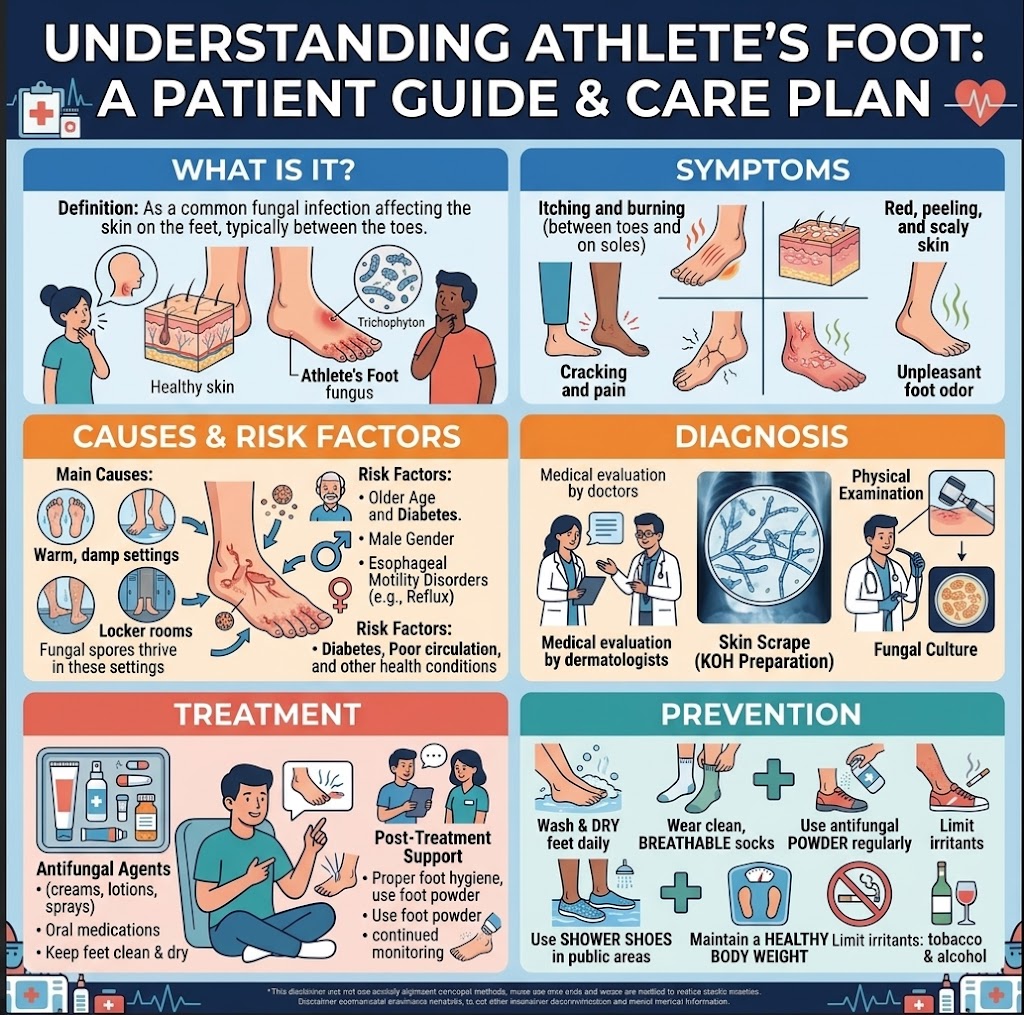
Athlete's foot, also known as tinea pedis, is a common fungal infection affecting the skin, typically starting between the toes. It thrives in warm, damp environments like sweaty feet inside closed shoes. This condition presents as an itchy, scaly rash and is highly contagious, easily spreading through direct contact or contaminated surfaces. While treatable with antifungal medications, it can often return if preventive measures aren't consistently followed. Athlete's foot is closely related to other fungal infections like ringworm and jock itch.
Understanding the Condition
Athlete's Foot: Understanding This Common Fungal Skin Infection
Understanding the Condition
Common Symptoms
Skin Changes: You might notice scaly, peeling, or cracked skin, most commonly between the toes. This can also appear on the bottom and sides of your foot, often looking dry and scaly.
Itching and Discomfort: Itchy skin is a hallmark symptom, often intensifying right after removing socks and shoes. You may also experience a burning or stinging sensation.
Skin Discoloration and Swelling: The affected skin may appear swollen and discolored, looking red, purple, or gray depending on your natural skin tone.
Consultation Guide
Which Specialist to Meet
Initially, you can consult your primary care doctor or family physician. If the condition is severe, persistent, or recurring, they may refer you to a dermatologist, a specialist in skin conditions.
Preparations Before Your Visit
Before your visit, make a list of your symptoms, including when they started and how long they've lasted. Note any over-the-counter treatments you've tried and their effectiveness. Inform your doctor about any underlying health conditions, especially diabetes or a weakened immune system, and bring a list of all your medications. Avoid applying any creams, powders, or sprays to your feet on the day of your appointment, as this can make diagnosis more difficult.
Book a doctor visit near me
Your doctor will visually inspect the affected areas of your feet and ask detailed questions about your symptoms, lifestyle, and medical history.
During the examination, the doctor will carefully look at your feet, particularly between your toes, on the soles, and the sides. They will ask about when your symptoms began, how long they've been present, any activities that might have caused them, and if you've tried any home remedies or over-the-counter treatments. This helps them understand the context of your condition.
Maintain Foot Hygiene: Wash your feet daily with warm, soapy water and dry them thoroughly, paying special attention to the spaces between your toes. Change your socks regularly. (Duration: Ongoing, until symptoms resolve and for prevention.)
Breathable Footwear: Wear sandals or open-toed shoes when possible to allow your feet to breathe. Choose shoes made from breathable materials and rotate pairs to ensure they dry out completely between uses. (Duration: Ongoing, until symptoms resolve and for prevention.)
Topical Antifungal Creams, Sprays, or Powders: These over-the-counter or prescription medications are applied directly to the infected skin to kill the fungus. (Duration: Typically 2-4 weeks, even after symptoms improve, to fully eliminate the fungus and prevent recurrence.)
Diagnostic Procedures
Physical Examination and Medical History
What to Expect
Skin Scrape (Potassium Hydroxide or KOH Test)
This common test involves taking a small skin sample from the affected area and examining it under a microscope to confirm the presence of fungi.
What to Expect
The doctor or a nurse will gently scrape a tiny amount of skin from the edge of the rash, where the fungus is usually most active. This is a quick and generally painless procedure, though you might feel a slight scratching sensation. The collected skin cells are then placed on a slide, treated with a solution to dissolve healthy skin cells, and viewed under a microscope. This allows the doctor to quickly identify fungal elements, confirming a fungal infection. Results are often available within minutes.
If the diagnosis is unclear or the infection is unusual or persistent, a skin sample may be sent to a lab to grow the specific type of fungus.
What to Expect
Treatment Options
Athlete's foot, also known as tinea pedis, is a common fungal infection affecting the skin, typically starting between the toes. It thrives in warm, damp environments like sweaty feet inside closed shoes. This condition presents as an itchy, scaly rash and is highly contagious, easily spreading through direct contact or contaminated surfaces. While treatable with antifungal medications, it can often return if preventive measures aren't consistently followed. Athlete's foot is closely related to other fungal infections like ringworm and jock itch.
Similar to a skin scrape, a small skin sample is collected from the affected area. This sample is then placed in a special laboratory dish containing nutrients that encourage fungal growth. This process helps identify the exact species of fungus causing the infection, which can be useful for guiding treatment, especially in cases that are difficult to resolve. It typically takes several days to a few weeks for the culture results to come back.
Home Remedies and Self-Care
Medications
Oral Antifungal Medications: For severe, widespread, or persistent infections that do not respond to topical treatments, your doctor may prescribe pills. (Duration: Varies, usually several days to weeks, as directed by a healthcare professional.)
Addressing Complications
Antibiotic Treatment: If a bacterial infection develops alongside athlete's foot (e.g., from scratching), antibiotics may be prescribed to treat the secondary infection. (Duration: Varies depending on the severity and type of bacterial infection.)
Self-Monitor for Recurrence: Be vigilant for any early signs of athlete's foot, such as itching or scaling, as the condition can often recur even after successful treatment.
Regular Professional Check-ups: Individuals with diabetes or weakened immune systems should have regular foot checks by a healthcare professional to quickly address any signs of infection and prevent serious complications like cellulitis.
Prevention & Long-Term Wellbeing
Prevention
Daily Foot Care: Wash your feet every day with warm, soapy water. Ensure they are completely dry, especially the skin between your toes, before putting on socks or shoes.
Choose Moisture-Wicking Socks: Wear socks made from materials that absorb moisture, such as cotton, and change them at least once a day, or more often if your feet sweat excessively.
Wear Breathable Shoes: Opt for shoes made of breathable materials. If possible, wear sandals or open-toe shoes. Rotate your shoes daily to allow them to fully dry out between wears.
Protect Feet in Public Areas: Always wear waterproof sandals or shoes when walking in public showers, around pools, or in locker rooms to avoid contact with fungi.
Avoid Sharing Personal Items: Do not share towels, shoes, or unwashed bedding with others, as fungi can easily spread through these items.
Use Antifungal Products: If you are prone to athlete's foot, consider applying an over-the-counter antifungal powder, spray, or ointment to your feet after washing them, as a preventative measure.
Long-Term Monitoring
Tags & Topics
Notice an error or need an update?
Help us keep medical information accurate. Report incorrect info or suggest an edit.


